Sponsored briefing: The Singapore Convention – The mediator’s perspective

Independent Mediators

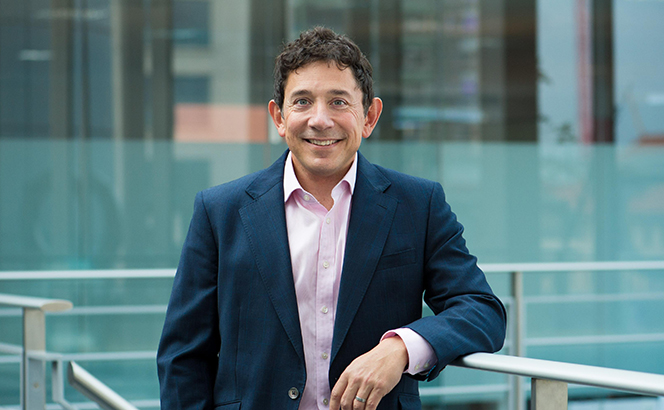
Michel Kallipetis QC was the International Academy of Mediators (IAM) representative at the drafting of the Singapore Convention. He provides a brief overview of the Convention and some analysis from a mediator’s perspective

The Grand Ballroom of the Shangri-La Hotel in Singapore was the proud setting for the momentous occasion on 7 August 2019 when the United Nations Convention on International Settlement Agreements Resulting from Mediation (Singapore Convention) was signed by no less than 46 states. It was a spectacular conclusion to three years’ work and consultation by UNCITRAL’ s Working Group II. Since then six other states have also signed. Notable signatories are the US, China, Russia and India; notable absentees at the moment are the UK, Canada, Australia and the EU. The Convention will come into force six months after three states have ratified the Convention. At the time of writing, two states have ratified the Convention: Singapore and Fiji. The Singapore Convention responds to the demand from a growing body of mediation users for an enforcement mechanism applicable to mediated settlement agreements in cross-border disputes. It is to be hoped that the UK, once untrammelled by the provisions of the European Union Treaty signed in Maastricht, will feel able to join the major economic trading nations and sign the Convention. Continue reading “Sponsored briefing: The Singapore Convention – The mediator’s perspective”

Sponsored firm profile: Independent Mediators

Independent Mediators

Independent Mediators manages the practices of nine of Europe’s leading full-time civil and commercial mediators. The mediators joined forces to form a dedicated mediation ‘chambers’ which offered a new model for independent mediation practice.Independent Mediators manage the practices of nine of Europe’s leading full-time civil and commercial mediators. The mediators joined forces to form a dedicated mediation ‘chambers’ which offered a new model for independent mediation practice.

In brief

  • The business was launched in 2007 and now comprises nine full-time commercial mediators, two of whom are well-known commercial negligence silks and seven former solicitors.
  • Independent Mediators has been involved in more than 5,500 mediations since launch.
  • Between them the mediators have undertaken more than 8,750 mediations during their careers.
  • IM mediators have worked with parties from over 85 countries, as mediators, mediation advisers to governments and companies and in delivering mediation training.

They are acknowledged as leading mediators in The Legal 500 and Chambers & Partners. In addition all have been welcomed into the Legal 500 Hall of Fame. They all feature in the international directory Who’s Who Legal: Mediation, which recognises the world’s leading commercial mediators. Three of our mediators feature in a list of those selected by Who’s Who Legal as ‘Global Elite Thought Leaders’ in mediation. Recognition of our standing in the international mediation sector was cemented when Independent Mediators were awarded Mediation Firm of the Year 2019 and Bill Marsh was awarded Mediator of the Year 2019 by Who’s Who Legal at their annual awards ceremony.

Our mediators cover a wide range of commercial disputes in almost every sector of business and law. Values range from tens of thousands to multi-billion pounds and are between parties from all walks of life and all over the world, including companies both public and private, national governments, public bodies/authorities and group actions. The mediators regularly travel all over the UK and internationally for mediations.

The mediators are self-employed and independent, and share a central service to administer all their mediations, offering clients the advantages of:

  • A single contact point for all nine mediators – no need to call each mediator separately.
  • Instant diary availability and mediation bookings.
  • Harmonised documentation and fees – with complete transparency on all fees.
  • A standard mediation agreement and timetable for submission of papers.

The structure ensures maximum convenience and speed for clients with minimum overheads. Our aim is to make the process of appointing a mediator as straightforward as possible.


Charles Dodson Phillip Howell-Richardson Kate Jackson

Michel Kallipetis QC Jonathan Lloyd-Jones Mark Lomas QC

Bill Marsh Andrew Paton Nicholas Pryor

L-R, top to bottom: Charles Dodson, Phillip Howell-Richardson, Kate Jackson, Michel Kallipetis QC, Jonathan Lloyd-Jones, Mark Lomas QC, Bill Marsh, Andrew Paton and Nicholas Pryor


Independent Mediators
International Dispute Resolution Centre,
70 Fleet Street,
London, EC4Y 1EU

Tel: +44(0)20 7127 9223
Email: [email protected]

Web: www.independentmediators.co.uk


Return to the Disputes Yearbook 2020 menu

Sponsored briefing: Surveillance capitalism

Brown Rudnick

Jane Colston discusses how the legal world is wrestling with technology regulation

As technology becomes increasingly sophisticated, making every aspect of our lives more streamlined and efficient, the legal world is wrestling with how best to regulate that technology in a way that does not stifle innovation but allows humans to understand and keep control of technology, and make sure it is applied in a way that takes into account human morals and ethics. Continue reading “Sponsored briefing: Surveillance capitalism”

Sponsored briefing: Parties’ ability to agree on procedural aspects of a lawsuit under Brazilian law

Pinheiro Neto Advogados

The team at Pinheiro Neto discuss Brazil’s civil procedure code

Brazil’s Civil Procedure Code (CPC), enacted in 1973, provided for a very few opportunities in which the litigating parties could agree on changes to procedural aspects of the case, eg the choice of forum (forum conveniens) and the conventional stay of the developments for a certain period. Continue reading “Sponsored briefing: Parties’ ability to agree on procedural aspects of a lawsuit under Brazilian law”

Sponsored briefing: IP litigation in Portugal – from the ’00s to the ’20s

VdA

António Magalhães Cardoso and Sara Nazaré discuss IP Court challenges

Going back to the 2000s, disputes arising from the enforcement of industrial property rights were to be tried before the Court of Commerce, which also handled matters relating to bankruptcy, and many other issues involving commercial companies’ legal disputes and issues. The Court of Commerce was completely overloaded with the work that the latter involved and all the cases involving industrial property rights, especially patents, in light of their complexity, were completely clogged. The situation was so critical that preliminary injunctions were being filed against the actual infringement of patent rights and the Court of Commerce was taking more than two years to serve the defendants. Continue reading “Sponsored briefing: IP litigation in Portugal – from the ’00s to the ’20s”

Sponsored briefing: From Barings to Bitcoin, the forensic accounting market – past, present and future

Grant Thornton UK

Grant Thornton UK’s Michael Barber considers the progression of the forensic accounting profession and looks ahead to what may be in store in the coming months and years

The past

Origins: Maxwell, Barings and beyond

Forensic accountancy. The term strictly refers to accountants whose work supports legal proceedings of various kinds. This is not dissimilar to the way that a forensic pathologist might provide expert evidence to the court. Only forensic accountants substitute corpses for cashbooks and scalpels for sale-and-purchase agreements (SPAs). Continue reading “Sponsored briefing: From Barings to Bitcoin, the forensic accounting market – past, present and future”

Sponsored firm profile: Gilbert + Tobin

Gilbert + Tobin

Gilbert + Tobin: Disputes + Investigations

The disputes and investigations team at Gilbert + Tobin specialises in assisting clients to navigate complex and significant contentious issues. We work closely with our clients to develop an approach best suited to achieving their objectives and the protection of their interests. We understand that litigation should always be a last resort but, where necessary, needs to be handled strategically and commercially, and with jealous regard to your reputation.

Our lawyers have been and continue to be involved in Australia’s most high-profile commercial disputes, litigation, investigations and inquiries. Clients come to us for our sophisticated and strategic litigation and dispute resolution services across a broad range of legal areas. We work closely with clients to deliver focused, timely and cost-effective solutions. Continue reading “Sponsored firm profile: Gilbert + Tobin”

Sponsored briefing: A guide to white-collar offences

Basham, Ringe y Correa

Basham, Ringe y Correa on key white-collar and fraud offences in Mexican law

Basham, Ringe y Correa SC is a full-service law firm with a strong presence in Latin America and is the Lex Mundi representative for Mexico. The firm’s clients include prominent international corporations, many of them on the Fortune 500 List, medium-sized companies, financial institutions and individuals. Basham’s preventative and strategic consulting in all law practice areas allows the firm to offer its clients effective, complete and timely solutions to their concerns. The firm’s in-depth knowledge of the international as well as the domestic market gives it the solid base and perspective needed to offer fully integrated and tailored solutions to every client. The firm’s lawyers actively participate in worldwide associations, as well as in international transactions, something that has promoted the exchange of information and experience. Basham, Ringe y Correa is aware that each client requires objective counselling, experience and professionalism. The firm’s lawyers are well-known leaders in their respective fields of specialisation and are committed to providing legal services at the highest standards of quality. Continue reading “Sponsored briefing: A guide to white-collar offences”

Sponsored firm profile: Shoosmiths

Shoosmiths

Shoosmiths’ specialist team of litigation, international arbitration and dispute resolution lawyers, based in 13 locations across England, Scotland and Northern Ireland, helps clients redress the balance – maximising value, minimising risk and enhancing reputations.

Through our unique advisory services solutions and award-winning litigation services offer, we provide early practical and pragmatic advice to minimise risk and avoid disputes arising. Continue reading “Sponsored firm profile: Shoosmiths”

Sponsored briefing: The coming of age of litigation funding

Harbour Litigation Funding on the growth of alternative funding

It has been over 20 years since a law was passed allowing litigation funding. While many are still ambivalent about this form of funding, citing recent industry scandals and anxieties about becoming a more litigious society, each year thousands of claimants secure compensation for their losses, thanks largely to this route.

Continue reading “Sponsored briefing: The coming of age of litigation funding”

Sponsored briefing: 2020 fraud –
Is the picture any clearer?

Stewarts’ Mo Bhaskaran and Pia Mithani discuss the huge growth in international fraud

Fraud thrives in systems that permit secrecy and anonymity. Technological innovation and the continued growth of international trade are allowing fraudsters to use increasingly opaque and complex techniques. The globalisation of finance has allowed such activities to grow to jaw-dropping levels.
Continue reading “Sponsored briefing: 2020 fraud –
Is the picture any clearer?”

Sponsored briefing: Reverse corporate insolvency resolution process

Manoj K Singh and Vijay K Singh discuss the concept of reverse CIRP in India’s insolvency and bankruptcy matters

In December 2016, the Insolvency and Bankruptcy Code 2016 (I&B Code 2016) was introduced with the objective of rescuing a company in distress by maximising the value of its assets and promoting entrepreneurship, availability of credit and balancing the interest of all the stakeholders, including but not limited to shareholders, creditors, debtors, etc.

Continue reading “Sponsored briefing: Reverse corporate insolvency resolution process”

Sponsored briefing: Seeing
litigation through many lenses

Brodies

Stephen Goldie discusses Brodies’ growing litigation practice and the increasing popularity of ADR

Brodies’ position as the leading independent law firm in Scotland is well established. The only Scottish firm in the UK top 50, Brodies continues to employ more lawyers, increase revenue and has achieved more directory rankings than any other firm in its jurisdiction. But, like other firms in the UK, there are any number of new challenges, changes and uncertainties shaping the climate in which we live and work.
Continue reading “Sponsored briefing: Seeing
litigation through many lenses”

DWF flags Covid-19’s ‘material impact’ on profit and increased debt as Keystone declines dividend

Hope floats

The UK’s largest listed law firm, DWF, expects the fallout from the Covid-19 pandemic to have a material impact on its profit and has entered talks with its lenders to extend its £80m credit facility and relax certain covenants.

DWF provided a trading update to the London Stock Exchange today (27 March), setting out the board’s expectation that revenue for the year to 30 April 2020 would be below previous expectations. The final quarter of each financial year is typically the most important to its financial performance, the firm said, which coincided with the coronavirus outbreak. Continue reading “DWF flags Covid-19’s ‘material impact’ on profit and increased debt as Keystone declines dividend”

The domino effect – restructuring counsel brace for deluge as Covid-19 means no more business as usual

coronavirus under the microscope

‘Even two weeks ago no-one predicted such a catastrophic impact from the coronavirus. Things have turned very quickly.’ This City restructuring partner’s words carry some irony, given that the restructuring and insolvency community has for years waited in vain for a sequel to the global financial crisis of 2008/09.

However, the trigger event in this disaster – the global spread of the coronavirus of which there are so far more than 500,000 confirmed cases around the world resulting in well over 20,000 deaths – is a crisis of the unknown. It has left restructuring lawyers reeling along with peers as everyone hunkers down through an indefinite lockdown. Continue reading “The domino effect – restructuring counsel brace for deluge as Covid-19 means no more business as usual”

Interview with: Kresna Panggabean and Benny Bernarto, TNB & Partners

Kresna Panggabean
Benny Bernarto

GC: What do you see as the main points that differentiate TNB & Partners from your competitors?

Kresna Panggabean (KP): We are one of the few international firms operating a disputes practice in Indonesia. Most international businesses know that Indonesian courts can be notoriously challenging to navigate and that the legal market for dispute resolution is dominated by local players. While we are happy to provide clients with a full service offering, we do not focus on matters in the local courts. Instead, we focus on cross-border corporate disputes where we can plug into the strength of the Norton Rose Fulbright network to add value.

Benny Bernarto (BB): Norton Rose Fulbright has been an established presence in Indonesia for nearly 30 years from its Australian connection and has, through various forms of associations and incorporations, acquired longstanding expertise in the Indonesian market. While the core strength of our practice in Indonesia has been handling corporate and banking and finance transactions, over the last three years we have been putting a lot of effort into building our dispute resolutions offering, working hard to increase the capacity of the firm to serve clients on a broader range of matters.

We (Kresna and I) are corporate lawyers by background, which helps a lot in understanding the nature of corporate disputes. In my experience, there are not many disputes lawyers in the Indonesian market who have a strong corporate background or understand complex, cross-border corporate transactions. We have knowledge of how international companies operate and can follow what our partners across Norton Rose Fulbright have seen in other jurisdictions and bring that expertise to bear on matters in Indonesia.

As a rule, clients want to work with the same firm or lawyers. If a dispute arises in connection with an M&A they want to stay with the same firm. Likewise, clients who deal with Norton Rose Fulbright offices outside Indonesia want to keep the same firm if they end up facing a dispute elsewhere. Because these clients are based outside Indonesia they are often unfamiliar with the very unique market dynamics

GC: What are some of the trends facing the dispute resolution landscape in Indonesia?

BB: Business is becoming more disputatious and client demand for dispute resolution services is increasing. This will certainly continue. As the global market becomes more sophisticated we will naturally see more disputes. Market sophistication leads to disagreement and dispute, new regulations lead to disputes, and cross-border trade is almost inevitably going to be followed by cross-border disputes.

KP: Indonesia is an incredibly disputatious market. In the last couple of years, we have received an increasing number of enquiries from clients facing disputes, so it is important for us to have a strong disputes offering. There are really two main sources of these disputes. We are seeing more disputes related to M&A or joint ventures, but we are also seeing an increase in things like anti-bribery and corruption investigations. That means disputes are evolving and a disputes lawyer can no longer focus only on the sorts of matters which end up in court. We have worked hard to help clients when things go wrong by specialising both in the fast-moving nature of cross-border investigations, which are typically being driven from the US, while also integrating our disputes offering more closely with the corporate practice.

GC: What are some of the issues international clients need to be aware of when it comes to facing a dispute with an Indonesian counterparty?

KP: My first advice would be to settle disputes before they go to court or arbitration wherever possible. Of course, this is not always possible, but it is certainly worth exploring any avenues that can lead one away from a dispute to reach a mutually agreeable solution.

Mediation and other forms of ADR are recognised here but are neither common nor effective, and it can be a challenge to get an Indonesian party to consider settling. However, we work closely with our clients to explore all options and examine the likely costs of each course of action.

BB: Most disputes are driven by business teams. The commercial view is that if you can’t get what you want you go to court and try to win. We like to remind them that in order to do that they will need to spend time and money. Clients understand that disputes are expensive, but they rarely appreciate how time consuming and expensive they can be.

There can be a tendency for business to see things like employment-related matters as “not real disputes”, but even these can become very expensive if they are not handled properly. There is a temptation to think, “it’s just an employee, let’s go to court”, but the costs and timelines can spiral unpredictably.

Similarly, we advise businesses to be proactive when it comes to investigations as the processes can be quite unpredictable. For example, we were instructed by an oil and gas contractor based in the US to conduct an investigation into suspected bribery involving several of its employees. We teamed up with our colleagues in Singapore to interview their staffs and establish a case for termination. However, we quickly discovered that the alleged practices were not confined only to those employees facing investigation but were in fact prevalent across most of the sales division. What started as a relatively contained FCPA compliance investigation became a systemic problem for the business involved.

KP: The next most important consideration is to determine whether you are going for litigation or arbitration. Our position is generally to push for arbitration, particularly when advising entities based outside Indonesia, as it is less complex and has a more certain timeframe. It is also safer – arbitral awards can be enforced in Indonesia while court judgements generally cannot be enforced.

In terms of selecting a seat we recommend that our clients based outside of Indonesia push to have their disputes settled at the Singapore International Arbitration Centre (SIAC) or Indonesia’s arbitration centre – Badan Arbitrase Nasional Indonesia (BANI). Both have a good list of arbitrators, including many who are internationally recognised, but it is often preferable for international businesses to seek a neutral jurisdiction.

Freshfields and Slaughters drafted as Government reveals details of Covid-19 business support package

The UK Treasury and Bank of England (BoE) have called in their go-to counsel Slaughter and May and Freshfields Bruckhaus Deringer as they iron out details of the multibillion-pound support scheme to underwrite British business through the coronavirus crisis.

The UK Government announced last week the Covid-19 Corporate Financing Facility to help companies with cash flow as the rapid spread of the virus has forced governments to put a third of the world’s population in shutdown. Continue reading “Freshfields and Slaughters drafted as Government reveals details of Covid-19 business support package”