Sponsored briefing: Labour law issues in Covid-19 crisis

Upon confirmation of the spread of Covid-19 in Turkey with the declaration of the first case on 11 March 2020 and simultaneously with the World Health Organization’s declaration of COVID-19 as a global pandemic, government started to take certain measures including banning people above the age of 65 from going out; closing down certain workplaces. The measures are actively changing based on the evolution of the pandemic disease, yet, no complete lock down has been announced for many sectors but companies are encouraged to take their own measures during this period. This article mainly focuses on the impact of the Covid-19 pandemic on the employment relationship by presenting possible options provided under the Turkish labour legislation.

It is globally accepted that the Covid-19 pandemic is a force majeure event. However, force majeure provisions provided under the Labour Code (Law No 4857) (published in the Official Gazette dated 10 June 2003 and numbered 25134) (Labour Code) allow parties to terminate the employment relationship under limited circumstances. Continue reading “Sponsored briefing: Labour law issues in Covid-19 crisis”


Sponsored briefing: Measures taken by the regulatory authorities in the banking sector regarding the Covid-19 outbreak

The Banking Regulation and Supervision Agency (the BRSA), the Central Bank of Republic of Turkey (the CBRT) and the Banks’ Association of Turkey (the BAT) have swiftly taken several measures after the declaration of the first confirmed Covid-19 case in Turkey on 11 March 2020 in order to mitigate the outbreak’s impact on the financial markets and soften expected disruptions in commercial activities that may be caused by Covid-19. Such measures are set forth by the relevant regulators in order to provide flexibility to financial institutions (the FIs) to ensure (i) financial stability of the FIs and (ii) meet FIs customers’ needs such as facilitating cash flow of individuals and SMEs which are likely to be the most affected by this outbreak and ultimately to mitigate the macroeconomic effects and risks arising from Covid-19 in financial markets.

Firstly, the BRSA, in its press release dated 16 March 2020, indicated that the business continuity plans prepared routinely by banks in accordance with the Guide on Management of Operational Risks with the aim of continuity of FIs’ activities and limitation of losses which arise from severe business interruptions are re-examined by the BRSA and in this regard all necessary measures are taken. This measure has been taken by the BRSA within the framework of prudent supervision approach. Continue reading “Sponsored briefing: Measures taken by the regulatory authorities in the banking sector regarding the Covid-19 outbreak”

NRF asks staff to cut working hours by a fifth and defers partner pay in re-introduction of financial crisis-era flexi scheme

Norton Rose Fulbright

Norton Rose Fulbright (NRF) is asking its staff to agree to a 20% cut of weekly working hours and delaying profit distribution to partners in response to the Covid-19 crisis.

The firm announced today (20 April) it is asking its employees to sign up to a temporary change of their contract for one year from 20 April which will make them eligible to move to 80% of their working hours and base salary. Continue reading “NRF asks staff to cut working hours by a fifth and defers partner pay in re-introduction of financial crisis-era flexi scheme”

Competition, supply chains and act of God clauses – First considerations for GCs in their Covid-19 responses

coronavirus cells under the microscope

Businesses have shown remarkable resilience through an era defined by increasingly rapid change. Innovation, diversity and agility have driven adaptability and resilience. But now such resilience is facing a far more severe test in the shape of the coronavirus pandemic sweeping through societies and economies. Yet well-led businesses identify themes and opportunities emerging even from this crisis.

General counsel have the challenge of juggling (i) strategy – working with their boards on strategy and performance; (ii) legal issues and regulatory change; and (iii) team leadership and delivery (who, what, where, how). Identifying a framework and common themes can help decision-making. Continue reading “Competition, supply chains and act of God clauses – First considerations for GCs in their Covid-19 responses”

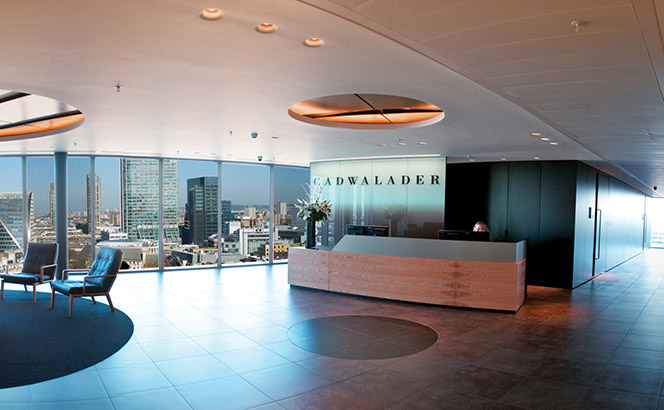
US worst hit as Cadwalader becomes latest firm to respond to Covid-19 with pay cuts

Cadwalader, Wickersham & Taft

Cadwalader, Wickersham & Taft has become the latest firm to take drastic financial measures as the Covid-19 pandemic reaches new heights suspending partner pay and cutting salaries elsewhere. 

The move comes as the number of confirmed cases of the virus in the US soared to nearly 200,000 today (1 April) and the number of deaths reached 4,000. Cadwalader will stop paying partners, reduce associate salaries by 25% and impose pay cuts of 10% to 25% on staff to mitigate the economic impact of the crisis as it hits businesses around the world.  Continue reading “US worst hit as Cadwalader becomes latest firm to respond to Covid-19 with pay cuts”

Supreme Court rules in favour of Morrisons in landmark data breach case

Morrisons supermarket

In a significant move for the future of large data breach and privacy cases, Morrisons Supermarkets has successfully defeated a group litigation claim following a decision by the Supreme Court this morning (1 April).

The case centres on whether a company can be held vicariously liable for the actions of a single employee, after thousands of members of staff found their personal information disclosed on the internet by a rogue employee in the company’s audit team. Continue reading “Supreme Court rules in favour of Morrisons in landmark data breach case”

Sponsored briefing: The COVID-19 Handbook – Force majeure and contracts

Yazici

The novel coronavirus, now officially known as COVID-19, was first seen in Wuhan, China in December 2019 and continues to spread rapidly worldwide. The World Health Organization (WHO) declared it an ‘epidemic’ first and then a ‘pandemic’ on 11 March 2020.

As COVID-19 cases continue to surge amid crashed markets and overwhelmed healthcare systems, it is also taking a toll on contractual relationships as countries continue to take drastic measures to flatten the curve of the pandemic. These measures include the ordering of curfews, travel bans and state of emergencies, all of which undoubtedly have enormous impacts on businesses and contracts. Continue reading “Sponsored briefing: The COVID-19 Handbook – Force majeure and contracts”

Sponsored briefing: How to handle contractual disputes in the COVID-19 era

Pekin & Pekin

Since the COVID-19 coronavirus was first reported in Wuhan, China in December 2019, strict and unprecedented measures have been gradually imposed by governments around the globe to limit risks of contagion. On 11 March 2020, the severity of the phenomenon was emphasised by the World Health Organization (WHO)’s declaration of COVID-19 as a global pandemic. As circumstances continue to evolve, substantial business and operational disruptions are a cause of great uncertainty that now reigns in various sectors and trade relations around the world. The implications are particularly profound when it comes to performance of contractual obligations in view of COVID-19’s far-reaching socio-economic effects. In this context of a health crisis exacerbated by the unexpected nature of the outbreak, the main issue is whether parties to affected commercial contracts may invoke force majeure as an argument to justify for failure to perform their contractual obligations.

For contracts governed by Turkish law, the first observation to be made is that the concept of force majeure and its defining conditions are not explicitly provided in the Turkish Code of Obligations (TCO) (published in the Official Gazette dated 4 February 2011 and numbered 27836) (Law No. 6098). The Court of Cassation has come to clarify at various occasions what should be understood by force majeure and under which circumstances parties are entitled to rely upon this concept. Within the framework of the case law and legal doctrine, it can be said that force majeure is deemed to arise when a contracting party’s performance is materially affected by (i) an event beyond his reasonable control, (ii) the effects of which could not have been foreseen at the date of commencement of the legal relationship and (iii) avoided despite all appropriate measures being taken. Continue reading “Sponsored briefing: How to handle contractual disputes in the COVID-19 era”

Pioneering City arbitration set secures DC launch with latest member

Int-Arb Arbitrators & Mediators (Int-Arb), the specialist set of advocates launched earlier this year, is opening a new branch in Washington DC with the recruitment of its latest member.

The veteran mediator and arbitrator Wolf von Kumberg becomes the sixth tenant at Int-Arb, the set and membership service for independent practitioners launched in January. Von Kumberg, who joins from ArbDB Chambers, will split his time between Int-Arb’s central London offices and the new branch in Washington. Continue reading “Pioneering City arbitration set secures DC launch with latest member”

‘Brutal clarity on priorities’ – A&O’s former chief looks back to the banking crisis for lessons to aid law firm leaders now

David Morley

What lessons can we learn from the 2008/09 financial crisis to help law firm leaders manage the escalating disruption of the coronavirus outbreak ravaging populations and crippling economies? Every crisis is different and this one is very different and it’s no use merely fighting the last war. Nonetheless, in terms of dramatic economic upheaval and rolling uncertainty, the impact of the banking crisis shares some common ground and there are some principles that hold good for any financial crisis.

The first principle is that if you’re the leader when a crisis strikes, you need to act like one. My experience as senior partner of Allen & Overy during 2008/09 was that a crisis will probably define you in that role, for better or worse. There is nowhere to hide, so don’t even try; this is showtime and you are centre stage. Put yourself out there so people know someone with calm assurance is in charge. Continue reading “‘Brutal clarity on priorities’ – A&O’s former chief looks back to the banking crisis for lessons to aid law firm leaders now”

Coronavirus latest: Reed Smith to limit partner drawings as firms start to bunker in for the crisis

Reed Smith has ringfenced a portion of its cash reserves against partner distributions as a means to mitigate the impact of the unfolding Covid-19 crisis. 

The new contingency measures will include every office at the firm, with global managing partner Sandy Thomas (pictured) informing the firm’s global partnership in a conference call last week. Monthly drawings will be reduced by 40% for full equity partners and 15% for fixed share partners.  Continue reading “Coronavirus latest: Reed Smith to limit partner drawings as firms start to bunker in for the crisis”

Ashurst launches consulting arm to handle Covid-19 demand with Deloitte partner hire

Paul Jenkins

Ashurst has launched a consulting business with the hire of a senior Deloitte partner in Australia to deal with growing client demand amid the coronavirus pandemic.

The firm said today (31 March) it had hired Philip Hardy, a partner at the Big Four consultancy since 2008 and head of its Australian governance, regulation and conduct advisory business. The resulting Ashurst Consulting will initially be offered in Australia and will advise clients on minimising risk, manage change and bolstering business performance. Continue reading “Ashurst launches consulting arm to handle Covid-19 demand with Deloitte partner hire”

A&O takes coronavirus threat to task with raft of belt-tightening measures

Allen & Overy

 Allen & Overy has pre-empted a likely financial hit from the coronavirus crisis with a host of measures, including altering profit distribution to partners, increasing partner capital levels and freezing some investments and recruitment. 

The firm confirmed today (31 March) what it described as prudent management measures’ as part of its ‘ongoing scenario planning’ as the Covid-19 continues to affect international businesses.   Continue reading “A&O takes coronavirus threat to task with raft of belt-tightening measures”

Guest comment: Covid-19 and City regulators – The limits of forbearance

FCA SIGN

Forbearance is something of a dirty word in UK financial regulation, at least with regulators themselves. It describes a situation where watchdogs voluntarily exercise their discretion not to enforce rules or other requirements on the regulated. And that’s why they don’t like it – no regulator has ever prospered by giving its industry a free pass. Long-term pain for the regulator will outweigh any short-term gain to the industry as a whole.

Even so, you’d be forgiven for thinking the coronavirus crisis presents an ideal breeding ground for regulatory forbearance: a world-wide pandemic with seismic economic effects, stock markets tumbling, staff working remotely, and huge potential consumer detriment lurking around every corner. Continue reading “Guest comment: Covid-19 and City regulators – The limits of forbearance”

Revolving doors: Alston & Bird adds London structured finance partner as Signature’s Bushell departs

starry sky over the City

City recruitment clearly slowed down last week but  Alston & Bird  managed to add to its relatively new City branch while Signature Litigation partner Simon Bushell leaves the firm after three years.

Atlanta-based Alston & Bird has hired structured finance partner James Fisher from Reed Smith to its finance practice in London. He has experience advising  corporate trust and agency clients on the full gamut of deals, including securitisations and CDOs. He also focuses on post-closing matters such as restructurings, defaults, remediations and exercises of discretion. Continue reading “Revolving doors: Alston & Bird adds London structured finance partner as Signature’s Bushell departs”

Sponsored briefing: Coronavirus’ effects in terms of Turkish labour law

Küçükislamoğlu

A. Introduction

The coronavirus (COVID-19) pandemic constitutes a major problem for the economy and employer-employee relations in Turkey and all over the world. At such a time, it is important to know how the pandemic affects the rights and responsibilities of the employer and the employee. At the same time, it is very difficult for employees and employers to predict how they will come through this, because of the shrinking economy. People tend to do the wrong things in times of crisis. First of all, they can make hasty and wrong decisions in order not to damage themselves. But we should not forget that the law is basically still the same. Although regulatory changes are made according to conditions, like a pandemic, people should not deviate from the basic regulations. Continue reading “Sponsored briefing: Coronavirus’ effects in terms of Turkish labour law”

Pinsents makes up non-lawyers to partner as it mulls quarterly distributions delay in wake of Covid-19

Richard Foley

Pinsent Masons has promoted staff outside of traditional legal services to partner for the first time in a slightly increased partner promotions round.

The firm said today (30 March) it was promoting 17 to partner, effective 1 May, including Hayley Boxall from its forensic accounting services team and director of client solutions David Halliwell. Pinsents has an forensic accounting team of seven, focusing on disputes, consultancy services and investigations, while Halliwell is charged with working across the firm to help clients change the way they deliver and receive legal services. Continue reading “Pinsents makes up non-lawyers to partner as it mulls quarterly distributions delay in wake of Covid-19”

Junior barristers blast the government’s ‘woefully insufficient’ self-employed support package

Gray's Inn

Junior barristers have heavily criticised the government’s self-employed support package as ‘woefully insufficient’ while imploring the Bar Council to address ‘urgent and serious concerns’ about the scheme.

The open letter, published today (30 March), says the government’s Self-Employed Income Support Scheme announced last Thursday neglects newly-qualified barristers as it does not provide financial aid to those without 2018/19 self-employed tax returns that accurately reflect their current earnings. Continue reading “Junior barristers blast the government’s ‘woefully insufficient’ self-employed support package”

A&O defies coronavirus turbulence to lure back New York litigation partner

 Allen & Overy has not let market turmoil wrought by the Covid-19 pandemic get in the way of its US recruitment ambitions, having re-hired IP litigation partner Paul Keller from Norton Rose Fulbright in New York. 

The move, announced today (30 March), comes as part of its strategy to accelerate investment into its US business after its failure to merge with O’Melveny & Myers last year. It is the third US hire announced in a week after adding Billy Jacobson and Jonathan Lopez, both veterans of the fraud section of the US Department of Justice, from Orrick Herrington & Sutcliffe in Washington DC.  Continue reading “A&O defies coronavirus turbulence to lure back New York litigation partner”

Disputes perspectives: Craig Pollack

Craig Pollack

I was supposed to study economics and realised I was not a very good economist. Then I went to study law in Israel and almost from the first lecture it all made sense. It explained the rule of law means we’re all treated equally and there’s due process if you get arrested. I come from Africa where in Zimbabwe and in South Africa there was no rule of law for black people.

I was hooked early on, but wasn’t hooked as a litigator. I thought I’d be a corporate lawyer, come to England, get involved in all this big M&A and it would be a fantastic, go-go, rock ‘n’ roll thing. Continue reading “Disputes perspectives: Craig Pollack”