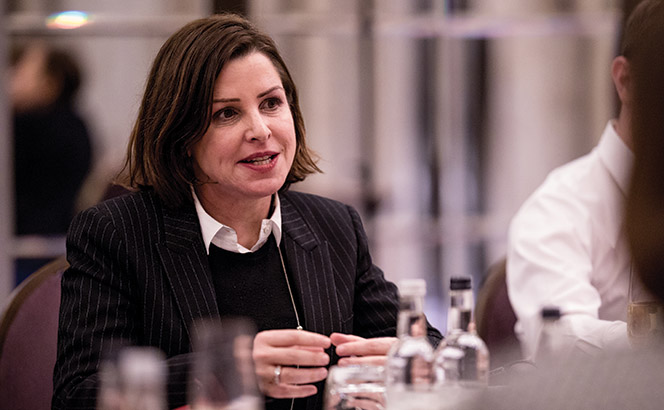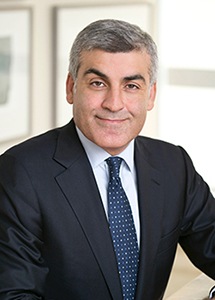

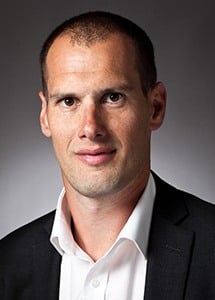
In Conversation: James Stebbing, general counsel, Six Nations Rugby and the British & Irish Lions

rugby pitch

james-stebbingGC: Start by telling us a little bit about your current role and your career to this point.

James Stebbing (JS): I’m the GC to the organisation that runs the Six Nations Championship and I’m seconded on an ongoing basis to be the GC of the British and Irish Lions.

In my previous role, I was Head of Legal at the Rugby Football Union (RFU). Because there was no dedicated GC to either the Six Nations Championship or the British and Irish Lions, I’d also been ‘dragged in’, so to speak, to help out on a few things on the side of the desk. The catalyst for my current role, really, was a potential private equity deal with regard to investment in the Six Nations Championship.

Originally, I trained and qualified at Harbottle & Lewis, very much intending to go into sport. My qualification coincided with the aftermath of the global financial crisis, so jobs generally were few and far between. But I knew two things. One, that I wanted to get into sport. Those roles were rare at the best of times, let alone in a major downturn. I also knew that I was going to end up in-house rather than private practice.

I joined Vodafone – they were a client of Harbottles’ at the time – and I found myself on a major mobile payment project, which led to a role at Barclays at a time when they were investing heavily in mobile banking.

But I very much wanted to keep my ear to the ground, hoping that an appealing sports role would come up. A commercial legal job came up at the RFU, which I applied for and was fortunate enough to be appointed to and which eventually led to promotions to Senior Legal Counsel and then Head of Legal.

GC: That sounds like an interesting journey. How common is your role? Do you have a sense of how many versions of you there are out there in other sporting organisations?

JS: Sport roles are few and far between. Harbottle & Lewis is a media and entertainment firm with a fantastic roster of sport, music and film clients, and when I was joining the firm there were over 150 applications for each training role. Fast forward to the current climate – the last time I recruited for the RFU for a junior role in my team and there were a similar number of applicants, which highlights how rare these types of roles are.

I get asked a lot about how to get into sport.  It requires a good solid foundation in where you trained and qualified, but it also requires a number of boxes to be ticked –being in the right place at the right time helps, as does cultural fit.  Sport is a very specific industry. But at the same time, it’s just another business.  A good sports lawyer is a good lawyer first and foremost. You just have to be able to apply those principles to a specific industry and a specific set of circumstances.

GC: In addition to the GC roles at the Six Nations and British and Irish Lions and, you serve as company secretary and hold directorships. What impact does this have on your job?

JS: Wearing different hats allows me to develop my skillset and hopefully add value in multiple ways.   I’m doing an MBA at the moment and these non-legal experiences help when I’m sat around the executive and board table by enabling me to contribute holistically about how the business can improve performance.

There’s always a danger of being accused of straying out of my lane, but to me, any effective leader within an organisation needs to be multi skilled, multi-faceted and able to add value in a number of different ways.

GC: I imagine working for sporting organisations, there isn’t as much of a profit motive as there might be in other kinds of entities. Does that change the priorities of the GC?

JS: There’s a broad spectrum. You’ve got global powerhouses like a Manchester United, which is listed in New York and has a hugely diversified portfolio off the pitch. But you’ve also got sports governing bodies, who have to balance their role as custodian of their respective sports from top to bottom with the need to generate as much revenue as possible to invest in the sport in order to grow it.

From my perspective, whether it’s the Six Nations Rugby Championship or the Lions tour, it’s about putting on a great sporting experience and generating as much money as possible to put back into the sport. The more money that gets generated, the more that can be reinvested in the sport to grow it and try to encourage more participants and commercial partners. As the valuation grows, the level of interest from broadcasters and sponsors grows, and you’re also talking about a better product which inspires the next generation of kids to pick up the sport.

Going back to the original question, I’ve spent time working in telecommunications and financial services, and the thing that really sets sport apart is that people have a genuine and emotional connection to the subject matter. Of course, a mobile phone is the centre of most people’s lives and acts as a conduit to be able to bank and buy things, but there’s only so much passion that can be derived from a mobile phone. Equally, how much passion do people have in opening bank accounts? Whereas with sport, there’s an innate ability to inspire, to evoke emotion, to bring people together in a really human way.

There’s the old saying: sport is either the most important of the unimportant things, or the most unimportant of the important things. It’s special in that regard. That’s what you realise when you are part of the fabric of it: it has that ability to touch peoples’ lives in a way that nothing else does and the absence of live sport during the lockdown has really underscored that.

GC: You mentioned you started off in a less senior role and moved your way up. What infrastructure was there preceding you taking over your current job?

JS: For my current job, it was a completely new position.

The Lions team is unique in sport because you take four international sports teams who spend the best part of four years trying to do everything they can to beat each other.  And these four teams are absolute arch-rivals. Not just in a pure sporting sense, but you’ve got a lot of history between England and Wales and Ireland and Scotland which goes back hundreds of years.  And then every four years, those guys get together to form one team to go to the other side of the world and take on the best of the Southern hemisphere.

That just doesn’t happen in any other sport. The closest thing you’d probably get is the Ryder Cup whereby every couple of years the best in Europe will form a team and the best in America will form a team, but that’s still premised more on an individual sport rather than a team sport. It’s incredibly special.

The Lions operates like a start-up. The tour happens, the profits get distributed amongst the shareholder unions and then everything gets dismantled. The players go back to their respective countries, and the organisation gets stripped back to its bare bones. You’ll then slowly and incrementally build up to the next tour and it continues in that cyclical fashion.

In days gone by, the Lions relied exclusively on external counsel, and on the Six Nations side, it’s been the same thing. That’s worked, and there’s a great relationship with our external counsel. But both the Six Nations Championship and British and Irish Lions Tours are now huge global sporting properties and very much merit fit for purpose executive teams – which includes a GC!

GC: Is there a typical day for you?

JS: To a certain extent, yes, I’m doing what a GC should be doing – being that trusted advisor to the CEO and the rest of the executive team, playing a similar role to the board, trying to focus on the stuff that is keeping the CEO and the board up at night, and managing legal risk accordingly.

But really, it is a crazy time. A lot of it at the moment is about scenario planning. The Six Nations Championship takes place in February and March each year. The pandemic struck mid-tournament. So in the end we had to postpone four matches that we are aiming to replay in the autumn of this year. How do we get those four international Rugby matches and shoehorn them into what will be a new Rugby season, recognising that there is a number of different rights holders who are also looking to reschedule? The sporting calendar this autumn is already looking congested with things getting postponed in the first half of the year and being pushed into the second half.

The other big thing is that Rugby has traditionally been split between the northern and southern hemisphere. The two respective calendars don’t dovetail neatly, which leads to conflict, often between clubs and countries. Because of what’s gone on, because of Coronavirus creating an artificial pause for the sport across the board, this has given us the opportunity to take a step back and understand if this dreadful thing that’s happened can act as a potential catalyst for change and a realignment of the calendar on a global level to make it work a bit better for everybody, so that fans win, the players win, the commercial partners win and everyone gets a bit more out of it.

GC: On the subject of using COVID-19 as a catalyst for positive change – with so many organisations around the world being involved in the work you do, have you found other entities’ priorities aligning more in the current environment?

JS: Let’s start with the positives. I’d like to think that this has made everyone a bit more human; a bit more cognisant of the fact that we are all quite fragile. This has been a real leveller in terms of everyone realising that there’s more to life than the grind that everyone has been caught up in. In that regard, there’s been some positivity.

I think that sports have realised that it’s quite a small ecosystem and ultimately, we all rely on one thing: sport being able to be played. If it isn’t then there’s no product to monetise and enjoy.

Rightsholders, broadcasters, sponsors – everyone needs each other. But I think that everyone has spent the last few months figuring out what has been going on and what it has meant for their respective businesses, and what the recovery looks like. It feels like we are starting to get some sort of understanding about the true nature of the impact and that spirit of compromise might be starting to erode as people get firmer in their positions and are a bit more confident of a way forward.

GC: As you see other sport leagues resuming and grappling with COVID-19 challenges, how much certainty is there that next year’s tour is going to be able to go ahead?

JS: Well, football was always going to go first. It’s much bigger than rugby.  But also, in football, there are less challenges because of what’s required to play the game of rugby – the scrum, for instance – the risks are higher. Football is still a contact sport, of course, but the level of contract isn’t as extreme as it is in rugby.

In terms of the Lions tour next year, we’ve got a number of challenges but we’re working on the basis that it’s business as usual and we will focus on what we can control.

GC: I suppose if by next year, you still can’t do the tour, then other sports leagues will be in a much worse situation than you.

JS: Yes. That scenario could play out either because there’s a disruption between now and then, or there’s a resumption of normality between now and then and there’s a second wave. Both those things are plausible.

Is it played to a full stadium or behind closed doors? Is it somewhere in between? All of those scenarios will completely affect the P&Ls because of the various factors at play, so there’s currently plenty of scenario planning going on.

GC: Before we move on from the COVID talk, how have you found the experience during this time, generally speaking?

JS: It’s been a great opportunity to collaborate, because everyone is in it together. I’m still hopeful that there continue to be positives that come out of such a dreadful situation.

In a sporting sense, it’s almost a microcosm for the wider economic piece in that if you were a sound business going into the crisis, then you’ve taken a hit, but you’ll come out the other side. If you were a business that was already under stress, then this is going to take those businesses right to the edge if not over the cliff. That’s the same in sports. The big, premium sports are going to come out of this affected but still premium in terms of fan engagement, sponsor and broadcast interest. It’s the smaller sports that may struggle because from a consumer perspective, everyone defaults to what they know. If you’re a subscription broadcaster, you’re taking a hit on paying subscribers, and if you’re a free-to-air broadcaster then ad revenues have gone down. And if you’re a sponsor, there’s more constraints on marketing budgets.  Overall that means you’re going to be that much more cautious about where you’re putting your money, and you’re more likely to invest it where you know you’ll get the most likely short term return.

GC: Do you think there will be lasting changes to rugby as a sport as a result of this pandemic?

JS: I really hope so. It goes back to my earlier point that this is a really good opportunity to address some of the challenges that the sport is facing.

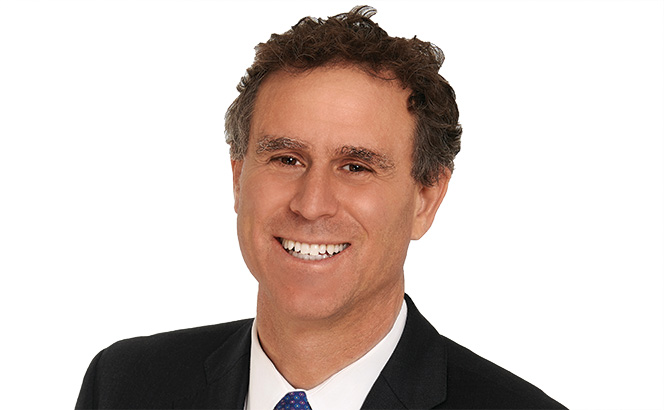
‘Doing business the right way’ sees PEP fall significantly at Pinsents as turnover growth slows

John Cleland

Profit per equity partner (PEP) endured a 12% drop at Pinsent Masons over the last financial year as the firm continues to hold back funds from partner profits to prioritise internal investment.

PEP now stands at £546,000 at the firm compared to £620,000 last year, when PEP was clipped by 5% as Pinsents held back funds in the region of £6m for the purpose of investment in the business. Continue reading “‘Doing business the right way’ sees PEP fall significantly at Pinsents as turnover growth slows”

Freshfields emerges from year of challenges and investment with 3% revenue increase and flat profit

After what has been an eventful year notwithstanding the havoc wrought by the coronavirus crisis, Freshfields Bruckhaus Deringer has closed out the Magic Circle reporting season by announcing a 3% revenue increase to £1.52bn and flat net profit at £685m.

Profit per equity partner (PEP) stood at £1.82m, slightly down on last year’s £1.839m. Continue reading “Freshfields emerges from year of challenges and investment with 3% revenue increase and flat profit”

‘Making Freshfields an American brand’ – Inside the Silicon Valley launch handing the City giant a rare opportunity

Freshfields Bruckhaus Deringer

Roughly 30 seconds into conversation with Boris Feldman it becomes apparent why the charismatic litigator is regarded as a local legend in California’s legal community. Spitting out colourful quotes with the confidence that comes from having acted for pretty much every Bay Area brand name going, the bow-tied Feldman has nonetheless chosen an odd time in his lengthy career to change firm, let alone quit a local bellwether like Wilson Sonsini for the uncertain embrace of London’s oldest elite law firm.

But then Feldman’s move alongside four other senior lawyers to set up a Silicon Valley arm for Freshfields Bruckhaus Deringer speaks to two key issues of huge strategic importance for the storied London firm. The first point is that for the first time in its 43-year history in the US, Freshfields is attracting the kind of star power widely accepted as a prerequisite of success stateside. The second point is directly related: the acquisition of said talent has dramatically changed perceptions of the London firm in the US in just eight months after years of mixed opportunities and bad PR. Continue reading “‘Making Freshfields an American brand’ – Inside the Silicon Valley launch handing the City giant a rare opportunity”

Dual role for Barclays’ company secretary as veteran GC Hoyt stands down

Barclays has announced the appointment of Stephen Shapiro as group general counsel, in addition to his current role as group company secretary. Shapiro will succeed GC Powerlist regular Bob Hoyt on 1 August, who is stepping down after nearly seven years in the role.

Shapiro will join the executive committee and report directly to group CEO Jes Staley in his capacity as GC, and to group chairman Nigel Higgins in his role as company secretary. He joined Barclays in 2017 from SABMiller, where he was group company secretary and deputy general counsel, having previously held the role of global head of legal. Continue reading “Dual role for Barclays’ company secretary as veteran GC Hoyt stands down”

Guest post: The pervasive impact of your mood

Stressed office workers

Your mood stays with you much longer than you think and has an impact that you probably aren’t even aware of.

When we are in the grip of a strong emotion (positive or negative), we hold onto it much longer than we realise. Even though the moment may have passed, we internalise it and it stays with us. What is interesting is that that strong emotion we felt can affect the decisions we make for hours after the moment has supposedly passed and we have returned to what we believe is a steady (emotional) state. Continue reading “Guest post: The pervasive impact of your mood”

CC becomes third City leader to achieve post-pandemic growth as revenues climb £110m

matthew layton

With the coronavirus pandemic still wreaking havoc across many industry sectors, London’s legal elite has continued to buck the dire wider market with the third Magic Circle firm announcing revenue growth.

Results announced today (21 July) from Clifford Chance (CC), show the London outfit confirming robust growth in the face of the most challenging trading environment since the depths of the banking crisis. The City leader said that revenues for the 2019/20 period were up 6% to £1.803bn, up £110m on the previous year, while profits per equity partner increased 5% to £1.69m. Partnership profit for the year totalled £666m, an annual increase of 5%. Continue reading “CC becomes third City leader to achieve post-pandemic growth as revenues climb £110m”

A&O shrugs off lockdown to hike revenues 4% to £1.69bn in first post-pandemic results from UK law elite

Gareth Price

There has been much speculation about the impact of the coronavirus pandemic on the profession but the first set of results from a leading law firm has confirmed the gist of months of market chatter: they’re doing fine.

Allen & Overy (A&O)’s financial results for the 2019/20 year show that the City giant managed the remarkable feat of driving revenues up 4% to £1.69bn, despite nearly two months of its crucial year-end period catching the full brunt of the Covid-19 lockdown. Continue reading “A&O shrugs off lockdown to hike revenues 4% to £1.69bn in first post-pandemic results from UK law elite”

Guest post: Having an honest conversation with ourselves is the first step

Stressed lawyer illustration

Intellectually we all understand that how we feel has an effect on us. We understand that most of the time that the feeling will pass. Not always but in most cases, the feeling is often fleeting. We are not talking here about the feelings that come from intense loss and grief or trauma, rather the multitude of emotions that come and go and that are the ebb and flow of our mood over the course of a day.

Interestingly, we think we tend towards using a limited vocabulary around how we feel and what our mood is, erring on the side of simplicity in naming and recognising our mood. We are very familiar with feeling sad or happy, angry, fear or joy. However, nuance is often missing. Just search for ‘A-Z of emotions’ online and you may be surprised by the choice of words that can reflect the complexity of the emotions we experience. All the words are familiar but we bet they are not words you use readily to describe your mood. Continue reading “Guest post: Having an honest conversation with ourselves is the first step”

Linklaters edges revenue up despite global slump as City results start flowing in

Traditionally, like the proverbial London transit, you wait ages for one set of Magic Circle results and then they start coming in like buses. Hot on the heels of Allen & Overy (A&O)’s financial results, City peer Linklaters has just unveiled its 2019/20 numbers, with a similarly resilient showing in the face of the coronavirus pandemic.

Linklaters today (16 July) confirmed that its revenues for the period to the end of April were £1.64bn, up a marginal 0.7% on the previous year. Pre-tax profit stood at £726.9m, with profit per equity partner ebbing 5.1% down at £1.612m. Continue reading “Linklaters edges revenue up despite global slump as City results start flowing in”

‘Let’s tear up the rule book’ – Boies chief sets out her stall for a radical rethink of the elite law firm model

If law firms are to survive and thrive, they must dramatically modernise the way they work and serve their clients; they must become more adaptable, flexible and collaborative if they are to prosper. While clients have accelerated and evolved in their respective sectors, the legal industry itself has failed – at best to keep pace – at worst to change in any meaningful way. Either way, law firms remain significantly and meaningfully behind the curve.

Covid-19 may be the disruptor the legal industry has long needed, sparking change and generating the long-awaited revolution. If so, how will these changes manifest? And how do we create the blueprint for the modern law firm? Continue reading “‘Let’s tear up the rule book’ – Boies chief sets out her stall for a radical rethink of the elite law firm model”

Guest post: How legal services providers should be changing their models for the digital age

Working in a lightbulb

Covid-19 continues to disrupt our personal and professional norms. In business – particularly, the legal industry – seismic shifts are occurring in how work is conceptualized and delivered. Corporate law departments and law firms that have not made digital a priority are considering all options in a new, decidedly digital world.

Remote working and social distancing have ignited a new appetite for technology that accelerates the profession’s agility. The move towards digital has rapidly evolved in all other business functions, and for the legal function it certainly enables much more than remote work. It affords an opportunity to maximize client and professional resource experience and creates new commercial value while redefining legal’s contribution to the business. Continue reading “Guest post: How legal services providers should be changing their models for the digital age”

CC breaks ground with 15% ethnic minority target for partners but can the profession follow through?

Is the next front on diversity in the profession targets for ethnic minority representation? The industry looks to be slowly moving that way with the news that Clifford Chance (CC) is committing to a host of new targets aimed at boosting diversity.

Though the package unveiled today (14 July) is focused on representation on many fronts, it will be CC’s new commitments on ethnic diversity that will attract the most attention. The firm is aiming to have 15% of its UK and US partner promotions and lateral hires from minority ethnic backgrounds by 2025, averaged over the previous five-year period. There is an additional target of 30% representation for senior associates and senior business professionals in the same region by 2025 as a whole, not just hires and promotions. Continue reading “CC breaks ground with 15% ethnic minority target for partners but can the profession follow through?”

Build Back Better: Two things associates need to know (and neither is ‘how to code’)

Millennials unicorn rider

The other day we were presenting a webinar on ‘The Lawyer of the Future’ to a firm’s summer associate class, now in the midst of their remote June and July programme, and the question came up, ‘What do associates need to know?’

Here’s where I suspect many were anticipating we would have headed straight to, ‘Technology’ or ‘IT’ or even ‘How to code.’ Continue reading “Build Back Better: Two things associates need to know (and neither is ‘how to code’)”

As Nationalist Agenda Advances, Latin American Businesses Mull Options Abroad

covid-nationalism
Michael McGuinness
Michael J. McGuinness
Mason Ferdinand
Ferdinand Mason

Recent times have been witness to the steady rise of nationalist regimes across Latin America.  With a number of unprecedented landslide victories in the past years, concern has risen among many of Latin America’s business leaders.  Latin America’s C-suites are feeling increasingly squeezed by this resurgent nationalism at home and the possibility of tightened regulations, and even indirect government expropriations, all against the backdrop of increasingly severe limitations on private businesses introduced by Latin American governments in response to the COVID-19 crisis.  The combination of these factors has intensified concerns about the strength of the corporate rule of law and the durability of the capital base in a number of Latin America’s largest economies.

Boards of Latin American companies are increasingly struggling with the changing political dynamics (often phrased as a response to the global pandemic) and their impact on the business environment.  As a general principle, these boards have a fiduciary obligation in the context of risk management to assess how best to  protect continuity of their domestic and international business.  In certain circumstances, a Board may determine that the potential risks are significant enough to the business that it consider other jurisdictions outside of Latin America with: (a) a superior venue to access capital markets, (b) a corporate legal system to attract and retain (international) equity investors, (c) bilateral investment treaty protection to address expropriation risk, (d) more attractive COVID-19 government relief programs for private industry, and/or (e) tax efficiency.

At the same time, it has never been easier or more advantageous for Latin American corporations to tap into foreign capital markets, with compatible access to favourable tax rates, and improved governance structures abroad. More Latin American companies are listing on foreign exchanges at a time when a number of the key Latin American stock exchanges are in decline. Some corporations are contemplating the relocation of headquarters from a Latin American jurisdiction to one outside of the region. This form of “corporate migration” enables companies to strengthen the continuity of their existing manufacturing or operational facilities in their domestic market while taking advantage of lower tax rates and more favourable legal and regulatory environments outside of Latin America, particularly in the United States and neutral jurisdictions in Europe, like Spain, the Netherlands, the United Kingdom and Luxembourg.

That Latin American corporations are extending their gaze beyond the continent is not unexpected.  Latin American businesses have read this script before. When a resurgent populist Argentina expropriated Repsol’s majority ownership of oil and gas producer YPF in 2012, then-President Cristina Fernández de Kirchner justified the move as a “recovery of sovereignty and control.” After years of political and legal struggle, Repsol eventually settled for $5bn in bonds – less than half of what it claimed in damages. At present, the handful of similar expropriation cases resulting from the Venezuelan crisis only further underscores for concerned parties the importance of protecting assets under such populist administrations. Continuing to create jitters – Cristina Fernández de Kirchner was recently elected as Vice President of Argentina.

Outside the region, meanwhile, opportunity knocks.  Foreign listings on US exchanges, and even dual listings, generally do not cause the compliance headaches that many corporate managers dread. There is no requirement that a holding company be incorporated and listed in the same jurisdiction. Foreign private issuers benefit from more lenient reporting requirements and governance restrictions than US and many European publicly traded companies. For example, rather than adhere to US accounting standards, such entities often need only to disclose the manner in which their own accounting methodologies differ.

The process of corporate migration is supported by a raft of trade and tax treaties and a well-developed regulatory infrastructure. With these components in place, companies’ manufacturing and production operations can remain in their home base in Latin America even as they relocate their headquarters and corporate governance functions overseas. This process is complex, requiring companies to consider questions such as whether to migrate an existing company or place a new company, incorporated in the new jurisdiction, at the top of a Latin American company’s group.

Well-developed corporate law and governance regimes abroad make business outcomes elsewhere more predictable. A broad tax treaty network, with most following the OECD model treaty, largely protects companies from double taxation issues. The European network of bilateral investment treaties (BITs) offers protection against the potential nationalisation of business and other assets and a point of leverage in negotiations with State actors. It also promises binding arbitration before an international chamber such as the United Nations Commission on International Trade Law (UNCITRAL).  All of these protections are brought further into relief by government action in Latin America as a consequence of the global pandemic.  Many of the government measures enacted are attempting to balance competing economic and public health interests, the disruption they cause proportionate to the global health risk.  However, measures that are taken for overtly protectionist reasons or that otherwise lack credible public interest justifications may constitute violations of foreign investor rights under Bilateral Investment Treaties.  General counsel and board members should bear in mind the protections that may be afforded to their companies by international treaties in the current global crisis.

Some of the most favourable jurisdictions for listings and corporate migration include the United States – with Delaware and Nevada among the most popular places to incorporate – and the United Kingdom, Netherlands, Luxembourg, and Spain.  Among the myriad factors to consider: shareholder activism, litigation risk, corporate governance regulations (such as residency requirements and board structure rules), debt-to-equity limitations, and investment protection precedents.  In this time of heightened uncertainty, the law and consulting firms and banks that advise Latin American corporations would be well-served to examine the detailed contours of each regulatory environment and to assess how best to serve a Board when it considers its fiduciary obligations to manage risks in the interest of their business and its stakeholders.

The Latin American business community remains concerned about the rise of new administrations with a predisposition towards nationalised, state-run businesses and the compounding effect of government measures taken in the context of the global pandemic. Given the ease and promise of accessing capital through foreign exchange listings, and the legal protections inherent in corporate migration, we can expect to see more of Latin America’s business leaders exploring their options for doing business beyond the continent’s grasp.


The authors are partners in the mergers & acquisition practice at the global law firm Jones Day. Mr. McGuinness is based in New York and Mr. Mason is based in London and Amsterdam.

The authors are grateful for the research and analysis for, and contributions made to, this article by associate Scott A. Nelson and former summer associate Rachel Miller.

The views and opinions set forth herein are the personal views or opinions of the authors; they do not necessarily reflect views or opinions of the law firm with which they are associated.

Comment: Are stressed junior lawyers being struck off too easily? It’s time for watchdogs to consider a more flexible approach

line-up

In my line of work you’re supposed to pretend ideas come out of nowhere but this column was triggered by a well-argued piece by my former parish noting the contrast between senior lawyers let off with fines for regulatory breaches while juniors are routinely struck off. The question in a nutshell is why juniors are banned while senior hands like Gary Senior at Baker McKenzie and Ryan Beckwith at Freshfields Bruckhaus Deringer were been fined for failings linked to sexual advances to staff. Senior was in June handed a £55,000 fine, reopening the debate but the Junior Lawyers Division of the Law Society had the previous month already publicly proclaimed its loss of confidence in the Solicitors Regulation Authority (SRA) following its prosecution of rookie lawyers with apparent mental health issues.

This debate has been much rehearsed in the last two years given cases such as Capsticks’ recently-qualified solicitor Claire Matthews, who was struck off after lying to conceal the accidental loss of client documents. Other notable cases have seen junior solicitors Emily Scott and Sovani James banned despite arguing for mitigation of toxic work cultures and high pressure. Continue reading “Comment: Are stressed junior lawyers being struck off too easily? It’s time for watchdogs to consider a more flexible approach”

Guest comment: An argument for outside investment in law firms for the post-Covid era

More than a decade after the 2008 global financial crisis, the world finds itself gripped by a pandemic and the resulting economic turmoil. As we saw in 2008, law firms won’t escape the impact of the recession, particularly as clients trim budgets and reduce demand for legal services. But unlike companies with diverse sources of capital, law firms, still predominantly structured as partnerships, will more acutely feel the cash crunch as they grapple with this outdated ownership model.

Already firms have begun to reduce salaries, hold back partner distributions and furlough employees to combat declines in revenue. In the short term, partners are expected to earn materially less income while firm growth and associate development are paused; in the long term, firms may need to draw down on lines of credit, lay off employees or, in extreme cases, dissolve. Continue reading “Guest comment: An argument for outside investment in law firms for the post-Covid era”

Signs of intent – Freshfields shrugs off US caution to secure high-stakes West Coast launch

Observers of Freshfields Bruckhaus Deringer have grown used to the City giant undercutting bold claims for its US strategy with half-hearted execution but the London leader has belied that image to announce an audacious launch in the key West Coast legal market.

The announcement today (1 July), sees the Magic Circle firm recruit five senior lawyers from major US firms to launch a practice in Silicon Valley, under the leadership of Davis Polk & Wardwell securities partner Sarah Solum. Continue reading “Signs of intent – Freshfields shrugs off US caution to secure high-stakes West Coast launch”

Leadership in a crisis (or how to build the ship while sailing it)

Mark Rigotti

The Covid-19 crisis is creating a lot of learning and insight across the legal sector and the wider communities in which we work and live. Much of this revolves around actions that organisations and their leaders are taking to navigate the crisis – including what leaders should do to manage uncertainty.

A key feature of law firms is that many people are leaders – not just those in formal senior leadership roles. A high degree of distributed management serves a range of teams. That is a real strength of our industry. Empowering those leaders to act in a way that helps their teams and drives the wider business forward is key. Continue reading “Leadership in a crisis (or how to build the ship while sailing it)”

GC Insider: Aviation and Aerospace Supply Chains – At the Tipping Point

The industries most directly and immediately affected by COVID- 19 are aviation and aerospace, as borders were shut and lockdowns across the world ensued. Lufthansa announced that it is burning through €1 Million an hour and flying just 1 per cent of its usual passenger numbers. It has also furloughed 90,000 of its 135,000 employees. This is but one of the world’s estimated 800 commercial airlines globally; the trade body Iata predicted a 48 per cent fall in traffic this year and if it proves correct, at least seven years of airline passenger traffic growth would be wiped out in 2020, according to consultancy Cirium. Airlines are looking to cancel or postpone aircraft orders on a massive scale.

What is the effect of this on manufacturers such as Boeing, Airbus, Bae, Lockheed – to name but a few – whether we are speaking of commercial or defence products? The answer is that these companies are struggling with the uncertainty of future demand. In fact, Airbus chief executive Guillaume Faury has told the 133,000 employees of the company that Airbus has lost a third of its business in a matter of weeks. He stated: “We’re bleeding cash at an unprecedented speed, which may threaten the very existence of our company.” Meanwhile, Boeing has announced “that it plans to cut its workforce by 10 per cent, as the coronavirus pandemic slashed global demand for jets and forced the manufacturer to lower production rates for nearly its entire portfolio of commercial planes.”

The Effect on Supply Chains

If that is the situation for the aerospace manufacturers themselves, what can be said of the supply chains? As we know, supply chains are key to the ability of aerospace and defense organisations to function efficiently and effectively. These chains are incredibly complex, being made up of several tiers of different types of suppliers. Included are scores of original equipment manufacturers (OEMs), prime contractors and integrators, repair and overhaul providers (R&O), small parts suppliers, maintenance support through to the customers whether commercial or military. To make this even more complex, over the past few decades both the supplier and customer base have become global in nature. Supply chains have adopted digital technologies, are vertically integrated and operate on a just in time basis. This makes management of supply chains difficult in the best of times, but what happens when the global system of trade fractures as it has now due to COVID-19?

COVID-19 hit suddenly, without much warning. Companies, as well as Governments, were ill-prepared for its overwhelming impact on infrastructures and almost overnight, supply lines were impacted as Asia, Europe and then the Americas begun to feel the effects of the pandemic. Countries reacted by closing borders and within, people went into lockdown. Nothing functioned as it ordinarily should. Given the extent to which aviation and aerospace companies had integrated global supply chains the results are devastating. Moreover, since it is very common for companies in the aviation and aerospace supply chain to also supply the defense industry, the damage happening today in the aviation sector is highly likely to spill over into the defence industrial base through defence supply chains.

Over the past decade, there has been an emphasis on risk-sharing partnerships in supply chain contracting. The mantra was collaborative agreements based on risk and revenue sharing arrangements. This covered development, production, manufacturing and after-market activities. But this means that the pain of what is now happening due to COVID -19 has also been spread amongst a larger group of companies. Suppliers in developing countries are particularly feeling the pain and their employees have been severely affected. What is interesting is that supply chain management over the past few decades has been focused on cost reduction and outsourcing. As security of supply is becoming the focus due to COVID-19 supply shortages, is that all about to change? Will security of supply now trump cost, as the focus in supply chain management

The added challenge for the aviation and aerospace industries is that their supply chains are often specialized and require companies to be pre-qualified. This qualification process takes a period of time to achieve and can be costly. Often, customer requirements and specifications inhibit the use of certain suppliers, further narrowing the supply chain. National security requirements might also limit choice of suppliers and where offset requirements dictate the use of particular suppliers, the manufacturer is further inhibited. It is therefore not a matter of simply moving on to someone else.

So what is it that companies should now be doing to deal with their supply chain pain, recognizing that when they emerge from this, they will want their supply chain, not only to survive, but to be capable of returning to normal capacity rapidly if demand requires it.

Building Resilient Supply Chains

The first and immediate impact will be reviewing legal positions to have a view of what obligations exist. Here, legal principles such as force majeure, frustration, material change and impossibility all play a role. The governing law of the contract will be critical in formulating this analysis. To assist, Bird and Bird, an international law firm specializing in aviation and aerospace matters, has developed a handy 10 step guide reviewing key contract clauses under English, French, German, Italian and Polish law:

https://sites-twobirds.vuture.net/110/8101/uploads/coronavirus-defencesecurity-diagram-1-10steps-v02.pdf

Going forward, what can this crisis teach us about building more resilient supply chains?

A supply chain’s ability to respond to and recover from disasters such as COVID-19 is determined not only by the type of event, but also by the nature of the supply chain system put in place. Traditionally, managing risk was an exercise of identifying risks that may affect a company and its supply chain and then managing those risks in a piecemeal manner. The focus was on short-term recovery. The nature of the system did not need to be taken into account, as it was largely operating in the same manner over a long period of time, and the parts were not interdependent.

Today, given increasingly complex and interconnected supply chains, the traditional approach is no longer effective. The focus now has moved from managing a risk to managing a system. This means risk can no longer be fully understood in terms of a specific event such as an earthquake, fire or even a pandemic, but in terms of an overarching system – also called “systemic risk”. This means moving risk management from an event approach to a resilience approach. The first looks from the outside in (how the risk will impact on the system – event-centric), whereas the latter looks from the inside out (how the system will respond to the risk – system-centric). Going forward from this crisis, we need to concentrate on a system-centric supply management approach. Supply chains have to become more resilient.

Resilience looks at how a system deals with change; it is system-centric rather than event- centric. A whole-of-system approach can be understood in terms of the types of risk that might enter the system (an input view of risk) versus the types of disruptions that might occur (an outcome view of risk).

An input view of risk does not categorise risk in terms of high or low probability or magnitude, the way an outcome view of risk would. It tries to understand possible events in terms of knowledge about the risks. An updated means of categorizing risk has been described as: “completely novel (such as space weather (meteor showers, solar flares), modern (such as climate change or cybercrime), infrequent (such as pandemics), spasmodic (such as earthquakes and volcanoes) and traditional (such as business and infrastructural risks).” The knowledge about a category of risk contributes to helping businesses respond to it when it happens. It is relatively easy to build resilience into a system in order to prepare for spasmodic and traditional disruptive events which are better known, but less so for the other categories. Building resilience into a system that has little or no knowledge about novel, modern or infrequent disruptive events is difficult. The only way to build in such resilience is to work at understanding more about these types of disruptive events and build in a certain degree of redundancy based on the unique characteristics of such events. This is precisely what supply chain management now has to do respecting COVID-19 risks, which are increasingly known.

A whole-of-system approach to managing risk looks at large numbers of commonalities between the different categories of risk. For example, you can compare earthquakes to a pandemic, flood or another event. The initial responses will share certain commonalities: the need for short-term housing/hospitals; the need for hot food, water and medicine; the need for infrastructure to work, such as water systems, power and technology; the need to communicate clearly in a timely manner; the need to make alternative arrangements for transport. Resilience can relatively easily be built into a supply chain system to manage these short-term local disasters. However, as supply chains become more interconnected and complex, dependencies can lie unseen and untested, only to become apparent when a key link in the supply chain becomes broken and alternatives have not been identified. This is when supply chain resilience becomes critical.

Going forward from this crisis, we need to concentrate on a system-centric supply management approach.

COVID-19 is at the moment demonstrating this fact. It is a global pandemic – with all that this implies for workforces, manufacturing capability, supply of raw materials and parts, disruption of transport systems and closed borders. It is, however, rapidly becoming a financial crisis as well, as employees are furloughed, demand drops dramatically, revenue dissipates, banks refuse or are unable to lend and Governments begin to incur massive debts. This puts immense strain on supply chain maintenance and their ability to recover once the crisis is over.

A possible way to identify key dependencies is to follow critical flows in the system and work out how they might be disrupted and how those disruptions might best be reduced. This concept allows for identification of multiple risks and shocks. Here, the opportunity is to follow the flow of goods and services to assess the supply chain risks to the entire system. Resilience can be added in to deal with several independent or connected events such as a pandemic and a hurricane occurring simultaneously and adding in global risks such as a financial crisis.

A resilient supply chain is fundamental to delivering core products and services over long periods in times of stress. A resilient system is much more than natural disaster management or epidemic management. It requires an understanding of where the overall system is weakened by events and how it might be strengthened to cope with them.

PRACTICAL STEPS

So how in the light of COVID-19 and what we are now learning, can we make supply chains in particular for the aviation and aerospace industries, more resilient?

The World Economic Forum is a 6th April 2020 publication (www.weforum.org/agenda/2020/04/supply-chains-resilient-covid-19) looking at supply chain disruption due to COVID-19 makes several excellent recommendations for making supply chains more resilient. I have added in several additional tips from my own experience.

1. Move away from paper to digitization.

The need for a physical presence to deal with physical assets has proven to be a major issue when personnel are required to come to an office. With lockdown, many businesses have been shut throwing the supply chain into disarray. Digitizing limits the points of failure in a supply chain and allows operations to continue even when there is a lockdown.

Recording contracts on digital ledgers in blockchain helps to achieve this. Participants can verify and audit transactions securely. It replaces the need for trust, as documents are stored on a secure ledger. Records on the digital ledger cannot be altered retroactively.

2. Dealing with data privacy

Suppliers are reluctant to provide information to customers, because they fear losing commercial advantage if confidential data about operations, pricing and sourcing is shared. In a crisis situation, this is however disruptive as it does not permit flexibility and continuity of supply.

Blockchain with private or public permissions allows suppliers to audit data-sharing permissions directly on their blockchain node. This also permits data to be securely distributed to others, as needed in the blockchain network.

3. Blockchain can also provide financial flexibility and security

Blockchain can also be used to help with financing needs and institute supply chain finance programmes. Suppliers are paid sooner and can replace more costly supply chain finance arrangements, because payment occurs automatically, when required performance parameters are triggered in the system.

Payment commitments on the blockchain can replace Letters of Credit, pay suppliers automatically and insulate from supplier bankruptcy.

4. Blockchain can also be combined with collaborative dispute mechanisms

COVID-19 has shown how quickly legal obligations are impacted and the need to be flexible and restructure them through collaboration, rather than confrontation.

Allowing for structured negotiations with a neutral, or mediated settlements, rather than immediately looking to litigation to resolve disruption to legal obligations becomes a necessary tool for survival of supply chains. Most contracts don’t have to be terminated, but simply renegotiated.

5. Build greater redundancy into your supply chain

Review the weaknesses this crisis has demonstrated in your supply chain community and the reasons for it.

Take from lessons learned and build greater flexibility into your supply chain to permit for redundancies be this geographical, financial, supplier specific, alternate or substitute products.


6. Build supply chain considerations into the design phase

Supply chain management was not typically part of the design consideration for products, unless a very specialized and unique part was needed.

Sourcing was left up to the purchasing function after the design was completed. This will likely now change with sources of supply and supplier security being key to successful delivery. Closer integration in this respect will become critical.

7. Better awareness of downstream supplier activity

Supply chain management downstream has largely been outsourced by primes, who have not wanted to be burdened with this task and put that obligation on tier 1 and tier 2 suppliers.

Given the criticality of the supply chain system needing to function throughout to ensure supply security, this will be a function that requires greater oversight at the prime and tier 1 supply level.

8. Supply chain management oversight

Increasingly companies have left much of their supply chain management with the purchasing function to oversee, with little oversight from operational management.

Given that supply chain security has become critical to the overall functioning of the enterprise, operational management will need to become more integrated in the process and take on more of an oversight role. Operational management will also need to ensure that allocation of risk within the supply chain contracts is “flowed up” in the upstream contracts, or if not “flowed up” is at least is a known priced risk for the prime.

9. Discuss supply chain resilience with customers

Customers are key to the supply chain, so an in-depth discussion respecting sourcing of products and flexibility of supply is crucial.

Discussing topics such as security, cots , cost and need for specific specifications might permit a greater flexibility and range of suppliers to be used in the future.

10. Begin making changes now to ensure survival of supply chains long term

Implement changes now when there is a crisis, in particular looking at supply chain finance programmes to support suppliers in financial need. This might even take the form of acquiring an equity stake in the supplier or ensuring critical IP.

Thinking outside of the traditional box and being flexible in approach, will be critical for those companies that emerge with their supply chain relatively intact.

The World and international trade will be deeply impacted by COVID-19 and will by necessity be forced to change. Supply chains will be forced to become more resilient, in order to provide businesses with security of supply. That factor, more than cost, will now drive supply chain design, management and integration. No more so than in the Defence, Aviation and Aerospace Industries.


Wolf Von Kumberg
BA, LL.B, LL.M, FCIArb

Independent Arbitrator & Mediator
(London & Washington DC)

Email: [email protected]
Mobile (UK) +44 7876027093
Mobile (US) +1 202 322 5506

Global Resolvers (Washington DC)
Tel: +1 202 836 8788
Web: www.globalresolutionservices.com
Address: Universal North, 1875 Connecticut Ave. NW,
10th Floor, Washington DC, 20009

Int Arb Arbitrators & Mediators (London)
Tel: +44 (0)203 928 7272
Web: www.int-arb.com
Address: International Arbitration Centre, 190 Fleet Street,
London, EC4A 2AG