
Overview: Paraguay

The COVID-19 pandemic hit Paraguay’s economy very hard and just when the country was recovering after a period of stagnation (-3% year-to-date in the first half of 2019). 2019 wasn’t a good year for employment either, the combined unemployment and underemployment rate reaching 14.5% in the first half of the year and retracting to 12.9% in the second half. This favorable path continued during the first two months of 2020 but with the beginning of COVID in March, began to slow down. Social distancing measures have most severely affected the service sector although informal labor was also badly affected.

The Government and the Paraguayan Central Bank (BCP) adopted a series of exceptional measures to address the economic and financial needs of both individuals and companies. In this regard it’s worth mentioning the BPC’s decision to reduce the policy interest rate by 175 basis points to 2.25% and the temporarily relaxed provisioning rules not to penalize credit restructurings and prolongations as well as the Government’s anti-crisis fiscal package approved by Parliament.

Another measure to alleviate the crisis has been low interest loans granted by the National Development Bank (BNF) to finance MSME’s payroll during the outbreak; in line with this it is worth mentioning that in June credits granted to the private sector grew by 4.1% YtD and loans granted to MSMEs reached USD$217m in July, while in May they totalled USD£130m.

Nevertheless, in 2021-22 growth is expected to return to 4% due inter alia to consistent macroeconomic policies, anchored in inflation targeting and a gradual return towards the FRL ceilings. Another key role in economic recovery will and is being played by public investments particularly in public works.

Legal Updates

The pandemic has represented an opportunity to introduce major and necessary changes that have helped modernize the local legal framework.   

Corporate Law

The Executive Branch enacted Decree 3605/2020 allowing PLCs to hold their board and shareholders meetings through telematic means provided that a series of requirements are met such as, inter-alia:

a) Real time presence and participation of authorized participants is ensured;

b) Meetings are recorded and kept within corporate files for 5 years and;

c) Mechanisms for the accreditation of rights to participate are established.

This provision represents a breakthrough in Paraguayan corporate practice and a clear advantage for foreign investors and shareholders as they can now take part in company decisions avoiding delays and fines especially during the pandemic. This exceptional measure will remain in force until 31 December 2020 and we are confident it will become a definitive practice.

Another important provision enacted is the suspension until 15 September 2020 of the application of fines and sanctions for non-compliance with the mandatory requirement of converting bearer shares into nominative shares.

Labor Law

This may be the field that saw the biggest changes. These sought to help businesses and employees cope with the crisis and reduce the negative impact on employment. Some of the most important decisions adopted by the Government are:

a) Contributions to the Social Security Institute (SSI) may be refinanced without interest for up to 18 months.

b) During the pandemic and whenever the nature of their work allowed, employers are encouraged to implement home and teleworking so as to avoid the spread of the virus; this measure is provisional and will last until the 31 December, nevertheless a draft bill has been presented to Congress in order to make it definitive.

c) A new regulation aimed at simplifying the application process for requesting employees’ job suspension was enacted. The procedure will remain in force during the pandemic and will benefit MSMEs only.

Anti-Trust and Regulatory Law

As a consequence of the COVID-19 crisis a lot of effort was made by the Government as well as the media and citizens in general aimed at controlling the public expenditure and public bidding processes. As a result of this, the National Competition Commission (CONACOM) undertook a series of formal investigations under Paraguayan Competition Law.

a) One was aimed at determining if prohibited agreements practices had been performed; the investigation was focused on public bidding processes for the purchase of medicines and medical related goods.

b) In another, CONACOM’s Investigation Department initiated preliminary investigation proceedings in order to identify possible violations of the Competition Law in connection with the latest operation involving a concentration proceeding between the biggest meat processing company and one of its competitors.

This is the first time CONACOM has used its investigative powers and its power to initiate ex officio proceedings; we believe this will improve the level of transparency of our public system and, at the same time, will force local businesses to strengthen their compliance policies, in particular those businesses in a dominant position.

Tax Law

Along with labor, tax law was the other field to see the greatest number of significant changes. During the crisis the Government enacted a series of important tax relief measures such as, inter alia:

a) Tax Deferrals;

b) Exception of penalties for late filing;

c) Exception of import duties and VAT reductions on all goods qualified as of first need;

d) Deadline extensions for filing and payment of the Withholding Tax on Dividends, Corporate Income Tax, Income Tax on Individuals, Income Tax on Agricultural Activities and Income Tax on Commercial, Industrial and Service Activities.

Procedural Law

The Executive branch enacted the Law by which the Judiciary’s summer recess is suspended thus all judicial activities and deadlines remain.   

Bankruptcy Law

A draft bill to modifying the bankruptcy law is being studied by the Legislative branch. The current law dates back to 1969 thus its modernization is seen as being key to improving the country’s business climate; the new law will allow companies at risk of insolvency to swiftly put their accounts in order and hence re-emerge more stably while also benefiting creditors. This law will be particularly important in the aftermath of the pandemic crisis.

Data Protection Law

Currently Paraguay does not have a general Data Protection Law, however, as a result of the increase in social and commercial activity on the internet due to social distancing measures it became apparent that the country could no longer remain without such an important provision; as a consequence a bill is currently being studied in Congress and is expected to be enacted by the end of 2020 or the beginning of 2021.

Conclusion

We cannot ignore the negative effects produced by COVID-19. However, we believe that Paraguay will re-emerge stronger wherever we can capitalize on the opportunities arising from the crisis aimed at accelerating the modernization process and increasing transparency of institutions.

So far, our country has taken adequate measures and has better coped with the crisis than some of the other countries in the region. In truth, the pandemic’s impact has been less harsh than in those countries whether in respect to fatalities and infections or in economic terms.

As for opportunities for the years ahead these will certainly come from the public sector particularly public works (civil and road) and from telecommunications as both sectors have shown a very dynamic performance over this period. 


See more from Vouga Abogados at: www.vouga.com.py

Hector Garcia, lead of legal and compliance express centre LATAM and Canada, Bayer

The Bayer legal and compliance express centre for LATAM and Canada is changing the way it provides compliance and data privacy services, as well as how it handles compliance investigations.

I started this new role at Bayer in March, just as the COVID-19 pandemic broke. As a result, I had to build a whole team remotely. The entire hiring process occurred virtually as I was not able to travel to regions such as Brazil and Costa Rica.

For me it was a very challenging experience. Building a new team, training new employees and taking them through the on-boarding process remotely is not typically the best way to start a new team. Yet, that was the situation and we all had to cope with. At the same time, we were developing a new digital platform, and I had to interact with developers and people in charge of that project virtually as well.

Additionally, time zones were a challenge as I had to schedule calls with Germany, Brazil, and Costa Rica. Managing my time and my agenda was very difficult, even though I had been working from home. I am based in Colombia and because of the pandemic I do not have the opportunity to travel. Therefore, hiring had to be been done in three different ways. For the first round we planned to hire 12 people, most of them located in Costa Rica and Brazil. I preformed 50 interviews virtually in the first wave. For some key positions I would have preferred to travel to Costa Rica or Brazil, but it was simply impossible. Overall, it was a very demanding process, but I am very happy with the outcome and with the people we were able to hire.

As a leader I like to empower and trust my team. This is not the first time I have had to manage people in other countries, so for me empowerment is key when leading a team.  In this case I have had to trust more as it is impossible for me to have a meeting in person with members of my team. I delegate more, and empower people to adjust and adapt to our new reality. We set up weekly goals, and we have follow-ups to see how tasks and activities are tracking. Although we do not have face to face meetings, we have been able to manage things effectively.

Travelling to other jurisdictions is one of the things that is going to be reviewed after the pandemic, because we have been able to prove that we do not have to travel to other countries to make things happen. I believe that every company is going to cut on their travel expenses. For example, I have not had to travel to Costa Rica or Brazil. I am managing teams in both countries and everything has been going well. Yet, if we have a serious or sensitive case to investigate we may need to travel thereto perform the investigation in person. Overall, companies realise that it is not necessary to be present in the country to make things happen.

External firms may need to reevaluate the way they deliver services as a result of the pandemic. Even before the pandemic, law firms in Latin America did not understand the necessities of clients and companies. They approach things in an ‘old school’ way. For example, if there is a new law  I need to know whether I am able to do something or not. External firms will prepare a 100 page legal opinion, citing all the articles of law, including any decisions from the Supreme Court that may pertain to that matter. This is very old school – maybe as legal counsel or as a lawyer that is something that I need to know and review – but the business does not need that volume of information. They just need to know if they can do something or not, and if they can, what would be the best way to do this, outlining the risks and consequences of the issue.

I am fed up with long legal opinions that do not say if our request is possible or not until the very end of the document. However, I think after this pandemic external firms will need to reinvent the way they provide services, and the way they interact with clients and think they will need to be faster in delivering services when providing advice to their clients. The world has changed, and the way firms interact with and provide services to clients will also need to evolve.

Another important aspect of changing times is managing the mental health of employees. At Bayer we have virtual actives for employees to relax and forget about the current situation. For example, we have yoga classes every week, we offer webinars with specialists in psychology, COVID-19 and a range of other topics. That is a very good way to offer employees alternatives to help them relax, and to think about something beyond work.

I have noticed that on team calls people ask how their peers are doing in their personal life, or about their family. This is useful to check in and talk about something that is not related to work, it is good to just check in, and see how people are and if they need anything from the company. One of the main things we need to be aware of is the ‘speak up’ mindset. Now everyone is at home, it is not possible to know what they are doing or be present at all times and we may miss some potential compliance infringements. We need to be closer to people because of this situation so they can raise any concerns. That is something important to keep in mind, especially in the legal and compliance teams. In the past, it was easier to interact directly with people, and preform training face to face, but now as you know that is not possible.

As a result, digital alternatives to interact with people are becoming more important. At Bayer, we are developing a digital platform to start a teaching the people to move from emails or phone calls to a more digitized solution. I think that is going to be the future. We are setting up teams and solutions in shared service centres around the world, for example in Costa Rica and Brazil. Overall, I think we are going to have to change our mindset on how we provide our services. We need to be more agile and we need to be more straight to the point.

Legal Business Awards 2020 – Private Client Team of the Year

We are delighted to announce the winner of Private Client Team of the Year for the 2020 Legal Business Awards.

This award recognises the top private client teams in the country, either offshore or onshore, handling high-value work in the areas of estates, charities, family, contentious and non-contentious trusts and probate, as well as personal tax, particularly to high-net-worth individuals and families. Continue reading “Legal Business Awards 2020 – Private Client Team of the Year”

Comment: Litigators prepare as market enters phoney war but battle lines are yet to be drawn 

broken scales

The received wisdom is that a downward trajectory in the economy results in an upward trajectory in contentious work as the environment becomes more acrimonious, and by extension more litigious. Of course, this is a simplistic take, but it does describe something that is approximately true.

But no downturn completely resembles the one before it. Though an overused description generally, even a cursory glance at the state of the economy shows the chaos wrought by the Covid-19 lockdown is truly unprecedented – the 20.4% contraction in in the economy during the second quarter of 2020 was the largest since records began.  Continue reading “Comment: Litigators prepare as market enters phoney war but battle lines are yet to be drawn “

Legal Business Awards 2020 – Real Estate Team of the Year

After much back-and-forth between the judges in a keenly contested category, we are now delighted to reveal the winner of Real Estate Team of the Year for the 2020 Legal Business Awards.

For this award, judges looked for a standout example of real estate-related work, including financing, development or construction, or cases and transactions in planning, environment and regeneration. Continue reading “Legal Business Awards 2020 – Real Estate Team of the Year”

Revolving doors: all change in Middle East, UK, Europe as September begins with fresh wave of hires

It has been a busy start to September already with a spate of international and UK-wide hires.

Washington DC-based Crowell & Moring was a major beneficiary in the Middle East, picking up a team from Squire Patton Boggs (SPB) after the latter announced plans to shut down its operation in Qatar. Continue reading “Revolving doors: all change in Middle East, UK, Europe as September begins with fresh wave of hires”

‘Match fit’ DWF rebounds after torrid finish to 2019/20

Hope floats

DWF has started 2020/21 strongly after a series of efficiency measures were put in place following a tumultuous end to the last financial year that saw debts rise and underlying profits plunge, the firm’s delayed financial results show.

For 2019/20, revenue at DWF rose 11% to £297.2m, up from £268.2m last year. Despite the double-digit hike, the performance is still below the firm’s revised expectations announced in March, when DWF suggested total revenue growth would land between 15% and 20% as the Covid-19 lockdown impacted the firm’s year-end. Underlying organic revenue growth was also below the revised expectations, with the figure growing 2% due to the difficulties encountered in Q4. The firm suggested in March the figure would undergo a ‘high single-digit’ increase.  Continue reading “‘Match fit’ DWF rebounds after torrid finish to 2019/20”

Interview with… Paul Lister

Paul Lister

Paul Lister

Director of legal services and company secretary

Associated British Foods

How difficult was it to adjust to a corporate responsibility role, even if it looks like compliance?

Very. The legal team’s values are rigour and integrity, and we decided early on they should be the values of the ethics and CR teams. It is very different but it does mean that when you do it, you’re doing it properly and when you say something, you really mean it. If you’re saying you’re not sourcing cotton from Uzbekistan, you need to make sure you’re not. Continue reading “Interview with… Paul Lister”

Interview with… Sonya Branch

Sonya Branch

Sonya Branch

General counsel

Bank of England

How has the financial services industry responded to the changes brought about by Brexit?

We were very active, very early on, in trying to come to a manageable plan of action – in building a transitional regime and a temporary permissions regime, and the approach we took to Nationalising the Acquis to allow for the financial services sector to make the requisite changes in time. Largely, the impact has been managed as far as possible. That’s not to say firms don’t face considerable ongoing efforts to be ready for the end of the implementation period, but we’re fortunate in that for the UK financial services sector there’s been a clear plan of action and firms have been engaged with regulators throughout. Continue reading “Interview with… Sonya Branch”

Legal Business Awards 2020 – Insurance Team of the Year

The entries have been assessed, the shortlists have been drawn up and our panel of general counsel judges have had their say: we are now delighted to reveal the winner of Insurance Team of the Year for the 2020 Legal Business Awards.

This award recognises the team that has handled innovative work and has attracted the most impressive instructions of 2019 in this constantly changing sector. Judges were looking for one example of standout work – either a transaction, a dispute or even regulatory advice. Continue reading “Legal Business Awards 2020 – Insurance Team of the Year”

The totally scientific secrets of leadership – What I learnt from years of drinking with managing partners

man with a barcode mask

The upheavals of 2020 have given me more time than normal to reflect on something that I’ve spent a good deal of my career engaging with: leadership in major law firms. But while leadership in law is widely accepted as crucial to the success of major institutions, it is a subject that still attracts much confusion and lazy platitudes. So, for what it’s worth, I’ve put down some reflections drawn from two decades of gossiping, arguing, drinking and debating with the c-suites of large law firms. The following are my personal observations and assertions about the state and nature of leadership in this game we call law.

Leadership at the crossroads As Legal Business has remarked before, 2010 was a curate’s egg for leadership in large City law firms. While operational management continued to improve after the battle testing of the banking crisis, strategic leadership became increasingly uncertain when it came to making the big calls. This happened as the model that delivered effective leadership through the 1990s and 2000s at what were then still London-driven firms failed to adapt to the sprawling global partnerships that they have now become. With partnerships being increasingly unwilling to delegate big strategic decisions to leaders during the 2010s, the obvious question of the Covid-19 aftermath is whether managing partners will use the crisis to retake the helm. They’ll certainly try but it’s far from clear that this more robust approach will survive a return to something like normal. Continue reading “The totally scientific secrets of leadership – What I learnt from years of drinking with managing partners”

Deloitte Legal continues New Law push with hire of Elevate global consultancy head 

Book on shelf: 'How it works - New Law'

Big Four accountancy firm Deloitte has again boosted its New Law credentials, this time with the hire of Jack Diggle from alternative legal provider Elevate to head up its Legal Management Consulting arm.

Diggle will be joining the firm alongside contract management expert Craig Conte and legal management consultant Tom Birdseye, both of whom also join from Elevate. The trio will now be responsible for bulking up Deloitte’s legal consultancy offerings to in-house teams, contracting functions, and law firms.   Continue reading “Deloitte Legal continues New Law push with hire of Elevate global consultancy head “

Legal Business Awards 2020 – Competition Team of the Year

The entries were reviewed and our panel of general counsel judges delivered their verdicts: we are now delighted to reveal the winner of Competition Team of the Year for the 2020 Legal Business Awards.

This award is given to the team based in either the UK or Brussels that can demonstrate crucial antitrust advice on a specific case, transaction or investigation, or was instrumental in steering a client through a regulatory minefield.
Continue reading “Legal Business Awards 2020 – Competition Team of the Year”

In-house: HSF and Beachcroft win spots as Sainsbury’s makes big cuts to adviser panel

Sainsbury’s/Argos

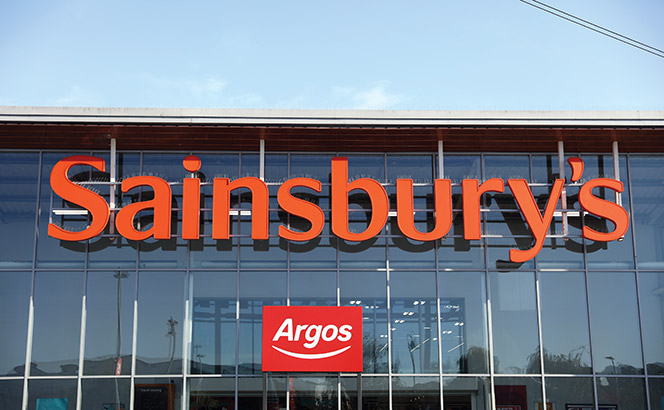
Herbert Smith Freehills and DAC Beachcroft were among the firms to win spots on Sainsbury’s most recent legal panel, with the supermarket chain cutting its roster by a third with 11 spots reduced to eight.

Morton Fraser was the third firm to be allocated a slot, while Addleshaw Goddard, Shepherd and Wedderburn and Cleaver Fulton Rankin, which were on the previous roster, no longer feature. Meanwhile, Linklaters, Dentons, TLT, CMS and Winckworth Sherwood all retain their spots. Continue reading “In-house: HSF and Beachcroft win spots as Sainsbury’s makes big cuts to adviser panel”

Legal Business Awards 2020 – Commercial Litigation Team of the Year

After much back-and-forth between the judges in a keenly contested category, we are now delighted to reveal the winner of Commercial Litigation Team of the Year for the 2020 Legal Business Awards.

This category identifies one outstanding piece of commercial litigation work undertaken by the winning team. The key requirement is not necessarily a substantial award of damages but rather an impressive result for the client, which could include an important out-of-court settlement or avoiding a costly appeals process. Continue reading “Legal Business Awards 2020 – Commercial Litigation Team of the Year”

Legal Business Awards 2020 – International Arbitration Team of the Year

After much back-and-forth between the judges in a keenly contested category, we are now delighted to reveal the winner of International Arbitration Team of the Year for the 2020 Legal Business Awards.

The winner of this award demonstrated pre-eminent advice in a single matter, be that acting for private corporates, investors, state-owned enterprises or states themselves in international commercial arbitration or investment treaty arbitration. Continue reading “Legal Business Awards 2020 – International Arbitration Team of the Year”

Editor’s note

Hamish McNicol

It’s fair to say the research for this year’s GC Powerlist UK, where we once again shook up the format of our flagship annual in-house publication, met some initial resistance. Now in its eighth year, the 2020 edition sought to highlight general counsel (GCs) and legal teams making a major contribution to positive change or transformation, either at an industry or sector level: hence this year’s title, The Change Agenda.

And after months of research and more than 100 interviews, that early cynicism looks excessive. Hoary claims that change will only happen in law when clients demand it and that UK legal chiefs have achieved greater internal clout have moved from platitude to substance, even if such progressive attitudes remain, like the future, unevenly distributed. And the 50 case studies amassed in this year’s Powerlist give a good indication of where that future of the in-house profession is currently amassing. Continue reading “Editor’s note”