More than just size: the Global London firms making the best impression on clients

The Legal Business Global London ranking – which ranks the fifty biggest non-UK firms by their London headcount – is largely made up of the biggest firms in the world, with 90% of those fifty also featuring among the Global 100 revenue rankings.

But while revenue and headcount tell one side of the story, there are of course many other criteria that clients care about when choosing a law firm.

And so for an alternative perspective, Legal Business delved into the data gathered during the Legal 500 research to reveal which of the Global London firms score best for client service – based solely on the views of their London referees.

The data is compiled via responses from clients canvassed during the rankings research, when they are asked to rate the firms they instruct on 10 core client service metrics (the full list is at the bottom of this article), using a sliding scale of 0-100. Those responses are then averaged to give an overall score for each firm.

To ensure a representative comparison between firms, we’ve broken down the Global London group into three groups – those with 200+ lawyers in London, those with 50-200, and those with fewer than 50. The below charts provide a snapshot of the five top-scoring firms for each metric.

Skadden scores highest among firms with 200 or more lawyers in London for lawyer/team quality, which is compiled from client scores for three sub-criteria: quality of partners, quality of associates, and partner availability/engagement. The firm held onto its tenth-place spot in this year’s Global London table, with lawyer headcount up almost 12% to 254.

Joint-second place was shared between Weil, Sidley Austin, and Simpson Thacher, just ahead of Latham & Watkins in fifth.

Latham, however, is the highest scoring firm for sector/industry knowledge, which covers two sub-criteria: sector knowledge and sector profile. The firm, which sits top of the Global London ranking for the fourth consecutive year with 594 lawyers, is also one of only two firms to to rank in the top five for all three core criteria – lawyers and team quality; sector and industry knowledge; and value, billing and efficiency – alongside Sidley.

For value: billing and efficiency, which takes into account resourcing, billing transparency, value for money, communication and efficiency, White & Case is the highest-scoring 200+ lawyer firm, just ahead of Sidley and Latham.

Moving into the second bracket of firms by size, Sullivan & Cromwell is the top scoring firm for lawyer/team quality among those with 50-200 lawyers in London. It slipped two places to 38th in the Global London ranking this year, with lawyer numbers down over 6% to 88, although partner count increased 20% to 18.

In second place for lawyers/team quality is WilmerHale – the only firm with 50-200 lawyers to appear in the top five on all three core metrics.

In the 50-200 bracket, Ropes & Gray scores highest for sector/industry knowledge, just ahead of Debevoise & Plimpton. While many firms in this mid-bracket saw year-on-year declines in headcount, Debevoise saw both lawyer and partner numbers rise, up 10% and 25% respectively.

Morrison Foerster scored highest for value: billing and efficiency, and was also third for lawyer/team quality.

Full list of client service criteria

Lawyers/team quality
Quality of partners
Quality of associates
Partner availability and engagement

Value: billing and efficiency
Appropriate resourcing
Billing: transparency
Billing: value for work done
Communication and case management
Efficiency in delivering the legal product

Sector and industry knowledge
Industry/commercial knowledge of the sector
Profile in the sector

For more on value: billing and efficiency, see our feature on the best-performing UK-headquartered firms in the Global 100.

[email protected]


All of the scores in this article are compiled from referee responses collected during Legal 500 research. If you would like to know more, please contact [email protected] – we welcome all feedback on our data and what insights you would like to see.

Sullivan & Cromwell makes rare London lateral with hire of high-profile A&O Shearman partner

A&O Shearman global financial services regulatory co-head and financial institutions sector lead Barnabas Reynolds has left the firm to join Sullivan & Cromwell, in an extremely rare lateral hire for the US firm in London.

Reynolds, who is a Legal 500 Hall of Famer for non-contentious financial services, was one of the most high-profile partners at legacy Shearman & Sterling, where he headed up the firm’s global financial services practice. He took a similar practice leadership role when his firm merged with Allen & Overy last year.

He is known as a proponent of the benefits of Brexit, and in recent years has built a profile as a policy expert and commentator on the opportunities arising from the UK’s split from the European Union.

In a statement, Sullivan co-chairs Robert Giuffra and Scott Miller said: ‘We’re delighted that Barney is joining our firm. Barney is a leader in advising financial institutions in UK and EU regulatory and transactional matters. His addition will strengthen our preeminent financial services group by providing our clients access to the foremost experts on both sides of the Atlantic. We have long represented many of the world’s top financial institutions, and Barney’s addition will allow us to provide full-service advice to our clients around the globe, including from London, which remains a key growth priority for our firm.’

In contrast to many of its US peers, Sullivan very rarely makes lateral hires in London. In the last decade, it has hired only two other partners – former Shearman corporate partner Jeremy Kutner in 2018, and A&O private equity partner Karan Dinamani in 2023.

And partner exits have been just as rare as hires. However, earlier this year the firm saw two departures, with Gibson Dunn picking up European credit and leveraged finance practice head Presley Warner and European restructuring practice head Chris Howard.

Reynolds added: ‘Sullivan is known around the world for its premier financial institutions lawyers and practice. I’m honoured to become part of a global team that is the best in the business.’

A&O Shearman has seen a steady stream of departures since the merger of the two firms was announced in May 2023, with Legal Business research at the start of 2025 finding than more than 100 legacy A&O and Shearman & Sterling partners had left or retired since that date.

In September, the firm announced plans to cut 10% of its partnership by the end of the 2024-25 financial year, but departures have continued into the new financial year, including the news last month that digital infrastructure partner Tom Levine and restructuring partner Nick Charlwood would be joining Paul Weiss’s fast-growing London office.

[email protected]

Slaughters and DLA lead as Poundland seals discount sale

Slaughter and May and DLA Piper have taken lead roles on the cut-price sale of Poundland to retail-focused private equity firm Gordon Brothers.

Pepco Group, which has owned Poundland since 2016, yesterday (12 June) confirmed it had accepted a ‘nominal’ fee – widely reported to be around £1 – for the discount chain, which operates over 800 stores across the UK and Ireland.

Poundland has experienced a sharp decline in sales, prompting Pepco to write down €775m (£660m), primarily relating to goodwill, on its FY24 balance sheet.

A Slaughters team led by restructuring partner Ian Johnson and corporate partner Alex Dustan led the team advising Pepco, alongside finance partner Susan Hughes, restructuring partner Tim Newey,  IP and tech partner Laura Houston and tax partner Gareth Miles. The Slaughters team worked closely with the Pepco legal team led by GC and company secretary Ned Staple.

DLA Piper advised Gordon Brothers on the transaction. The team was led by restructuring partner Rob Russell, supported by finance partners Jonathan Richards, Joseph Frew, Sarah Letson and Gavin Smith; real estate partner Andrew Walker; IP and tech partners David Booth and Satnam Sahota; and tax partner David Smith.

Commenting on the transaction, Russell said: ‘We are delighted to have played a role in the renewal of Poundland; a cornerstone retailer on the UK high street. I have no doubt that the business has a bright future under the stewardship of our valued client, Gordon Brothers.’

Gordon Brothers confirmed it had provided ‘up to £80m to support the management team’s proposed restructuring and turnaround plan for the British discount retailer’.

Both firms have longstanding relationships with the respective clients.

DLA’s Russell also led the team that advised Gordon Brothers on the sale of Laura Ashley to New York-based brand management company Marquee Brands in January this year. On that occasion, he was supported by Manchester-based corporate partner Jonathan Watkins and Massachusetts-based corporate partner Adam Ghander. Greenberg Traurig advised Marquee.

Meanwhile, a Slaughters team led by corporate partner Richard Smith advised Pepco on its 2021 IPO on the Warsaw Stock Exchange.

[email protected]

‘A step into uber-entrepreneurial territory’ – Gateley’s CEO reflects on a decade as a listed law firm

‘We’ve always been an entrepreneurial firm, but listing was a step into uber-entrepreneurial territory,’ says Gateley CEO Rod Waldie of the firm’s decision to become the first UK law firm to float in 2015.

Earlier this month (8 June), Gateley passed a significant milestone: 10 years since listing on London’s Alternative Investment Market (AIM).

When the firm floated on 8 June 2015, it had revenue of £60.9m and a market capitalisation of £100m. A recent trading update stated an expected growth rate of 4% for the 2024-25 financial year – up from last year’s £172.5m to ‘not less than’ £179m, meaning the firm’s revenue will have grown by nearly 200% over the last decade. 

And this growth in revenue has come alongside a significant increase in headcount, driven, in part, by the 14 acquisitions the firm has made since (see list below).

At the time of its IPO, the firm had 154 partners and 380 lawyers. Now, it has 183 partners and 630 total lawyers; not to mention an additional 387 non-lawyer fee earners – meaning almost 40% of its 1,017 fee-earners come from the consultancy side of its business.

Given the mixed outcomes for firms that have listed in the years since Gateley, this growth is not to be sniffed at.

‘That’s a hell of an achievement,’ says Ian Rosenblatt, founder and senior partner of Rosenblatt Law, which emerged from the ashes of failed listed parent RBG Holdings. ‘They must have excellent management who are able to deal with the endless jack-in-the-boxes that pop up.’

So what drove Gateley’s decision to list? Waldie (pictured right) says it stemmed from the firm’s strategic board (with former senior partner Michael Ward and London corporate head Nick Smith credited with spearheading the strategy) wanting to do something that would set Gateley apart from its peers and help it climb the revenue rankings from its then position of 48th in the LB100.

‘We were looking at how we go through the next tier, up to around 25th. We looked at the competitors between 50 and 25 – it’s a very crowded legal services market and a lot of the firms looked fairly similar. We wanted to differentiate Gateley in some way, make ourselves look different, and therefore potentially make ourselves look more compelling, both internally and externally.’

He adds that the listing was viewed as the best way to implement the identified ‘D, D and I’ strategy: ‘differentiate through diversification, along with a different way of incentivising our people.’

Waldie, who led the firm’s property team at the time of listing and replaced Michael Ward as CEO in May 2020, says the board wanted to broaden equity beyond a ‘small number of senior people’ and says it was ‘wonderful’ that on the day of the IPO everyone at Gateley, regardless of their role, received shares. 

The impact of the diversification is similarly clear. Only two of the £56.83m-worth of acquisitions the firm has made since listing have been pure law firms – the 2018 acquisition of Surrey-based GCL Solicitors and the 2020 addition of Tweed Legal in Belfast.

The rest have seen Gateley branch into work including IP protection, chartered surveying and leadership development. The firm also launched a collective action practice (Austen Hays) last year, having recruited Slater and Gordon’s head of collective actions, Chaya Hanoomanjee, in 2023 to lead it.

Indeed, Gateley’s most recent half-year financials show organic revenue from non-legal work growing significantly faster than legal work, with consulting now bringing in around 30% of revenues.

And the firm isn’t done yet. As Waldie comments: ‘The adjacencies have broadened for us in every context, and we’ll continue to keep an eye on opportunities in spaces we find strategically interesting.’

Waldie says he hopes to see more law firms join Gateley on the market and points to IPOs as a possible exit for PE firms, who have been ratcheting up their interest in the legal sector in recent years.

Whether this happens may depend on how his fellow listed firms fare. Of the five firms that have followed Gateley onto the market, Ince Group and RBG Holdings entered administration amid a wave of recriminations, while DWF was taken private by Inflexion in 2023. That leaves Gateley, Knights, and Keystone Law as the survivors. All of those three firms are growing and looking robust, but it is fair to say that IPOs are not proving that popular for firms right now.

Keystone founder and CEO James Knight is honest about shift to law firms being able to list. ‘It’s no secret that it has not been an outstanding success,’ he says, adding that Mishcon de Reya’s costly abandonment of its listing plans in January 2022 was the ‘final nail in the coffin’ for law firm flotations in the immediate future.

Amish Bakhai, managing director at investment bank DC Advisory,  is another sceptic: ‘The trend we’ve seen – not just in legal or accounting services, but across the board – is that there’s now a huge amount of private capital available, from a variety of sources, such that there often isn’t a strong reason to list the business on public markets.’

In contrast, Freeths corporate partner Jeremy Swift, who led on the April flotation of accountancy firm MHA for a market capitalisation of approximately £271m, believes the listing demonstrates that the door hasn’t completely slammed shut for law and professional services firms.

‘There is clearly a demand for high-quality professional service businesses amongst the investment community. I can see room for high-quality law firms to list in London, though I suspect that they will need to be different to those currently on the market.’

Access to external capital is often cited as a primary reason for law firms to list, but Waldie is keen to emphasise that for Gateley, the driving force was the need to corporatise: ‘The LLP model doesn’t lend itself particularly well to acquisitions – the listed structure gave us all of the levers we felt we needed.’

The firm does however have a recently agreed £80m revolving credit facility with Bank of Scotland, HSBC, Barclays and NatWest, with an uncommitted £20m ‘accordion’ option. While the facility provides a buffer against market volatility, it will also be ‘pointed at acquisitions’, according to Waldie.

Some of the money will also be available for lateral team hires, in the vein of the six-lawyer corporate team Gateley recruited from Clyde & Co led by partners Nora Al Muhamad and Darren Harris in March this year as part of what Waldie refers to as a ‘reboot’ of the firm’s Dubai operations.

Waldie describes the hires as a ‘big investment and a clear intention of our intention to grow in Dubai.’

He is quick to clarify, however, that Gateley is not out to plant flags across the globe: ‘What I don’t see in the foreseeable future are lots of Gateley bricks and mortar offices popping up in lots of different jurisdictions.’

Despite the modest rise of 4% in the most recent financials. Waldie’s ambitions remain high: ‘the medium-term target is to grow revenue both organically and through complementary acquisitions to at least £250m.’

And the burning question, with the benefit of hindsight: would he have still recommended listing back in 2015? The answer is a resounding yes: ‘I’m firmly of the view that we couldn’t have achieved what we’ve achieved absent the listing.’

Gateley’s post-listing acquisition: a timeline

2016
April: Tax incentives specialist Acquires Capitus – £2.72m
September: Property consultancy Hamer Associates – £2.05m

2018
April: Human capital Kiddy & Partners – £3m
May: Residential law specialists GCL Solicitors – £4.15m
November: Inward investment consultancy International Investment Services

2019
September: Acquires land referencing consultancy Persona Associates – £250,000
December: t-three, a leadership development consultancy – £3.4m

2020
March: Reputation and media boutique Tweed Law – £2m
March: Corporate advisory and built environment consultancy The Vinden Partnership – £6.75m

2021
July: Chartered quantity surveyors Tozer Gallagher – £700,000

2022
January: Adamson Jones, a patent and trade mark legal practice – £2.5m
April: Smithers Purslow, a multi-disciplinary surveying firm – £20m
October: Symbiosis IP, a patent attorney firm focused on life sciences – £2.5m

2023
July: Chartered surveyors RJA Consultants – £6m

[email protected]

Linklaters, DLA Piper and Cuatrecasas lawyers among new roster of Europe’s sustainability legal leaders

Partners from firms including Linklaters, DLA Piper and Cuatrecasas have been recognised as Green Ambassadors in Legal 500‘s inaugural roster of the lawyers championing the green transition across Europe.

The guide, which follows the launch of our UK Green Ambassadors guide last year, has been compiled by research into the most impressive sustainability-focused lawyers across continental Europe, from Germany, France and Benelux to Iberia, Ireland and the Nordics.

The 170-plus lawyers – who all stand out for their green credentials and wider sustainability engagement – include 13 from Linklaters and 12 from DLA Piper, while other well-represented firms include Spain’s Cuatrecasas and Benelux leaders Loyens & Loeff and AKD. Germany is the most strongly represented country, with 25, followed by France, the Netherlands and Denmark.

The names in the list include some of the most senior and well-respected figures across the continent, including Cuatrecasas sustainability head Elisabeth de Nadal, DLA Germany ESG head Ludger Giesberts, Loyens ESG co-chair Vanessa Marquette and Linklaters Germany environmental and planning head Markus Appel.

The full list, including profiles of the individuals featured, can be found here: Green Ambassadors Europe 2025, and to find out more about featuring in our future Green Ambassadors research, you can access all submissions information here.

Latham, Kirkland and Simpson Thacher come out on top in new Legal 500 US rankings

Legal 500 has launched its 2025 US research, with Latham & Watkins, Kirkland & Ellis and Simpson Thacher emerging as the firms with the most tier 1 rankings in our definitive research into the best performing firms in the world’s largest legal market.

The latest rankings shows that over 340 firms have won rankings for their work across more than 120 different practice areas -an increase of nearly 4% on last year’s research. In total the latest research includes more than 3,500 unique rankings.

Top five firms by tier 1 ranking

Firm T1 rankings Change year-on-year
Latham & Watkins 59 +3
Kirkland & Ellis 31 +2
Simpson Thacher 24 +2
Cleary Gottlieb 21
Davis Polk 18 +1

Latham tops the table for tier one rankings by a significant distance, with its three additional rankings taking the firm to 59 T1 rankings, ahead of second-placed Kirkland, which has 31 top-tier rankings. Latham’s new top tier rankings were in general commercial disputes, capital markets advice to underwriters, and a brand new commercial lending ranking covering advice to direct lenders/private credit. Kirkland, meanwhile, added new tier-1 rankings in securitization and patent litigation (International Trade Commission).

Simpson Thacher gained two additional top tier rankings to hold onto third place, while Cleary remained in fourth with 21 rankings. Davis Polk is new in the top five after securing one additional T1 ranking to take it to 18. The firm has replaced Gibson Dunn, which went from 19 top-tier rankings last year to 17 this year, after the rankings for climate change litigation and congressional investigations were discontinued.

A total of 16 firms had 10 or more tier-1 rankings, down from 18 last year.

Top five firms by total rankings

Firm Total rankings Change year-on-year
Latham & Watkins 78 +3
DLA Piper 70 +5
Mayer Brown 69 -1
Morgan Lewis 67
Kirkland & Ellis 64 +1

Looking at total rankings brings other firms into the top five. While Latham also came first for total rankings with 78, DLA Piper comes in second, after climbing two spots thanks to the addition of five new rankings, taking its tally to 70. The increase nudges Mayer Brown into third place, down one ranking to 69.

Morgan Lewis features in fourth place with 67 rankings, while Kirkland rounds out the top five, up one ranking to a total of 64.

T1 and T2 firms for private credit

Tier Firm
Tier 1 Davis Polk
Latham & Watkins
Milbank
Tier 2 Paul Hastings
Paul Weiss
Proskauer
Simpson Thacher
Skadden
White & Case

The US rankings also include a new category, recognising firms and lawyers for their expertise in private credit for the first time. The commercial lending: advice to direct lenders/private credit table features 29 firms across five tiers, with Davis Polk, Latham, and Milbank in tier 1, and a further six firms in tier 2.

The new ranking reflects the growing importance of private credit, which has gone from a multibillion-dollar to a trillion-dollar market over the last decade, becoming increasingly central to a range of legal work.

A total of 18 lawyers are also individually recognised in the private credit ranking, with four from Latham, three from Milbank, and two apiece from Davis Polk (both partners) and Winston & Strawn (both associates).

Five lawyers are ranked in the private client Hall of Fame: global hybrid capital practice head Stelios Saffos and global banking practice vice chair Alfred Xue and chair Daniel Seale from Latham, Davis Polk finance partner Nicholas Palumbo, and Proskauer global finance practice co-head Justin Breen.

Firms with most individual ranked lawyers for private credit

Firm Individual rankings Details
Latham & Watkins 4 Hall of Fame (3); leading partners (1)
Milbank 3 Leading partners (3)
Davis Polk 2 Hall of Fame (1); leading partners (1)
Winston & Strawn 2 Leading associates (2)

[email protected]

Merger round-up: national duo discuss £100m tie-up as two more deals get over the line

Consolidation in the UK legal industry is continuing apace, with news of three combinations announced in recent days, including a potential national tie-up which could create a new £100m firm.

That proposed combination involves South East firm Cripps and South West firm Michelmores, who have entered ‘preliminary’ discussions over a merger that would create a 400-lawyer firm spanning six locations across southern England.

Cripps, which has offices in Tunbridge Wells, London and Horsham posted revenue of £47.2m and PEP of £328,600 for 2023-24, while Michelmores, which a presence in Bristol, Cheltenham, Exeter and London, saw revenue rise to a new record of £50m – up 16% from the previous year.

Cripps has gone through a number of other mergers in recent years, and was briefly known as Cripps Pemberton Greenish following its 2018 combination with Pemberton Greenish; it also merged with Horsham’s PDT Solicitors in 2023. It has 15 tier 1 rankings in the Legal 500 and 29 rankings in total.

Michelmores, meanwhile, which is headquartered in Exeter, has nine Legal 500 tier 1 rankings and 31 rankings in total. The firm also has an almost equal gender split of partners – 51% male to 49% female.

A spokesperson for Cripps confirmed ‘initial discussions’, adding: ‘These conversations are preliminary and are focused on whether, by combining two strong and successful businesses in the south, we can create more opportunities for our clients, our people, and the communities we serve. Discussions are at a very early stage, and no decisions have been made.’

In a statement, Michelmores managing partner Tim Richards stressed that the talks ‘remain in their very early stages’, adding: ‘Cripps is a forward-thinking firm with a strong culture aligned to our own. Any future decisions will be centred around our joint potential to strengthen our client offering and to provide an exciting, alternative and modern law firm for talent.’

Elsewhere, national firm Foot Anstey has expanded into Northern Ireland via a combination with Belfast’s McKees, which as of yesterday (9 June) is now called Foot Anstey McKees.

Foot Anstey, which is headquartered in Exeter but has nine offices across the UK, saw revenues rise 14% to £67m last year, with revenue growth of 43% over the past five years. The firm has 254 lawyers and 48 partners, with the McKees deal marking the firm’s first step outside of England.

McKees, which is ranked by Legal 500 for dispute resolution and banking and finance, has five partners, two legal directors and seven associates, according to its website. In a statement, the firms said that real estate and corporate services are particular areas of joint strength.

Martin Hirst, managing partner at Foot Anstey (pictured above right alongside McKees managing director Chris Ross), hailed the tie-up: ‘Today marks the beginning of an exciting chapter in Foot Anstey’s story as we cement our growth into a truly national firm. Northern Ireland provides a critical gateway to European markets, and the combination will offer significant opportunity to existing and new clients alike.’

Finally, Irwin Mitchell has acquired boutique immigration firm Carter Thomas in a move that strengthens its private client immigration offering.

Irwin Mitchell, which passed the £300m revenue mark in 2024, has also been expanding regionally, adding offices in Brighton, Nottingham, Cardiff and Liverpool in recent years. The tie-up means that the firm now has immigration specialists working in Sheffield, London, Newcastle and Manchester.

Carter Thomas was founded in 2013 and is ranked in tier 2 by Legal 500 for London immigration. Nichola Carter, the firm’s co-founder, who has joined Irwin Mitchell as a partner, said her team would benefit from Irwin Mitchell’s size and experience: ‘Joining Irwin Mitchell gives us access to a full suite of legal services, enabling us to support our clients even more comprehensively. We’re excited to be part of such a forward-thinking and dynamic team.’

Mandeep Khroud, head of immigration at Irwin Mitchell added: ‘This is a fantastic addition to our team. Our new colleagues bring excellent expertise and deep sector specialisms that perfectly complement our existing strengths. Together, we’re establishing ourselves as a powerhouse in UK immigration law.’

[email protected]

Trading places: Paul Weiss loses more partners as Paul Hastings hires A&O Shearman PE duo

Three more litigation partners have left Paul Weiss for Dunn Isaacson Rhee, the Washington DC boutique recently established by four former litigators from the Wall Street firm.

The trio includes Rush Atkinson, who joined Paul Weiss as a partner last February after more than 12 years in the Justice Department, most recently as associate deputy attorney general, and junior partners Kyle Smith and Melissa Zappala, who both previously worked together at Boies Schiller Flexner before joining Paul Weiss in 2020.

Atkinson’s work at DOJ included time as a prosecutor on special counsel Robert Mueller’s investigation into Russian interference in the 2016 presidential election, where he worked alongside Jeannie Rhee, who left Paul Weiss last month alongside litigation department co-chair Karen Dunn and Boies Schiller alums William Isaacson and Jessica Phillips to establish Dunn Isaacson Rhee.

Separately, Paul Weiss has also seen the exit of Damian Williams, the former US attorney for the Southern District of New York (SDNY), who has left to join Jenner & Block after less than six months at the firm.

Williams served as US attorney for SDNY from 2021 to 2024, during which time he brought high-profile cases against individuals including FTX founder Sam Bankman-Fried and then-US senator Bob Menendez.

At Jenner, he will co-chair the litigation department and the investigations, compliance, and defence practice.

The raft of departures from Paul Weiss come after its deal with the Trump administration, which saw it discard its diversity, equity, and inclusion (DEI) programmes and pledge $40m in pro bono work in return for the rescission of an executive order issued against it.

Jenner, however, has pushed back against a similar executive, and late last month a US judge struck down the order, ruing that it was ‘an unconstitutional abuse of power’.

In a statement, Williams said: ‘Jenner & Block fearlessly advocates for its clients and provides outstanding strategic counsel through their most difficult challenges. I’ve seen firsthand how this firm expertly tackles the toughest cases and lives its values. I’m excited to join a team with an extraordinary depth of legal talent that doesn’t shy away from hard fights—and delivers results that matter.’

Other recent senior departures from Paul Weiss include litigator Jeh Johnson, who served as Secretary of Homeland Security in President Barack Obama’s second term, and pro bono practice head Steven Banks. Both are retiring; Johnson will now serve as co-chair of the board of trustees at Columbia University.

In other major US moves, Paul Hastings has hired private equity partners Christopher Zochowski and Bradley Noojin from A&O Shearman. Both partners joined the Washington DC office of legacy Shearman & Sterling in 2021 from Winston & Strawn, where Zochowski was M&A co-chair.

At A&O Shearman, Zochowski served as US co-head of private equity and private equity sector lead for the US.

Paul Hastings chair Frank Lopez said in a statement: ‘Chris and Brad further strengthen our already strong global private equity offering, particularly in the upper middle market, where we see significant growth opportunities given the fragmented market.’

Zochowski added: ‘Paul Hastings boasts a preeminent private equity practice with an impressive roster of leading PE clients to match.’

As revealed by Legal Business this January, more than 100 partners have left both legacy A&O and Shearman since the merger was announced in May 2023. Many of these departures came from the firm’s finance practices – a core area of specialism for legacy A&O – and the firm has seen further exits since, including the April departure of London structured finance duo Franz Ranero and James Smallwood to Latham.

Meanwhile, Herbert Smith Freehills Kramer has brought in its first new partners as a merged firm following the 1 June merger of Herbert Smith Freehills and Kramer Levin, with restructuring partners Kyle Ortiz and Brian Shaughnessy joining from New York bankruptcy boutique Togut Segal & Segal.

Finally, Simpson Thacher and Mayer Brown have both added partners to their ranks in New York, bringing in as Weil M&A counsel Iliana Karaoglan and Cadwalader CLO counsel Joanna Suna respectively.

[email protected]

White & Case boosts City private equity practice with hire of Ropes Hall of Famer

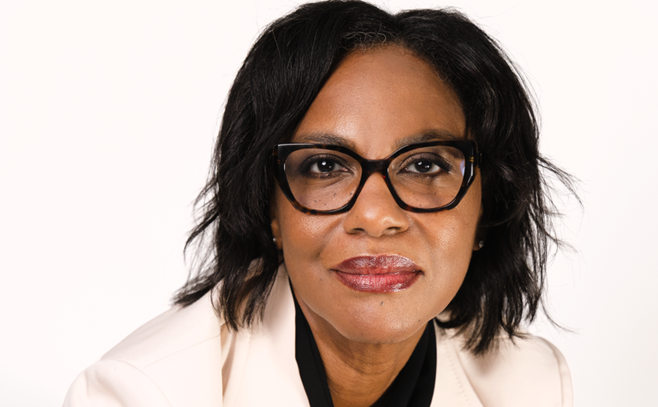
Helen Croke

White & Case has ramped up its private equity capabilities in London with the hire of leading partner Helen Croke from Ropes & Gray.

A Legal 500 Hall of Famer for high-value PE transactions, Croke has been at Ropes since 2016, and has longstanding relationships with PE clients including Bridgepoint and Intermediate Capital Group (ICG).

She moved to the US firm after making partner at Travers Smith in 2008, and has extensive experience of advising a range of institutional investors on UK and international PE transactions. Earlier this year she led the firm’s team advising ICG and Law Business Research (LBR) on the merger of LBR with ALM, the owners of law.com.

White & Case chair Heather McDevitt said in a statement: ‘Private equity is a strategic priority for White & Case and in London, the world’s second largest private equity market, Helen is an important addition to our strong team.’

Other key names in the London PE team at White & Case include Lucy Bullock, the regional section head for EMEA M&A and PE, as well as Richard Jones and Ross Allardice.

Global PE industry group co-head Thierry Bosly described Croke as ‘a recognised a leader in the UK private equity market.’

Other notable recent hires for White & Case in London include former A&O global corporate practice co-head Richard Browne, who joined in February, and secondaries-focused partner Alexandra Chauvin, who also joined from Ropes last summer.

However, the firm has seen a number of recent departures, with energy and infrastructure partners George Kazakov and Din Eshanov leaving to become co-heads of Paul Hastings’ London, Paris, and Abu Dhabi energy and infrastructure practice, as well as finance and capital markets partner Kevin Ng, who left for Mayer Brown last month.

Firm vice chair Oliver Brettle said in a statement: ‘Our record financial performance in 2024, when revenue exceeded $3bn for the first time, was in part driven by a strong private equity market and a standout performance by our global private equity industry group.’

[email protected]

‘Full-service firms all say the same thing – but we’ve been opportunistic’ – John Quinn on AI, funding and suing banks

I actually considered joining the navy. I went down to the recruiter’s office in Claremont, California, the college town where I was living. This was when the Sixth Fleet of the US Navy was based in Piraeus. I was infatuated with all things Greek, and I was very keen to get to Greece. I told them if they could promise me I’d be based in Athens, I’d join. But they couldn’t guarantee that, so that’s as far as that got. There were a lot of lawyers in my family, so I always had it in the back of my head that law might be an option.

I always thought I’d like to be a litigator. When I was at Cravath in New York, they really needed corporate associates, so they talked me into it. I found that a very valuable experience. But I had a young child, and I didn’t really understand how people raised families in New York. Obviously they do, but that’s not what I was used to; I’m from Utah – wide open spaces and mountains. And I’d enjoyed my time in Los Angeles, where I had gone to college. So after two and a half years I moved back there to join a very small firm that has long since disappeared, with a Cravath alumnus, a guy named Bob Baker, who I’d been told was a really good lawyer.

After two or three months, Bob said, ‘Why don’t you and I start our own firm?’ At that point I was three years out of law school. We set up a firm called Baker & Quinn. It didn’t really work out. Although Bob was an outstanding lawyer, he wasn’t much of a marketer. And I was three years out of law school, and new in LA – I didn’t know anybody! We didn’t have enough work.

We developed a relationship with a smaller firm in Midtown New York, and when our firm didn’t work out I opened an office for them in LA. Over the course of a couple years I built that up, but it turned out the home office in New York didn’t generate much work for us. It was develop work, or starve – so we built a practice. It got to the point where there was no economic justification for the linkage with the firm in New York, and, on 1 January 1986, four of us left and started the firm that is now known as Quinn Emanuel.

‘People said to us, “You should open an office in London, because English gentlemen won’t sue banks”’

We never had the goal of trying to establish an international multi-office firm. That’s a different proposition altogether. It’s very different to set up a four-lawyer office in Los Angeles that’s prepared to take on anything to keep the wolf from the door. I’m sure you can establish that kind of startup firm. There’s plenty of room for it in the marketplace, if you’re prepared to work really, really hard, to do good work, and to be relatively inexpensive, which was our recipe at the time.

Why isn’t there another global litigation-only firm that’s been as successful as us? It’s a mystery to me. It’s always kind of astounded me. For us, it’s been such an obviously good business model.

The challenge all the full-service firms face is, how do they distinguish themselves? They all offer basically the same practice areas, and their message to the marketplace has to be, ‘We can do this, we can do that, we can do all of it, and we’re great at all of it.’ They’re all saying the same thing. In that type of market, it’s very hard to distinguish yourself. Whereas our message has always been very clear: ‘We only do one thing, and we’re the best at that.’ We’ve always been opportunistic. We didn’t have any preconceptions of what a law firm should look like.

If you’re a full-service firm, you can’t afford to be adverse to certain type of clients. We decided over 20 years ago that we wouldn’t represent any of the world’s major money centre banks. None of the major full-service firms would take cases adverse to those institutions, because they have transactional departments that very much want to do deals for those clients. Those firms are not in a million years going to sue the Goldman Sachs of the world. If you had a claim against one of those institutions, you often had a hard time finding a firm that had the expertise, the skill, the depth and the horsepower to take on the case. We made a deliberate decision to meet that need.

We were adverse to all those banks after 2008. We recovered over $50bn, and developed a lot of credibility. That was the genesis of our opening in London. People said to us, ‘You should open an office in London, because English gentlemen won’t sue banks.’

After we’d heard that a few times, Bill Urquhart, who has now sadly passed away, said that we should maybe look into that. And so we made trips over here, walking the streets of London. We thought: ‘This isn’t going to be hard. They speak English, they use common law, they use words like trial and disclosure.’ We thought, in our innocence, that we understood the marketplace. It took me a couple of years to realise I really didn’t have a clue. The legal culture is so different. We had the great good fortune to recruit Richard East and Sue Prevezer, then QC, now KC. And they built the office into the success it is today.

‘Amazon would hire us in a heartbeat if they could, they’d love to conflict us out. But you reach a fork in the road and you have to decide’

In our business, you need adversaries. We represent Google, Qualcomm, NVIDIA, Salesforce, and Samsung. We’re adverse to Apple, Amazon, Microsoft, and Facebook. Those are some pretty good adversaries. There are a lot of people who are unhappy with those folks. It’s a business decision – Amazon would hire us in a heartbeat if they could, they’d love to conflict us out. But you reach a fork in the road and you have to decide.

We did some work for Apple many years ago – we were engaged by a special committee of the board to run an investigation into backdating stock options. We delivered a report that basically exonerated Steve Jobs, and the folks at Apple said nice things about us. But at the same time, even as the investigation was going on, we were being approached by people asking whether we would take a case that’s adverse to Apple. By the time the investigation wound up, we had to make a decision, and we decided to be adverse to them.

Private ownership and investment in law firms is inevitable. There’s just too much revenue to be made. The opportunity is too good. The US has been slower than the UK and Australia in loosening the rules to enable that. But what we see in Arizona [non-lawyers being allowed to own law firms] is inevitable, and the Utah legislature is considering similar reforms. There’s no good reason why you shouldn’t have private investment in legal practices.

‘The full-service firms all say the same thing. Our message has always been very clear – we only do one thing, and we’re the best at that’

While litigation funding has been around for a long time now, and has sort of come into the mainstream, it’s still a relatively inefficient marketplace. The funders are more sophisticated than the law firms are, or even, God forbid, the clients, when it comes to understanding how to price those cases. It always amazes me how much demand there is. You can talk to any kind of fund – private equity, bond funds, you name it – they want to talk about litigation funding. It surprises me, because I feel I just don’t see that many great cases. But there must be a reason all that money is chasing claims. Part of the appeal is that asset managers are always looking for investments that are uncorrelated to the business cycle. And the track record, by and large, is pretty good.

The degree to which AI will make associates obsolete is vastly exaggerated. It’s going to have an impact one day, but I don’t even see the beginnings of that impact on the fundamental structure of firms. We’ve known for a decade that AI is better than diagnostic radiologists at reading film, X-rays, CT scans, MRIs. We’re still graduating radiologists – AI has just made them more efficient. They do a better job and they do it cheaper. The same thing will be true of law firms. There’s so much inertia. There’s too much economic reason for the status quo.

The firm is an unfinished project. It’s not about what you’ve done in the past. We’re still moving. We’re very focused on the Middle East and Southeast Asia, in particular Singapore. The world is a big place, and there are always new legal issues. Whatever laurels we have, there’s no place for resting on them.

[email protected]

Revolving Doors: Ex-PM David Cameron joins DLA while Simpson Thacher, Pinsents and Bakers make lateral moves

Former Prime Minister Lord David Cameron has joined DLA Piper as a consultant, becoming the latest politician to take up a role in law.

Cameron, who stepped down as Prime Minister in 2016 after six years in office, will ‘provide guidance on the various geographies in which DLA operates, including on the issue of geopolitical risk’, according to the firm.

He is one of a number of high-profile politicians to have taken up roles at DLA, with Labour peer Lord David Blunkett last year appointed as an adviser on public policy and internal understanding of government and policy development, while in the US, former Republican senators Saxby Chambliss and Richard Burr are members of the firm’s regulatory government affairs practice.

Cameron, who spent a brief period as foreign secretary from during 2023 and 2024, has also taken advisory roles at private equity firm Finback Investment Partners, freight payments business PayCargo and hedge fund Caxton Associates. He is also a visiting professor at New York University Abu Dhabi.

He is not the only former foreign secretary to branch into law. Lord William Hague, who served as foreign secretary from 2010 to 2014, chairs Linklaters’ international advisory group, while other prominent politicians in law include former Justice secretary David Gauke, now head of public policy at Macfarlanes.

‘Lord Cameron’s unique background makes him well suited to advise the firm on the ever-evolving global landscape,’ said Frank Ryan, DLA Piper’s global co-chair. Global co-CEO Charles Severs added: ‘Lord Cameron’s vast experience in global leadership and policy-making will be a tremendous asset to our leadership team.’

Elsewhere, Simpson Thacher & Bartlett has become the latest US firm to add a secondaries partner in London, hiring Joanne Mak from Kirkland & Ellis.

Mak has joined after seven years at Kirkland and will work alongside secondaries partners Ed Ford and Sacha Gofton-Salmond, both of whom joined from Travers Smith in 2023.

The secondaries market has seen a flurry of activity in recent years. Among the moves, Simon Saitowitz joined Weil from Ropes & Gray in April, Proskauer added Skadden counsel Delphine Jaugey as a partner in March, while Alexandra Chauvin made the move to White & Case, also from Ropes & Gray, in July last year. 

Meanwhile, Pinsent Masons has raided Deloitte Legal for three IP partners – Rachael Barber, Jeremy Harris and Paul Garland – and IP director Richard Reeve-Young. Garland, who was global head of IP and technology at Deloitte Legal, has more than 20 years’ experience in advising technology clients on strategic IP management.

All three partners had previously worked together at boutique technology firm Kemp Little, becoming part of Deloitte Legal when the boutique was acquired in 2020. In leaving, they join a long list of former Kemp Little partners to jump ship from Deloitte, including fintech partners Chris Hill, who left for Fox Williams in February 2024, and Jake Ghanty, who left for Wedlake Bell in November 2023, before departing just nine months later.

Tom Nener, the co-head of Pinsents’ lP practice, hailed the hires, saying: ‘Having Paul, Rachael, Jeremy and Richard join our IP team in London represents a significant expansion of our IP practice, particularly in the brand protection and technology space.’

Meanwhile, LB understand that Blackstone has hired White & Case private equity counsel Joshua Alexander-Passe as head of legal for private equity transactions in Europe, a move first reported by Financial News.

It marks a return to a private equity firm for Alexander-Passe, who joined White & Case in early 2024 following a three-year stint at Providence Equity Partners, including as European legal counsel. He has also spent time at Freshfields and Weil.

Baker McKenzie has hired James Wyatt as a partner in its energy and infrastructure team in London. Wyatt has moved after two years at K&L Gates. He had previously spent time at Slaughter and May, Linklaters and four years at the now-defunct boutique Avonhurst. He has experience advising on project development, project finance, construction, and M&A.

TLT has hired DWF commercial real estate lawyer Neal Bhattacharyya as a partner in its London office. Bhattacharyya has joined after three years at DWF and had previously spent seven years as an associate at Hogan Lovells.

Finally, Shoosmiths has tapped corporate associate Wei Wu from Dentons’ London office. The trilingual, dual-qualified lawyer has joined as a partner following just under 10 years at Dentons.

[email protected]

Kennedys sees revenue soar as new management set sights on nearly doubling income to $1bn

Kennedys has posted a 13% increase in revenue to £428m for the last financial year, as the firm’s new management team set out ambitious plans to  nearly double fee income by 2030.

The increase marks an eleventh consecutive year of growth for the insurance and disputes focused firm and means that it has trebled revenue since its 2017 merger with US firm Carroll McNulty & Kull (CMK), even though this year’s growth rate is slightly down on the previous year’s 17% hike.

The US was a key driver of last year’s increase, with fee income up by 22% year-on-year to just over a quarter of firmwide revenues at £109.3m. Comparatively, EMEA revenue climbed 14% to £37.5m, Asia-Pacific grew by 11% to £59.9m, while Latin America, which represents 3% of revenue, soared by 27% to £12.8m.

The firm’s largest base, the UK, saw turnover climb by a healthy 9% to £209.2m.

‘The growth has been tremendous, and we’re very proud of it’, said Meg Catalano (pictured), who last November became Kennedy’s first global managing partner based outside of the UK.

But the firm is not resting on its laurels.

‘Our ambition on revenue is to hit a billion dollars in the next five years’, said John Bruce (pictured below), who was elected as senior partner last December and stepped into the role in January this year, succeeding long-time head Nick Thomas.

To hit that target, which equates to around £740m, Kennedys would need to maintain a compound annual growth rate of just under 13% for each of the next five years, taking turnover up just over 80% on its current marker.

‘We anticipate that much of that growth will come from North America and Australia’, said Bruce, who added that while the firm has no set target for US revenue, the region could well make up closer to 35% of Kennedys’ business by 2030.

Kennedys now has 12 US offices, after opening in Fort Lauderdale last January and in Los Angeles and Seattle in September. ‘There are always more states we could open in’, said Bruce. ‘But at the moment we’re happy with the footprint that we’ve got. Our focus is on building the offices, in particular our offices on the West Coast.’

He added that: ‘Texas would be another area of likely growth’, pointing to the firm’s offices in Austin, acquired in the CMK merger, and Houston, which opened in 2022.

Commenting on the firm’s plans in Australia, where it has offices in Sydney, Melbourne and Brisbane, Bruce said: ‘We don’t have as big a share of the [insurance] market in Australia as we do in the UK, so we can see further expansion there.’

Catalano said growth was being driven by the firm’s global clients seeking advice in regions outside the UK, with the pair ushering in a renewed focus on expanding existing client relationships across different offices and practices.

‘My taking the role of global managing partner, as someone from outside the UK, was a reflection of our strategy and vision’, said Catalano. ‘We’re not just a UK firm any more.’

‘We’ve seen an explosion of additional need from our clients in these regions, so our growth is a natural response to those needs, as well as a targeted approach to zeroing in on what we are doing and doing more of it.’

Bruce added: ‘We’re not closed to mergers, but we have some amazing client relationships and they want us to work with them in other countries, so I’m confident we can hit our target through that kind of growth.’

The pair point to litigation and arbitration and corporate and commercial work as key focuses for future growth.

On the disputes side, notable matters handled over the last year include representing reinsurers in the multibillion-dollar Russian aircraft litigation, as well as acting on claims in both the UK and Australia arising from the collapse of Greensill Capital.

Meanwhile, on the corporate side, Bruce said that Kennedys had recently been appointed to the corporate and commercial panel of one leading insurer.

As part of the push to extend existing relationships, the pair have created a new client development committee to help manage relationships better.

The new strategy is not limited purely to practice and geographic expansion though. With former senior partner Thomas leading Kennedys for 27 years, Bruce and Catalano are keen to embrace change and new voices. Embedding AI and innovation is a key plank of the new strategy, as is empowering the next generation of firm leaders.

In addition to the new client relationship programme, the pair have also added new roles such as the new UK managing partner position now held by London-based arbitrator and commercial litigator Ben Aram, who also co-heads the firm’s corporate and commercial division, as well as adding new partners to the exec, such as Sheffield managing partner Helen Snowball.

Catalano said: ‘All firms are going to be grappling with change over the next few years and we need to make sure we have the expertise we need; not just today, but in five years’ time.’

‘We’re making a real effort to involve more people and have more diverse people in leadership,’ added Bruce. ‘It’s a deliberate effort to ensure that the next generation of leaders is ready to step up. It’s important to get fresh ideas.’

[email protected]

Harbottle pushes financials to new heights with revenue and PEP growth

Harbottle & Lewis has posted its best-ever financial results, with both revenue and profit per equity partner (PEP) rising to new heights.

The firm saw turnover rise by 3.7% during the 2024-25 financial year to reach £53.8m, up from last year’s £51.9m. PEP, meanwhile, rose 2% to £756,000 from the 2023-24 figure of £741,000.

The performance means the London firm has now enjoyed a 31.5% increase in revenue over the past five years, up from the figure of £40.9m posted in 2020. Over the same period, PEP has risen more modestly, increasing by just over 5% from £718,000.

Perhaps best known for its private client work and media and entertainment practices, Harbottle bolstered its partnership during the financial year with the hire of private client disputes partner and Legal 500 Hall of Famer for contentious trusts and probate, Charles Lloyd, who joined this March after over two decades at Macfarlanes. He joined alongside information litigator and reputation management specialist partner Michael Yates, who arrived from Taylor Wessing.

The West End firm also promoted three lawyers to its partnership in April: entertainment specialist Harry Bresslaw; corporate lawyer Ed Lane, who specialises in the creative industries; and private client, tax and wealth structuring adviser Alasdair Wilson.

Hailing the results, co-managing parent Charles Leveque (pictured above) said: ‘We are very pleased with how the firm has performed over the last financial year, reflected in these strong results which underscore the strength of the relationships we have built with our clients and the trust they continue to have in us.’

These results mark the firm’s first full 12-month financial year since becoming one of a number of firms to change its year end to align with the tax year, following recent HMRC reforms.

[email protected]

Travers Smith makes up nine new partners in largest promotions round since 2022

Travers Smith has announced its 2025 partner promotions with nine lawyers making the cut, a notable increase from last year when six lawyers were made up.

The firm’s tax and financial services & markets practices have each seen two additions, with the other promotions shared between finance; funds; technology & commercial transactions; corporate M&A and ECM; and private equity and financial sponsors.

The total of nine is above average for the firm – in the last five years, Travers has only bettered the number in 2022 when a firm record 11 lawyers were made up.

Two women are among the cohort, equating to 22% – the lowest female percentage in at least five years, and a long chalk from 2017 when the firm announced an all-female partner promotion round.

It’s worth noting, however, that Travers has made notable strides on gender equality within the partnership. Women now account for more than 30% of the partners, around double the 15% seen a decade ago.

Travers has been active in the recruitment market of late, adding restructuring and insolvency partner Mandip Englund from Fried Frank; private equity partner Jeremy Dennison, who rejoined the firm following a seven-year stint as GC of Livingbridge; infrastructure finance partner Ryan Ayrton from Watson Farley & Williams, and experienced funds lawyer John Daghlian, who joined as a senior consultant having left Akin in 2023.

It has not been all one-way traffic, however, with funds partner Joel Grossmark leaving to join CVC as a managing director after less than a year at the firm.

Managing partner Edmund Reed said the promotions are evidence of the firm’s plan ‘to invest in strategic areas which we believe are key to the firm’s continuing success’.

‘Each of our new partners will develop our offering in those areas to help deliver exceptional service to our clients,’ he added, ‘I look forward to watching their successful careers develop as partners.’

Other recent developments for Travers include the opening of a competition-focused office in Brussels in March this year, a move that coincided with the shuttering of its Paris base.

Travers partner promotions in full

  • James Barnard, financial services & markets
  • Adam Burk, finance
  • Jaryd Davidson, private equity & financial sponsors
  • Elissavet Grout, tax
  • Nick Glynn, financial services & markets
  • Tom Margesson, tax
  • Michael O’Brien Kelly, funds
  • Richard Offord, technology & commercial transactions
  • Ella Sharpley, corporate M&A and ECM

[email protected]

Trading places: 13-partner Kirkland team hire and senior Paul Weiss defections among latest major US moves

Kirkland & Ellis has hired a 13-partner US litigation team from King & Spalding, as the near-$9bn powerhouse continues to expand into mass tort work in the States.

The team, which will join the firm’s offices across New York, Austin, Houston and Los Angeles, includes Legal 500 toxic tort leading partner Kristen Fournier and fellow specialists Morty Dubin and John Ewald in New York, as well as pharmaceuticals and medical devices leading partner Kim Bueno in Austin.

The hires are part of a concerted push by the firm to ramp up its litigation practice, and come on the back of the hire of a five-partner Skadden team led by Philadelphia partner Allison Brown this January, a move which saw the firm open a new office in the city.

The other partners making the move from King & Spalding include four others in New York – Shaila Rahman Diwan, who chaired the pharmaceutical and medical device litigation team, Matthew Bush, Kevin Hynes and Michael Vives, as well as Christopher Cowan in Austin and the LA-based Julia Romano, who is followed in the move by counsel Matt Ashby, who is joining as a partner.

Two of the other partners are currently located in Tennessee – Amy Pepke in Memphis and Tara Blake in Nashville – however, Legal Business understands that Kirkland has no plans to open an office in the state.

More junior lawyers are set to follow the partners to Kirkland, with a spokesperson telling LB that the firm expected ‘close to 30 King & Spalding lawyers’ to make the move in total.

Bueno, Cowan, Blake and Pepke all previously worked together at Mississippi-headquartered firm Butler Snow, joining King & Spalding in 2020.

Chicago-based litigation partner and executive committee member Andrew Kassof told Legal Business: ‘Product liability and mass tort litigation has long been one of Kirkland’s strengths and areas of focus. We’ve handled some of the most important matters in this space, from high-stakes personal injury trials to sprawling multidistrict litigation cases involving thousands of claims. Adding more superstars like Alli Brown, Kristen Fournier and their teams was truly about adding strength to strength.’

Elsewhere, Paul Weiss has seen four of its litigation partners leave its Washington DC office to launch a new litigation boutique, Dunn Isaacson Rhee. The departures include litigation department co-chair Karen Dunn, her fellow Boies Schiller Flexner alums William Isaacson and Jessica Phillips, and Jeannie Rhee, who headed the firm’s DC office. Both Dunn and Isaacson are tier 1-ranked Legal 500 leading trial lawyers.

In a LinkedIn post, Dunn said that the boutique would specialise in high-stakes trials, investigations and crisis management.

In addition to their work for corporate clients, many of the departing litigators have experience in political matters. Rhee served two stints at the Justice Department in 2009-11 and 2017-19, and worked as a prosecutor in special counsel Robert Mueller’s investigation into Russian interference int he 2016 US presidential election.

Meanwhile, Dunn helped to prepare Democratic presidential candidates Barack Obama, Hillary Clinton, and Kamala Harris for debates in the 2012, 2016 and 2024 campaigns respectively.

The departures come after Paul Weiss became the first law firm to strike a deal with the Trump administration, discarding its diversity, equity, and inclusion policies and providing $40m in pro bono legal services to causes the administration supports in return for the rescission of an executive order issued against it.

The firm said in a statement: ‘Paul Weiss is grateful to Bill, Jeannie, Jessica and Karen for their many contributions. We wish them well in all their future endeavors.’

Finally, Simpson Thacher has hired project finance partner Fern Han from White & Case into its Houston office. Han spent more than 14 years at the firm, and made partner there in 2022.

White & Case has seen several departures in energy and infrastructure since partners George Kazakov and Din Eshanov left for Paul Hastings in March, with a three-partner team led by Katie Hicks moving to Milbank in April.

Simpson Thacher has also hired Jana Hymowitz, who made partner at Cravath in 2024, into its executive compensation and employee benefits practice in New York.

[email protected]

Methodology: how we select Green Ambassadors

Our Legal 500 Green Ambassadors are private practice lawyers of various specialisms who lead client work which supports decarbonisation and the green transition. Featured lawyers demonstrate a particular green focus in their work and stand out for their wider sustainability engagement. As coordinators of internal departments and operations, legal or industry-focused thought leaders, and influencers within leading bodies and networks, Green Ambassadors are committed to promoting sustainability through and beyond their practice.

We continue to appreciate that the hallmark of an exceptional sustainability lawyer is in their client work, so this takes primacy in our research. Featured lawyers will demonstrate above all their leadership on client work which supports decarbonisation, the green transition, and sustainability objectives.

This is not just a guide for renewables or ESG lawyers. Lawyers irrespective of legal or sector focus have been named as Green Ambassadors – where they diverge on traditional expertise, they unite in their ongoing and acute focus on sustainability. Work for all types of client is welcome: public or private; start-up or large-cap; and at any stage of their familiarity with sustainable development. What is relevant above all is that the work advances green causes or solidifies sustainability best practice.

What sets Green Ambassadors apart from our individual rankings is that featured lawyers are acclaimed for their sustainability expertise both in client work and beyond. Featured lawyers will demonstrate in their submission an active thought leadership presence – as standout voices in academic, legal, or sector-focused speaking and writing posts – and/or a deep sustainability engagement – whether as key figures in the firm’s decarbonisation journey or as leading players in industry or public-sector committees and taskforces. While client work remains of prime importance, these factors constitute a significant part of our research. These suggestions serve only as common examples we see within submissions and we welcome information on further exceptional thought leadership and sustainability engagement.

To better reflect how sustainability work is being pioneered within the legal sector, the focus of our research is no longer on the quality and commitment demonstrated by a firm within its client work, thought leadership, and sustainability programmes. Our research is directed toward the work and engagement of an individual lawyer within their national context demonstrated within the submission and we ask that submissions only present information relevant to the lawyer nominated.

We look forward to receiving your submissions and seeing how the green ambassadors within the legal sector continue to set the standard on sustainability. Please reach out to [email protected] if you have any questions!

Contributors

Anna Baubock, Harry Hyde

Revolving Doors: Dechert signs up Orrick finance team while Reed Smith adds KC to financial crime practice

Dechert has hired a four-lawyer team from Orrick into its global finance practice in London, the firm announced today (Monday 2 June). The team includes partners Sushila Nayak, who is dual-qualified in New York and England and Wales, and structured credit specialist James Jirtle. Nayak joins as a leader of Dechert’s London-based CLO team, and will work closely with Aaron Scott, who joined the firm in a vertical move from Paul Hastings in April 2023.

The firm has also lost two partners, with international capital markets team lead Patrick Lyons and capital markets partner Jennifer Rees leaving for the London corporate practice at Baker Botts. Lyons is ranked by the Legal 500 as a leading partner for emerging markets, while Rees is a next-generation partner for both emerging markets and debt capital markets.

Reed Smith has hired Cohen & Gresser London head of criminal defence and investigations Richard Kovalevsky KC as a London-based partner in its global commercial disputes group. Kovalevsky KC took silk in 2003, and spent 15 years as a barrister at 2 Bedford Row before joining Stewarts as partner and head of financial crime in 2018, and moving to Cohen & Gresser in 2020.

Addleshaw Goddard has made two hires, bringing in financial services disputes partner James Southworth from Eversheds Sutherland, cybersecurity partner James Moss, who was most recently at Bird & Bird. Moss spent five years at the Information Commissioner’s Office, including as director of legal services (regulatory enforcement), before moving to Bird & Bird in 2023. He joins AG as director of cyber investigations.

Also in London, McDermott Will & Emery has hired antitrust partner Omar Shah from Morgan Lewis into its regulatory practice group. Shah is dual-qualified in the UK and Belgium, and his hire sees McDermott expand its UK and EU competition capabilities.

Charles Russell Speechlys has hired real estate planning partner Josh Risso-Gill from CMS, where he made partner at legacy Nabarro in 2005, while King & Spalding has hired Latham & Watkins counsel Dan Marcus as a partner into its London finance practice.

Brown Rudnick has hired London private client partner Sarah Gogan from Harbottle & Lewis into its global litigation and brand and reputation management team.

Finally in London, Shoosmiths has hired Worldpay deputy general counsel Tom Brown as a fintech partner in London. The move marks Brown’s return to private practice after he left Pinsent Masons as a senior associate in 2011. He then spent eight years as director and head of legal for the UK and Ireland at PayPal before moving to Worldpay in 2019.

Orrick was active in Europe, hiring A&O Shearman energy and infrastructure finance partner Craig Byrne in Milan, as well as counsel Frederic Demeulenaere, who also joins as a partner. The Milan hires follow the firm’s addition of a seven-lawyer team led by legacy Shearman & Sterling Italian M&A head Fabio Fauceglia last May. The firm has also hired M&A counsel Bruno Romagnoli from Weil as a partner in Paris.

[email protected]

HSF Kramer reveals full global leadership line-up as merger goes live

Herbert Smith Freehills and Kramer Levin have officially launched as Herbert Smith Freehills Kramer, unveiling a new global executive committee led by legacy HSF CEO Justin D’Agostino.

The team leading the merged firm – which went live yesterday (1 June) – includes London-based real estate partner Jeremy Walden, who has been appointed as executive partner for UK and EMEA. He has spent more than three decades at the firm, joining legacy Herbert Smith in 1992.

The executive committee also includes London partner Alison Brown – who has served as executive partner for EMEA, the UK, and the US at legacy HSF since 2020 – as executive partner for US growth and strategic integration.

Outside of the UK, the new leadership team comprises legacy Kramer Levin co-managing partner Paul Schoeman as US executive partner, as well as two Australian representatives – transactional IP partner Kristin Stammer as executive partner for Asia and Australia, alongside commercial litigator Anna Sutherland as executive partner for practices.

Stammer joined legacy Freehills in 1996 before the HSF merger in 2012, and has been executive partner for Asia and Australia at HSF since 2023. Sutherland became joint managing partner for disputes at legacy HSF in 2020, less than a year after being appointed to lead the firm’s Australia disputes practice.

New York-based Schoeman is the only member of the merged firm’s global executive who was previously at Kramer Levin. Since 2020 he has been co-managing partner of the US firm alongside Howard Spilko, who does not have a role on the global executive.

Rebecca Maslen-Stannage, who was reappointed as chair and senior partner at legacy HSF last month, said in a statement: ‘Today we embark on an exciting new chapter. Herbert Smith Freehills Kramer unites two firms with complementary strengths, shared values, and a bold vision for the future. We are delighted by the overwhelmingly positive feedback from our clients and our people. Together, we will focus on our strategic vision and build on this fantastic platform.’

D’Agostino, who has been chief executive since 2020 added: ‘In today’s fast-evolving and uncertain macroeconomic landscape, clients need a truly global law firm with deep local insight across all their key markets. Herbert Smith Freehills Kramer is uniquely positioned to deliver exceptional outcomes in an increasingly complex and interconnected world.’

The merger has gone live just two months after partners at both firms voted it through, and less than a year after the deal was first announced in November 2024.

The transatlantic combination will create a firm with 630 partners across 26 offices, and more than $2bn in revenue. The two legacy firms had little overlap, with both having offices in just two cities: New York, and Paris, where Kramer Levin’s team left to join Morgan Lewis last December.

Legacy HSF had only a small disputes-focused office in New York, while legacy Kramer had nearly 300 lawyers there, as well as offices in Washington DC and Silicon Valley. While little known in the UK, legacy Kramer had a strong reputation in the United States, and the market is a key focus for the merged firm, with expansion to Texas high on the agenda, as well as building regulatory and technology practices out of DC and Silicon Valley.

[email protected]

Global London 2025: Which US firms are setting the pace for City growth?

In this year’s Global London coverage , we highlight the split between two groups of firms: those that are continuing to place big bets on London growth and those that are retrenching.

Here, we take a closer look at some of the firms putting their money where their mouth is by ramping up lawyer numbers or making eye-catching lateral hires over the last year.

Greenberg Traurig

London lawyer count (partners) 156 (55)
London partner hires (laterals) 10 (9)

Greenberg Traurig may not always be the first firm people think of for splashy London expansion but, now ranked 22nd in the headcount table with 156 lawyers in January 2025, it’s a firm that has been steadily growing. Partner count climbed by nearly a third last year to 55, against an 11% increase in headcount. And 2024 was not an anomaly. The firm features in the top 10 for increases in both partner and lawyer count over the last five years, with partner count up more than 77% and lawyer count up 75%.

It brought in no fewer than nine lateral partners in 2024 across a  broader range of practice areas than some of its more narrowly focused Global London peers. These included a trio of construction-focused international arbitration partners from Pinsent Masons in July, including the UK firm’s former global international arbitration co-head Jason Hambury, as well as real estate finance partner Duncan Hubbard from Cadwalader in June.

‘Firms not only need larger headcounts but broader, more diverse practices’

Tom Sprange KC, King & Spalding

King & Spalding

London lawyer count (partners) 102 (39)
London partner hires (laterals) 9 (6)

King & Spalding jumped five places to number 34 in this year’s table on the back of year-on-year increases of nearly 26% in both lawyer and partner numbers. The firm also performed well on a five-year basis, increasing its lawyer headcount by nearly 62% and its partner count by just over 77%.

Tom Sprange QC

It made nine partner hires over the course of the year, six of which were partners at their former firms. Standout hires include its June hire of a four-partner funds team from Cadwalader, led by Legal 500 fund finance leading partner Samantha Hutchinson. The recruitment catapulted King & Spalding to a tier 1 Legal 500 ranking in fund finance, and complemented other transactional hires including high-yield capital markets partner Peter Schwartz, who joined from Paul Hastings in February.

In a sign of its long-term commitment to the City, the firm also executed an office relocation to 8 Bishopsgate. Announced in October 2023, the move saw the firm upsize to 41,000 square feet of space in the prime location.

‘The London market has grown substantially over the last 20 years or so and law firms have needed to scale-up to match demand’, says London managing partner Tom Sprange KC (pictured). ‘Firms not only need larger headcounts but broader, more diverse practices and specialities if they want to be competitive in London, at least outside of niches. We have been actively targeting key areas that our clients need support on, whether transactional, regulatory or disputes work.’

Paul Weiss

London lawyer headcount (partners) 215 (40)
Partner hires (laterals) 19 (17)

It would be impossible to look at the star performers of 2024 without referencing Paul Weiss. The firm leapt to number 13 in this year’s headcount ranking after entering the table for the first time at 45 last year. From 56 lawyers and 13 partners at the close of 2023, the firm finished 2024 with 215 lawyers (up 284%) and 40 partners (up 208%).

The firm’s small scale in the City until its bold relaunch in late 2023 under a team led by former Kirkland partners Neel Sachdev and Roger Johnson means its overall lawyer headcount has grown a staggering 696% in five years.

Its continued expansion means it finished in joint first place with Kirkland by increase in total partner numbers year-on-year, adding 27 new partners. And by total lawyer growth, the firm stormed to the lead, adding 159 lawyers compared to second-place Kirkland’s 45.

The scale of growth means that Paul Weiss alone accounted for nearly two thirds (62%) of the additional 255 lawyers hired across the whole of the Global London firms.

Paul Weiss also made the most partner hires of any Global London firm in 2024, bringing in 19 new partners, of which 16 were laterals. Six of these were from Kirkland, including a funds buildout kickstarted with the hire of James King in February and continuing with the hires of Jeremy Leggate, who joined as European funds co-head in August, David Pritchett and regulatory specialist Rev Raghavan and Prem Mohan, who joined later in the year.

The firm also made a further clutch of hires from the magic circle. Three joined from Clifford Chance, including Legal 500 high-value PE transactions leading partner Christopher Sullivan and banking and finance team co-lead Taner Hassan, whose moves were reported in December 2023. Meanwhile, five joined from Linklaters, including Legal 500 competition Hall of Famer Nicole Kar, whose move was also reported in December 2023 and who now serves as global co-chair of the firm’s antitrust practice.

Sachdev told Legal Business that the firm’s rapid expansion in London had been powered by its ability to attract ‘elite’ partners. ‘We now have a deep bench across all of the key teams to advise private equity and strategic clients on their global transactions.’  

Paul Weiss has maintained its momentum into 2025, with notable hires so far including A&O Shearman’s Nick Charlwood, who in May joined the London restructuring practice Paul Weiss launched through the hire of Akin’s Liz Osborne last July.

‘The strategy for London has remained constant – we’ve always focused on asset managers’

Steven Davis, Proskauer

Proskauer

London lawyer count (partners) 148 (50)
London partner hires (laterals) 8 (7)

Proskauer climbed two spots to 24 in this year’s table, with 148 lawyers and 50 partners – up 14% and 28% year-on-year respectively. By five-year growth the firm’s performance is more impressive. It finished fifth by overall five-year headcount growth, with lawyer numbers up 78% and partner count up 79%.

2024 saw the firm add eight new partners, seven of which were partners at their previous firms. Six of the hires joined its global finance practice and one, former Sidley investment funds head James Oussedik, its private funds group. The finance hires saw former legacy Allen & Overy banking head Philip Bowden join alongside partner Megan Lawrence, while Jake Keaveny, Warren Newton, and vertical hire Court Tisdale joined from Cahill.

‘The strategy for London has remained constant’, says Proskauer London office head Steven Davis (pictured). ‘Our strategy has always focused on asset managers across the full class of alternative assets. We’ve refined that to a focus on private capital. Our key practices address three things: the raising of capital, through our funds practice; the deployment of capital, which is a combination of equity and debt, and includes our secondaries practice; and the realisation of capital, with M&A.’

‘As those three main practice have grown, our adjacent practices in tax, regulation, and litigation, amongst others have grown as well.’

Davis says that this focus has been in place since he joined the firm in 2014: ‘When I was discussing with the then-chair what London might look like, we decided we’d focus on asset management clients and build strength and depth in the practices that those clients needed most.’

‘The goal is to put the right people in the right places so that you can build and develop the client relationships that you need’

Tom Thesing, Sidley

Sidley Austin

London lawyer count (partners) 206 (50)
London partner hires (laterals) 9 (9)

Sidley ranked 14th this year, with a total of 206 lawyers in London including 50 partners. Though total lawyer count was down a little over 1%, the firm increased its partner headcount by 9%, with six partners leaving but nine joining.

These hires included a clutch of high-profile partners from Latham, which accounted for seven of the nine laterals Sidley brought in over the course of the year. Perhaps most notable was the firm’s August acquisition of a five-partner leveraged finance team led by Legal 500 acquisition finance leading partner Jay Sadanandan and Hall of Famer Sam Hamilton.

With a strong focus on finance – six of the firm’s nine laterals joined its global finance group, including five of the Latham hires – Sidley zoomed in on one of its core areas of high-value work. ‘Growth in itself isn’t an end game’, says London managing partner Tom Thesing (pictured). ‘You can put people in seats, but that isn’t the goal. The goal is to put the right people in the right places so that you can build and develop the client relationships that you need.’

Sidley explains its continued growth in London with reference to the same class of large asset managers as Proskauer. Thesing says: ‘Our client base is global, in particular our clients in asset management. This means that there’s very little that gets done in New York that doesn’t benefit us in London, and vice versa. Our clients are also big and broad enough that they require advice on a range of matters, from corporate and M&A to finance and regulatory.’

The data shows that Sidley has been consistent in its commitment to London.  On a five-year basis, the firm has increased its lawyer count in the City by nearly 35%, and its partner headcount by nearly 14%.

And the firm has shown no signs of slowing, making six partner hires already in 2025, including Latham London finance co-chair Tania Bedi at the start of the year, Latham London corporate co-chair David Stewart in April, and a trio of Weil funds partners led by private funds head Ed Gander in May.

‘We’re investing in the firm’s growth on multiple fronts’

Wheatly MacNamara, Simpson Thacher

Simpson Thacher

London lawyer count (partners) 254 (54)
London partner hires (laterals) 4 (4)

Simpson Thacher re-entered the top 10 by total London lawyer count this year with 254 lawyers, including 54 partners. The firm is the only one in the Global London to rank in the top five by all headcount growth metrics, with lawyer numbers up 17% and partner numbers up 35% year-on-year, and lawyer numbers up 145% and partner numbers up 144% on a five-year basis, with the trajectory for its growth set by former London head Jason Glover.

Wheatly MacNamara

The firm made four partner hires in 2024, including Hadrien Servais from White & Case in July, who joined as European private credit team lead. It has followed up with a number of hires announced last year that joined the firm this year, including Sidley’s former leveraged finance co-head Bryan Robson, whose move was announced alongside William Gwyn at the end of the year, and leveraged finance partner Dan Peach from Linklaters, in a move announced in November.

Commenting on the growth, real estate PE partner and Legal Business deal star Wheatly MacNamara (pictured), who was announced as London managing partner in February 2024 and took over from Glover in October, says: ‘We’re investing in the firm’s growth on multiple fronts, including through our pipeline of talent and through strategic lateral hires to ensure we’re best positioned to meet our clients’ evolving needs.’

[email protected]


‘You need to be strong on both sides of the Atlantic’ – Milbank sets out its City infrastructure push

It would be fair to say that Milbank’s new four-partner London infrastructure team hit the ground running.

Within days of joining from White & Case, before they had even located the coffee machines or had their photos added to the corporate website, Milbank had announced that two of the group – corporate partners Tim Sheddick and Tom Pound –  had led their first deal at their new firm.

The pair, who joined alongside infrastructure finance partner Katie Hicks and former White & Case associate Jonathan Toffolo, advised Macquarie Asset Management (MAM) as consortium leader on the acquisition of a 50% stake in Danish telecom company TDC group – a deal which moved across with the team from White & Case and that gives MAM 100% management of TDC.

The MAM deal isn’t the only matter already keeping the team busy, with Hicks confirming that, on the finance side, they are also working on ‘three large cap refinancings across the midstream transport and utility sectors.’

Combined, the deals are thought to add up to around $5bn, with the mandates underlining the reason Milbank selected this team to help drive its ambition of becoming the leading infrastructure practice in the world.

Hicks and Sheddick will jointly lead Milbank’s infrastructure offering across Europe, with their team move following extensive discussions between the two parties.

‘We’ve been looking at them for a long time,’ confirms Suhrud Mehta, co-head of Milbank’s global leveraged finance group of the four partners. ‘We wanted to get it right. ’

Including its new hires, Milbank now has 46 partners in London (according to the firm’s website) and sits at number 15 in LB’s global London table by total lawyer headcount, which was compiled from data that pre-dates the team’s arrival.

Any concerns that Milbank’s 2023 acquisition of Dickson Minto’s private equity-focused London team (seven partners; 20 associates) might conflict with its strong bank-side lender practice appear unfounded, as the City office posted a 41% increase in revenue from $234m in 2023 to $329m in 2024.

With infrastructure partners in such high demand that the lateral merry-go-round is spinning frenetically, the team could afford to be choosy about their destination.

Other plays in the market have seen Paul Hastings also pick up an infrastructure team from White & Case, while Jessamy Gallagher and Stuart Rowson have moved from Linklaters, to Paul Hastings and on to Freshfields all within the space of two years. Earlier, Kirkland & Ellis added Sara Pickersgill and Paul Sampson from legacy Allen & Overy (A&O) and Clifford Chance duo James Boswell and Toby Parkinson; meanwhile, James MacArthur departed Weil to join Sidley, where he heads the firm’s London energy, transportation and infrastructure team.

So what attracted the team to Milbank?

‘There’s a huge amount of [client] synergies and also John [Franchini, co-head of Milbank’s global infrastructure practice] and Dan [Bartfeld, chair of the firm’s global project, energy and infrastructure finance group] and the incredible team in New York. It’s a really exciting platform,’ says Hicks.

Demonstrating this strength, as Sheddick and Pound were putting the finishing touches on the Macquarie deal, a New York team led by energy and infrastructure finance partner William Bice was advising LS Power on the sale of its natural gas generation portfolio and C&I virtual power plant platform to NRG Energy Inc., in a $12bn deal announced on 12 May.

‘If you’re going to be at the top of this market, you need to be equally strong on both sides of the Atlantic,’ Hicks stresses.

Beyond New York, Sheddick states that the team is ‘very excited’ to work with the team in Germany, pointing to ‘quite a lot of crossover there from mutual client relationships’.

There’s also a personal history for Hicks who adds: ‘At the start of my career at Clifford Chance, I worked with Barbara [Mayer-Trautmann, Milbank banking  partner) and Markus (Muhs, M&A partner].  They are absolutely first rate.’

Mayer-Trautmann and Muhs moved to Milbank’s Munich office, alongside nine associates, from Clifford Chance in 2021.

Hicks concurs, pointing to a €3.1bn refinancing she and Toffolo advised European energy service provider GETEC on in 2024.

‘The corporate aspects of that transaction were done by Markus and the team at Milbank in Germany. So that’s an example of something where we were already working together and now we’re just in the same place, which is nice. Much easier.’

Those personal relationships are important to the team, who have travelled very much as a package.

Pound has been working alongside Sheddick for 12 years, after qualifying as a lawyer at Baker McKenzie in 2013. Sheddick then hired in Hicks to the team in 2018, with the three later moving together to legacy Shearman & Sterling in 2019. In 2021, they made the move to White & Case as a trio, with Toffolo joining them a year later from legacy Shearman. Now, all four have moved together to Milbank, with Toffolo becoming a partner in the process.

‘We really complement each other, in teams of our skillsets, our clients and how we work together. We also really like each other. I mean you don’t stay as a team for this long if you don’t,’ says Hicks.

That team culture is important to Milbank. Mehta states that the London office will have ‘around 50 people working on the [energy and infrastructure] initiative. With about half from the new blood and half from the existing team across energy, infrastructure, finance and private equity.’

The TDC Group deal is confirmation that the team’s relationship with Macquarie remains strong, but the team also works with a number of other key clients.

Hicks has advised in financings for clients including Nadara (formerly Ventient), GETEC, Beacon and Chane Terminals in Europe and BWC Terminals in North America. Other clients include IFM Investors, Axa Investment Managers and Global Infrastructure Partners. According to Hicks, DigitalBridge is a ‘really good example of a client who was very active with Milbank in New York.’

‘[Milbank] is a really popular move with the clients, ’ Hicks says, ‘which drives everything we do.’

It is early days, but Mehta is excited about the possibilities opened up by the team’s move: ‘In London, and globally, we have one of the leading energy and infrastructure practices,’ he says.

‘When you combine that with the team’s infrastructure product knowledge—Katie and John on all types of structured debt products across various sectors, and Tim and Tom’s expertise in infrastructure M&A for investors—you’re doing something good for your clients.’

[email protected]