Sponsored briefing: Brexit places the UK out of the judicial cooperation area in the EU; will this be the end of English law in the continent?

English law, courts and lawyers are a popular option for business transactions in the EU. Brexit could possibly change that, not so much because of obstacles to a valid choice of English law or the enforceability of judgments rendered by English courts but because the UK is now outside the many procedures for judicial cooperation within the EU (summoning, taking of evidence and other forms of judicial cooperation) which are vital for effective cross-border litigation.

The legal life cycle

Continental firms often have their commercial and financial agreements governed by English law even if none of the parties are domiciled in England. This contractual choice of applicable law is invariably combined with a choice of English courts to hear any dispute. While the UK was an EU member state both choices were expressly admitted as valid and enforceable as a matter of EU law under well-known regulations. Continue reading “Sponsored briefing: Brexit places the UK out of the judicial cooperation area in the EU; will this be the end of English law in the continent?”


Sponsored briefing: Ukraine – successful heir of the Soviet empire or a self-made kid on the block?

Being one of the most powerful industrial countries of the former USSR with a unique geographic location and the biggest territory in the heart of Europe, stretching from Europe in the West towards Russia in the East, Ukraine has entered the independence era with high expectations and significant industrial and scientific potential.

A robust logistics network, including a web of railway, connecting the most remote parts of the country, seaports, energy (including hydro and nuclear), unique defence and air-space companies, large agricultural companies – these are just a few sectors to mention, which have decisively shaped the future of the Ukrainian economy. Continue reading “Sponsored briefing: Ukraine – successful heir of the Soviet empire or a self-made kid on the block?”

Depressing end to Weinstein gagging order narrative means closure for none

Zelda Perkins

The whimpering conclusion to the three-year saga that dragged City law into the middle of #MeToo could hardly have been more frustrating for everyone concerned.

The Solicitors Disciplinary Tribunal (SDT) announced in January that it had decided to stay proceedings against Allen & Overy employment veteran Mark Mansell (aka Solicitor Z) relating to a non-disclosure agreement drawn up for disgraced Hollywood producer Harvey Weinstein in 1998. The grounds for the decision were that Mansell’s ill health meant that continuing with a trial posed a significant risk to his life. Continue reading “Depressing end to Weinstein gagging order narrative means closure for none”

Life During Law: Anu Balasubramanian

I come from a family of lawyers. My father was a lawyer and a judge, and my brother followed in his footsteps and became a lawyer. So there was a lack of original thought on my part. I just went with the flow and followed them into the profession.

I was born and brought up in India. I went to school there and did my first degree there, in history. When I was at university, law was rarely done as an undergraduate degree and that programme has only just been introduced. When I finished my first degree, I followed in my brother’s footsteps and came to the UK to read law. Continue reading “Life During Law: Anu Balasubramanian”

Getting personal – perspectives on crisis management in the Covid-19 era

How to build the ship while sailing it, Mark Rigotti

‘The Covid-19 crisis is creating a lot of learning and insight across the legal sector and the wider communities in which we work and live. Much of this revolves around actions that organisations and their leaders are taking to navigate the crisis – including what leaders should do to manage uncertainty. Continue reading “Getting personal – perspectives on crisis management in the Covid-19 era”

300 not out…the story of Legal Business spanning three decades

‘In the course of the last 30 years, a lot has changed in the legal world but a lot has stayed the same,’ observes Chris Saul, the former senior partner of Slaughter and May. Four months before the first-ever issue of Legal Business hit desks in January 1990, Billy Joel released the song We Didn’t Start The Fire – essentially a list of major world events chronologically since his birth in 1949. This review of 300 issues is more than just a simple list of the main protagonists of global legal practice over the last 30 or so years. But a long list of names have certainly come and gone: Frere Cholmeley Bischoff; Turner Kenneth Brown; DJ Freeman; Wilde Sapte; Landwell; Garretts; Halliwell Landau; Cobbetts; Dewey & LeBoeuf; Dundas & Wilson; Tods Murray; SJ Berwin… We certainly didn’t start the fire, although we lit a few metaphorical ones over the years.

Legal Business arrived after the Big Bang – the 1986 de-regulation of London’s financial services market and subsequent boom, which was followed swiftly by City law’s own big bang – the 1987 merger of Coward Chance and Clifford Turner – a key landmark for law firm globalisation that set the tone for much of our coverage over the past 300 issues. Continue reading “300 not out…the story of Legal Business spanning three decades”

Learning from the ghosts of decades past

Although it seems like I’ve been around forever, I wasn’t here when Legal Business first hit desks in January 1990. I was probably listening to Soul II Soul’s Club Classics Vol. One, worrying about my 16th birthday and GCSEs coming up that summer.

I joined Legalease in the autumn of 1997 amid a very vibrant time for the UK and its legal market. We were just a couple of months into the heady days of New Labour; the accountants were all over Big Law; and the Magic Circle firms were rampaging all over Europe. Continue reading “Learning from the ghosts of decades past”

The Euro Elite: Methodology

Legal Business’ Euro Elite comprises independent law firms based in more than 40 European jurisdictions, rather than branches of international firms or Vereins.

To compile the 100 firms featured in this report, we used a scoring system based on the rankings of firms in the 2020 edition of The Legal 500 EMEA. Points were allocated for firms ranked in tiers 1-3 in tables featured in the guide. Top-tier rankings earned three points, second tier two and third one point. Continue reading “The Euro Elite: Methodology”

The Euro Elite overview: Enduring endurance

Much of the narrative of Legal Business for the past 300 issues has involved the internationalisation – and the failed internationalisation – of the UK-based global firms. When I started out in legal journalism in the late ‘90s, the activity of the major Anglo-Saxon firms in mainland Europe was at its peak. Many, like White & Case and Weil, Gotshal & Manges and CMS, had cut a swathe through Central and Eastern Europe, positioning themselves to take advantage of the wave of privatisations in new independent nations such as the Czech Republic and Romania following the collapse of the Berlin Wall. But the really bloody battles (in a law firm context) were taking place in some of the key markets of France, Germany, Benelux and Italy, where the Magic Circle firms were regularly putting noses out of joint at an alarming rate by either trying to take over leading firms or just hire as many of their key corporate partners as they could.

I witnessed first hand some shockingly arrogant behaviour from senior individuals towards what are now Euro Elite firms. Once, at the launch of a new initiative combining a number of key European firms, I saw one UK management figure sniggering as his German counterpart gave a speech in English. In an interview in Madrid with the fabulously charismatic founding partner of Uría & Menéndez, Rodrigo Uría González, he recalled having to get armed guards to eject from his office a particularly truculent London-based partner trying far too hard to get Uría on board in another hare-brained European alliance. Continue reading “The Euro Elite overview: Enduring endurance”

Euro Elite: Baltics – Small yet spirited

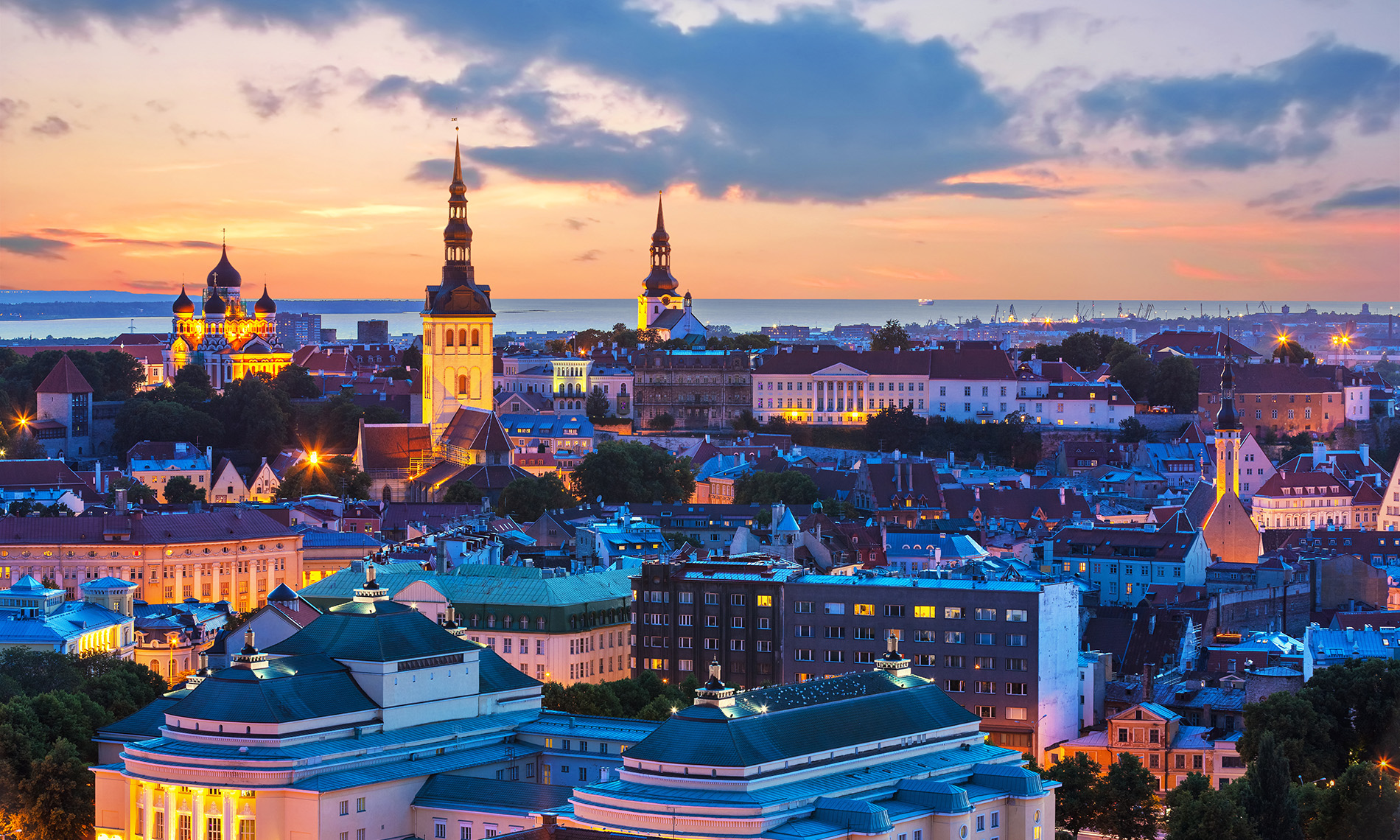
Often overlooked, the Baltics is fast becoming one of the most exciting tech startup hubs in Europe. Home to only roughly six million people, the countries of Estonia, Lithuania and Latvia have the largest number of startups per capita in Central and Eastern Europe and the venture capital firm Index Ventures has rated these countries as the most ‘startup-friendly’ in Europe, largely owing to policies on stock options, tax, employment and a low cost of living.

One remarkable statistic is that since Brexit, Lithuania is now the largest fintech hub in the EU and in some cases is actually moving investment from the UK to Lithuania. Continue reading “Euro Elite: Baltics – Small yet spirited”

Euro Elite: Benelux – Reasons to be cheerful

Notwithstanding the macro-level impact of Covid-19 globally, independent firms in the Benelux region have adapted to evolving conditions with remarkable fortitude. At Stibbe, for example, there have been tangible reasons for cheer. According to its managing partner, Wouter Ghijsels: ‘The firm is growing, and the lateral hires and promotions of the past year across the Benelux are a testament to that. Overall, we have had an increasingly successful year across all practices,’ he says.

Equally, Loyens & Loeff has been another success story. Says its Netherlands managing partner, Bram Linnartz: ‘Our firm succeeded in adapting to the ever-changing circumstances and continued to grow at a tremendous pace’. This was helped by the firm establishing a dedicated incident and crisis management team to safeguard the workforce and handle the challenges of the coronavirus crisis. Continue reading “Euro Elite: Benelux – Reasons to be cheerful”

Euro Elite: Germany – Flight to quality

Past experience, such as the financial crisis in 2008/09, has shown that the German legal market is robust. Today, in the midst of the Covid-19 pandemic, independent law firms are therefore largely confident that the market will remain stable and reasonably active.

This is not to say that the pandemic has not had an impact. Indeed, it is viewed by some as marking the end of the economic boom of the past decade. While the German government is keeping companies liquid by injecting cheap money into the economy, future consequences are still difficult to assess. Germany’s GDP fell by 5% in 2020, a shade less than analysts’ predictions and during the worst contraction of -5.7% in 2009. The economy has also fared relatively well compared with some other European nations. Continue reading “Euro Elite: Germany – Flight to quality”

Euro Elite: CEE – Finding the middle ground

The general picture is one of uncertainty across the diverse CEE region; while there was an initial slowdown last year across the board, transactions did pick up towards the end of 2020 in certain sectors. Lawyers report having been busy throughout the year, with Q2 necessitating more of a focus on restructurings and Q4 seeing a return to more usual flows of activity.

Overall, the year can be said to have been defined by volatility. Observing the pace of change, Dragan Karanović, the Serbian-based managing partner of Karanovic & Partners, reflects: ‘It used to be year-on-year, then quarter-on-quarter, and now it’s almost week-by-week.’ Continue reading “Euro Elite: CEE – Finding the middle ground”

Euro Elite: France – Shining lights

In France, as elsewhere, the Covid-19 crisis put firms under high pressure to quickly adapt to new regulations and remote working requirements, both for the firms’ own set-up and for clients undergoing the same challenge. The French market proved to be very resilient to the challenges caused by the outbreak of the pandemic in Europe, with the country’s large independent firms – as full-service outfits – able to help their clients with every Covid-related consequence.

‘There is almost a double movement in the market,’ observes August Debouzy’s managing partner Mahasti Razavi, ‘with transactional activity proving to be quite robust after a noticeable dip in spring, but a clear uptick in restructuring work.’ Continue reading “Euro Elite: France – Shining lights”

Sponsored briefing: Life sciences market in France: Early access of medicines reform for 2021

LexCase’s Diane Bandon-Tourret and Esther Vogel on the newly restructured early access mechanism for medicine products in France

The French Social Security Financing Law (LFSS) for 2021 restructured the entire early access mechanism for medicine products. Continue reading “Sponsored briefing: Life sciences market in France: Early access of medicines reform for 2021”

Euro Elite: Iberia – Stronger together

Iberia’s all-important tourism and hospitality sectors have taken a hit during the pandemic, and continued restrictions mean it could be some time before international holidaymakers are able to return. While Covid-19 has brought unique challenges, independent law firms in the region were already facing tough competition from global players and the Big Four accounting firms.

In Spain, the elite independent firms are well established, but so too are some of their biggest international competitors, including Allen & Overy, Clifford Chance and Linklaters. ‘The Spanish legal sector is very robust due to its competitiveness,’ notes Salvador Sánchez-Terán, managing partner at Iberian heavyweight Uría Menéndez. ‘Full-service firms such as ours are able to cope with crisis situations rather well, as our business is generated by clients requiring assistance from multiple practice areas.’ Continue reading “Euro Elite: Iberia – Stronger together”

Euro Elite: Ireland – All-comers welcome?

Despite the ongoing Covid-19 crisis, Ireland’s independent legal market has reason for optimism: the Irish economy is expected to be one of the most resilient in the EU, according to November 2020 forecasts by the EU Commission, with GDP expected to return to growth in 2021. This is largely thanks to the country’s thriving life sciences and technology sectors and the presence of numerous major multinationals – among them Apple, Facebook, Google, Microsoft, GlaxoSmithKline and Pfizer – which have their European headquarters in Dublin and in the south and west of Ireland. As a result, production and exports, particularly of medicinal products and computer services, have remained strong.

‘Client activity has remained robust during this time, despite the uncertainty,’ explains Owen O’Sullivan, recently appointed managing partner at William Fry. ‘While it’s true that most sectors are facing challenges, especially those directly impacted by physical-distancing measures, such as tourism, travel, retail, hospitality and live events, other sectors are enjoying significant demand and growth at this time – for example, healthcare, retail grocery, and online entertainment and communications.’ Continue reading “Euro Elite: Ireland – All-comers welcome?”