Southern and Eastern Europe: A long recovery

As with many global sub-regions, southern and eastern Europe (SEE) is slowly emerging from a period of stark economic slowdown as a result of the Covid-19 pandemic, with regional economies affected in a variety of ways. This ranged from tourism-reliant nations such as Croatia and Greece that faced an unprecedented plunge during 2020, relying on EU relief and revived capital spending intervening to restore growth, to Romania, whose resource-rich economy suffered from a decline in industrial production, only to recover during Q3 2020 after foreign trade and investment – particularly from Germany – resumed in earnest.

Although granular policy details have differed, governments have intervened to prevent the spread of Covid-19, while also seeking to protect key economic sectors and also balancing consumer demands and differing political situations. A number of SEE countries faced elections during the pandemic, a situation that has broadly favoured incumbents. Both the Romanian and Bulgarian governments returned, albeit facing a significant loss of support and ongoing questions over their futures, while control of the Cypriot House of Representatives shifted to the conservative opposition. Continue reading “Southern and Eastern Europe: A long recovery”

Croatia – ups and downs

Having enjoyed steady economic growth following its accession to the European Union (EU) in 2013, Croatia saw an abrupt halt to its development in 2020. With a projected 10% drop in GDP, the depth of the economic trough appears similar to that of the 2008 financial crisis, though optimism remains that this downturn will be shorter as mitigatory factors, particularly Covid vaccines, begin to make themselves felt.

Aside from the global economic impact faced by most countries as a result of the pandemic, Croatia was perhaps most affected by the affect on the tourism sector, which naturally suffered considerably. However, continued progress on vaccinations and the creation of the EU’s Green Pass have bolstered expectations the sector will soon recover (although a similar pre-vaccine reopening of the tourist economy last summer led to a dramatic surge in infections). Continue reading “Croatia – ups and downs”

Romania – bounceback

Romania has seen buoyant growth in recent years, with its economy upgraded to ‘emerging market’ by FTSE Russell in 2019. Gabriel Zbârcea, managing partner at Ţuca Zbârcea & Asociaţii, explains: ‘Until the coronavirus outbreak, business was flourishing in Romania: 26% more deals in 2019 as compared to 2018 with a value of €5bn; also real estate investments went past the €1bn line in 2019, standing 7% higher than in 2018.’

‘2020 has been an interesting year financially,’ says Răzvan Stoicescu, deputy managing partner of Muşat & Asociaţii. ‘We did see a slowdown during Q2 of 2020, but things picked up during the second half of the year and have been on a positive trend. However, since neither us nor our clients have gone through a situation of such a magnitude before, the process was not without challenges. For example, switching abruptly from what was essentially a direct contact way of working for our profession, to virtual meetings, unpredictable schedules and remote work was taxing even if ultimately manageable.’ Continue reading “Romania – bounceback”

Sponsored briefing: Romanian criminal judicial bodies must comply with fiscal courts’ final judgments

The Decision of the Romanian Constitutional Court no. 102/17.02.2021 is set to completely change the approach towards tax evasion cases, stating that criminal prosecution bodies must from now on give appropriate consideration to final decisions rendered by fiscal courts that establish the existence or non-existence of a prejudice brought to the consolidated State budget.

In many cases, criminal prosecution bodies are notified regarding a possible tax evasion offence, following fiscal audits carried out by the National Agency for Fiscal Administration. The latter issues administrative and fiscal documents that may be challenged separately, before fiscal courts. Continue reading “Sponsored briefing: Romanian criminal judicial bodies must comply with fiscal courts’ final judgments”

Sponsored firm focus: Focus on Musat & Asociatii

Chairman and managing partner: Gheorghe Muşat | Deputy managing partners: Răzvan Stoicescu, Paul Buta

Number of partners: 13 | Number of lawyers and other fee-earners: 100 + | Languages: English, French, German, Italian, Spanish, Romanian

Romania, Bucharest office: 43 Aviatorilor Bd., 1st District 011853 | T: +40 21 202 5900 | F: +40 21 223 3957 | E: [email protected] | W: www.musat.ro

Brasov office: 4 Diaconu Coresi St., 1st Floor, 500025 | T: +0368 006 105 | F: +0368 006 108 | E: [email protected] | W: www.musat.ro


Muşat & Asociaţii is a leading, full-service Romanian law firm, advising leading national and international companies alike, as well as governmental authorities and agencies, financial institutions and investment funds. Over 2,500 high-profile clients benefit from top-notch legal expertise and extensive resources, provided via 13 partners and over 100 dedicated attorneys. Muşat & Asociaţii is a pioneer in the business law industry and one of the first established law firms in the country, tracing its history back 30 years.

Areas of practice

M&A/PRIVATISATIONS: acting on complex cross-border transactions and on a full range of deal structures.
Clients: Penta Investments, Spectrum Brands, DAMEN Shipyards Mangalia, Sterling Resources, Enel Group, SABMiller, GDF Suez, Abbott, CRH Ireland.

CORPORATE AND COMMERCIAL: structuring and negotiating complex secured and unsecured transactions.
Clients: Amazon, Google, Facebook, Emerson, Dell, Nokia, Penta Investments, Premier Capital.
Contacts: Gheorghe Mușat, managing partner ([email protected]); Răzvan Stoicescu, deputy managing partner ([email protected]); Iulian Popescu, partner ([email protected])

LITIGATION AND ARBITRATION: the full spectrum of representation, from lower courts to the High Court of Cassation and Justice and the Constitutional Court.
Clients: Damen Schelde Naval Shipbuilding, BCR Banca pentru Locuinţe, FirstBank, Kaufland, Enel, thyssenkrupp, Roche, Abbott, Oracle, Eli Lilly, Colas, TriGranit, GDF Suez, Panalpina, KMG International, Copisa Constructora Pirenaica.
Contacts: Cosmin Libotean, partner ([email protected]); Paul Buta, deputy managing partner ([email protected]); Răzvan Stoicescu, deputy managing partner ([email protected])

REAL ESTATE AND CONSTRUCTION: advises on the acquisition of land, construction and maintenance, permitting aspects, residential, office and commercial projects, as well as mixed-use scheme developments and asset management work.
Clients: Brookfield, Adesgo, Novares, Teconnex, CRH, InterCora, Kaufland, Buck Consultants, TriGranit, ING Real Estate, Sogeprom, Daimler, Grupo Lar, CAF, Italferr, European Investment Bank.
Contact: Monia Dobrescu, partner ([email protected])

ENERGY AND NATURAL RESOURCES: experienced in encompassing energy trading, generation, distribution, transmission and supply licensing, emissions trading and renewable energy and environmental legal aspects related.
Clients: Electrica, Hidroelectrica, Electrica Furnizare, Repower, Nereo GreenCapital, Electromagnetica, Wellbore Integrity Solutions, Kraftanlagen Romania, Omya Calcita.
Contacts: Iulian Popescu, Partner ([email protected]); Răzvan Stoicescu, deputy managing partner ([email protected])

INFRASTRUCTURE AND PPP/PUBLIC PROCUREMENT: assists clients in public tenders, property finance and leasing, concession of public assets and services, drafting and negotiating PPPs and concession agreements, feasibility studies.
Clients: Solar Turbines, CCCC, Harris Corporation, Elbit, Sutech, CAF, European Investment Bank.
Contact: Iulian Popescu, Partner ([email protected])

BANKING AND FINANCE: advises on syndicated loans; structured, acquisition, asset and project finance; securitisation.
Clients: EBRD, PPF banka, UniCredit, Citi, Raiffeisen, BRD Societe Generale, Ciech S.A., European Investment Fund, Barclays PLC, Nokia, Alcatel-Lucent, Novares, Alior Bank, Google Cloud Platform, Goldman Sachs & Co. LLC.
Contact: Monia Dobrescu, partner ([email protected]); Răzvan Stoicescu, deputy managing partner ([email protected])

CAPITAL MARKETS: handles transactions involving publicly held companies listed on the Bucharest Stock Exchange.
Clients: Goldman Sachs & Co. LLC, HSBC, JP Morgan, Citibank, Northern Trust, BNY Mellon (members of the Association of Global Custodians), Barclays PLC, Romanian Financial Supervisory Authority, UBS, Swiss Capital, BT Securities, Citi, Raiffeisen, Société Générale.
Contact: Răzvan Stoicescu, deputy managing partner ([email protected])

TELECOMS, IT AND MEDIA: advises in all areas of communications, broadcasting, E-commerce, internet services, software development and licensing, infrastructure and equipment finance.
Clients: Verizon, Porsche, Disney, Sony, Google, Apple, Intel, Intact Media, AT&T, Amazon.
Contact: Iulian Popescu, Partner ([email protected])

COMPETITION AND ANTITRUST: legal assistance in all stages of antitrust proceedings and investigations carried out at national and EU level, concerning both cartel-type behaviour and alleged abuses of dominant position.
Clients: Electrolux, Damen Shipyards Group, Roche, Generali Holding, Penta Investments, Eli Lilly, Servier, Orange.
Contact: Paul Buta, deputy managing partner ([email protected])

RESTRUCTURING AND INSOLVENCY: covers pharmaceuticals, real estate, oil and gas, maritime technology, transportation, and construction.
Clients: First Bank, Aegean Airlines, Damen Shipyards Group, Termoelectrica, Sermedic, ECE Projektmanagement International GmbH, Dubai Aerospace Enterprise, Chloe Acquisition Consulting, Gordian Holdings, PVS International (S) PTE. LTD.
Contact: Mihai Popa, partner ([email protected])

TAXATION: advises on structuring in a wide range of corporate and financial transactions and fiscal matters.
Clients: Amazon, Emerson, Servier, SABMiller, Sermedic, Universal Music.
Contact: Razvan Graure, partner ([email protected])

HEALTHCARE AND PHARMA: counsels on M&A, restructurings and reorganisations, regulatory, competition and compliance-related advisory work.
Clients: Eli Lilly, Servier, Abbott, Lundbeck, Novartis, Astellas Pharma.
Contacts: Paul Buta, deputy managing partner ([email protected]); Dan Minoiu, partner ([email protected])

INTELLECTUAL PROPERTY: experienced in acquisition, development, implementation, enforcement, licensing and other exploitation of IP rights, as well as in patent, trademark, and copyright regulatory matters.
Clients: Deutsche Telekom, ZTE, L’Oréal, Blue Air, Otsuka Pharmaceuticals, Apple.
Contact: Paul Buta, deputy managing partner ([email protected])

TRANSPORT: advises on trade and transport of goods by sea, road and air, such as sale/purchase, charter, cargo insurance, recovery, arrest, execution, cargo, and freight claims.
Clients: CAF, Tip Trailer, China Gezhouba, Aerovista.
Contact: Iulian Popescu, partner ([email protected])

Ukraine – green shoots and uncertainty

Ukraine has broadly seen an improvement in its economic outlook since the 2019 election of comedian and actor Volodymyr Zelenskiy to the presidency. After years of turmoil, culminating in the 2014 defenestration of pro-Russian president Viktor Yanukovych and the Russian invasion of the Crimea, Ukraine has deepened its ties with the EU, adopting reforms that closely map those of European legislation. This has encouraged foreign investors, while legislative reform continues apace, with a new capital markets law coming into effect in 2020 that implemented the provisions of key EU law, including MiFID II, MiFIR, and CRD IV. There are also ‘grandiose governmental plans for the privatisation of state property and large-scale infrastructure projects’, in the words of Armen Khachaturyan, senior partner at major domestic firm Asters, while the legalisation of the gambling industry in July 2021 is also driving client activity.

Ukraine frequently competes with Moldova as the poorest country in Europe, despite its huge agricultural exports, though this is partly due to a lack of transparency in the economy, in which much economic activity goes unreported. Since 2014, the National Bank of Ukraine (NBU) has closed a huge percentage of the country’s commercial banks, partly to clamp down on corruption and money laundering, but state control of banks is part of the reason why inflation and interest rates remain high. Continue reading “Ukraine – green shoots and uncertainty”

Greece – the long road back

Despite a Covid-induced 8.2% contraction in GDP last year, compounding over a decade of economic decline, Greece serves as an unexpected source of optimism within the southern and eastern Europe region. Despite losing its title as the largest regional economy to Romania in recent years, it is set for a semi-swift bounce back, with the EU recently forecasting growth of 4.3% for 2021.

Supporting the buoyancy is the fact that, throughout its many years of economic torment, Greece has reformed its economy into a sustainable one which, in the words of Bernitsas Law managing partner Panayotis Bernitsas, is a ‘safe and welcome option for international investment’. Bernitsas adds that his firm has been heavily involved in a number of ‘legislative changes aimed at cutting back the red tape’ and ‘creating a more business-friendly environment’. Continue reading “Greece – the long road back”

Sponsored briefing: Recovery and Resilience Plan and labour market reform; Greece’s pathway to sustainable growth and investment attraction

Karatzas & Partners’ Angeliki Tsatsi and Christos Paraskevopoulos on the recovery measures in Greece in the wake of the Covid-19 pandemic

After almost a decade of deep recession and while being at the verge of sustainable recovery Greece faced the consequences of the Covid-19 pandemic, particularly adverse for an economy where tourism contributes to a very large part of its GDP. Following the global paradigm of using expansionary monetary and fiscal policy as the primary tool to tackle the Covid-19 economic shock the European Union (EU)adopted, among others, the NextGenerationEU recovery plan. Greece was among the first EU member states to seize the opportunity and to submit its national Recovery and Resilience Plan, the so-called Greece 2.0, for the European Commission’s assessment, as part of the EU’s Recovery and Resilience Facility, the heart of NextGenerationEU. Greece’s plan was approved in June 2021 and consists of €17.8bn in grants and €12.7bn in loans, a total financing of €30.5bn towards a green transition, digitalisation and improvement of the business environment. Continue reading “Sponsored briefing: Recovery and Resilience Plan and labour market reform; Greece’s pathway to sustainable growth and investment attraction”

Cyprus – work in progress

Cyprus, a divided island nation, faces an uncertain future on the geopolitical front. The northern region of the country remains occupied by neighbouring Turkey and recent efforts for reunification between the separated Greek and Turkish Cypriot communities have reached a bitter standstill.

Among all the uncertainty, which has arguably become the status quo after 47 years, the country has undergone steady economic growth and enjoys one of the highest GDP per capita rates in the southern and eastern Europe region. A 5.1% contraction in GDP was experienced during 2020 though an almost instant recovery is forecast for 2021 with The European Commission predicting growth of 4.2%. Continue reading “Cyprus – work in progress”

Sponsored briefing: Alternative dispute resolution in Cyprus

Stavros Pavlou and Athina Patsalidou on how Cyprus has embraced alternative dispute resolution, becoming an increasingly attractive venue for arbitration proceedings

As Cyprus has emerged as an international business centre it requires an efficient and effective dispute resolution mechanism that will allow stakeholders to move on from disputes and concentrate on their core business. Given the long delays experienced within the traditional court system, arbitration as an alternative dispute resolution method, provides such an efficient system for dispute resolution and promotes economic activity in Cyprus. The main areas in which arbitration is used in Cyprus are commercial disputes, shareholder disputes, construction disputes and banking disputes between debtors and financial institutions. Continue reading “Sponsored briefing: Alternative dispute resolution in Cyprus”

Bulgaria – M&A and energy boom

Bulgaria has, to say the least, performed commendably at shielding its economy from the significant disruption seen in many other European markets. GDP sank 4.2% in 2020, one of the lowest figures in the EU, and was partly supported by an extensive wage subsidy scheme that saw the government cover 60% of wages for employees who would otherwise have been made redundant.

Unsurprisingly, the relatively stable economic climate has allowed larger law firms, both international and local, to continue undisrupted throughout the pandemic period. Veronika Hadjieva of Kambourov & Partners reports that ‘2020 was arguably one of the strongest years the firm has ever had’ as it ‘managed to complete a large number of M&A, even some that were initially put on hold or pending’. Continue reading “Bulgaria – M&A and energy boom”

Sponsored briefing: Interview: Mr Nikolay Cvetanov – managing partner, Penkov, Markov & Partners

Can you give our Legal Business readers an overview of Penkov, Markov & Partners?

Penkov, Markov & Partners ( PM&P) was one of the first law offices established in Bulgaria immediately after the democratic changes in the country in 1990. During all these years we have been pioneers in various legal spheres. Currently, our law firm provides to its clients a full scope legal assistance in practically all areas of civil and administrative law, eg corporate and commercial law, real estate, banking and financial regulations, energy, competition, personal data protection, pharmaceuticals, litigation, etc. Our clients include a variety of domestic and international companies of varying sizes. Our team of experts is engaged on a daily basis with the provision of legal assistance to some of the primary Bulgarian businesses operating in various spheres of economy. PM&P is part of some of the leading international law organisations, including Lex Mundi, LexAdria, etc, as our office, as well as individual experts, are also regularly ranked in the most prestigious European lawyer’s ranking editions (The Legal 500, Chambers and Partners, etc). As a matter of principle, our professionals strive to help our clients and partners to find the best practical solution to any legal challenges lying ahead from a business perspective, as well as to understand and realise their projects in the best way possible. Continue reading “Sponsored briefing: Interview: Mr Nikolay Cvetanov – managing partner, Penkov, Markov & Partners”

Sponsored focus: Penkov, Markov & Partners

Iztok Dstr., 13B, Tintyava Str., Floor 6, 1113 Sofia, Bulgaria

T: +359 (0) 2 971 39 35 | E: [email protected] | W: www.penkov-markov.eu/en

Practice areas: Commercial and company law; state regulations; tax law; real estate; banking, finance and capital markets; litigation and arbitration; IT, media and telecoms; energy and environment; personal data protection; patents and trade marks

Firm profile

Established in 1990, Penkov, Markov & Partners is one of the first law firms in Bulgaria, having nowadays the biggest and most significant client portfolios and being respected both domestically and internationally.

The firm currently has approximately 40 partners and associated members, several external legal consultants, 12 trainees, 12 assistants and staff members. The firm publishes its own newspaper PMP Legal News, circulation 2,200 (published in Bulgarian, English and German languages) which is also available on its website.

Since 1996 PM&P is the exclusive member firm for the jurisdiction of Bulgaria of Lex Mundi – the world’s leading association of independent law firms. PM&P is a member of Lex Mundi and FLI Net and is the first law firm in Bulgaria certified under the ISO 9001:2000 and later re-certified under ISO 9001:2008 and ISO 9001:2015 standards by Bureau Veritas Certification.

For their professionalism the experts from PM&P are frequently engaged not only in legal advice and procedural representation but also in the legislative process (eg, the Commercial Register Act and the New Renewable Energy Sources Act, as well as competition regulations).

In 2019 PM&P was awarded Superbrand of the Year for a fourth time (2007, 2015, 2017) as recognition for exceptional reputation of the trade mark Penkov, Markov & Partners among its current and potential clients, partners and investors.

The team


Vladimir Penkov, chairman and senior partner ([email protected])
Mr Penkov has extensive experience in negotiations, research, drafting of legal documents and representation of clients in various areas of commercial law, such as banking and finance, corporate law and commercial contracts, competition, privatisation and foreign investments, investment management, M&A, project finance, public procurement, licensing and know-how agreements, tax law, telecoms, media and IT, energy law and renewable energy sources.


Ivan Markov, partner ([email protected])

Mr Markov has longstanding practical expertise in legal searches, elaboration of legal instruments and representation of clients in different areas of business law such as company law, commercial agreements, banking and finance law, regulatory permissions, insurance law, M&A, concessions, project finance and the securities related thereto.


Nikolay Cvetanov, managing partner ([email protected])
Mr Cvetanov has significant experience in research, drafting legal documents and representation of clients in the fields of commercial law and banking and finance law, litigation, corporate law, commercial contracts, financial projects and tax law.


Milena Gaidarska, partner ([email protected])
Mrs Gaidarska has longstanding practical expertise in legal searches, elaboration of legal instruments and representation of clients in different areas of business law such as: real estate transactions, development and construction, commercialisation of retail, residential and office space, financing and securitisation of real estate projects, M&A, public procurement.


Roman Stoyanov, partner ([email protected])
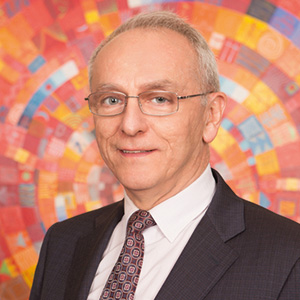
Mr Stoyanov disposes with long-term practical experience in research, preparation of legal documents and representation of clients in different spheres of business law, such as administrative law, commercial and corporate law, pharmaceutical law, customs law, litigation and arbitration, and M&A.

At a glance: Penkov, Markov & Partners

Headcount: 50+ lawyers

Offices: Sofia, Bourgas, Varna, Pleven, Rousse, Stara Zafora

Key clients: ARTEKS Engineering Group; Booking.com; Cable Internet Systems; Coca-Cola; EMCO; EBRD; Heineken; Klett Bulgaria; InnoPharma International BG; Markan Holding

Sponsored briefing: Q&A with LEX Law Offices managing partner Örn Gunnarsson

How would you describe the Nordic legal market generally regarding the last 12 months?

I am only able to speak for the Icelandic market, but over the last 12 months, the only significant change we have experienced is related to the more flexible working environment implemented because of restrictions put in place because of Covid-19. Business has been good although because of the restrictions we experienced delays in dispute resolution cases, but that has been offset by an increase in M&A activity.

What would you say has been the primary impact of the pandemic on the market?

Iceland was probably the country that felt the least impact of the pandemic. From time to time though limitations on the number of people in the workplace were put in force which resulted in the implementation of a flexible working environment supporting employees to work from home. Although the technology was already in place, the pandemic ensured that video conferences and meetings became the name of the game and every employee in the industry optimised those sources to keep the business running without interruption. On the business side Iceland, as with most other countries, has experienced increased M&A activity. In many cases the pandemic caused certain industries to struggle or particular firms, which has led to frantic exploration to increase efficiency. In many cases downsizing and restructuring has been the way forward while in other instances a merger has been deemed the best option. M&A activity has therefore been at an all-time high for the latter period of the pandemic.

How was 2020 and early 2021 for the firm? Would you say it was a successful year? If so, why? If not, why?

The year 2020 and the first half of 2021 have been successful. Turnover has increased marginally, but a lot of costs have been saved and significant gains have been made through alternative billing methods, which promoted efficiency for the benefit of all stakeholders, the firm, the client and the employee.

Have you noticed any noticeable new trends for the firm in the last 12 months? Have any practice areas increased/decreased in prominence?

As stated, before there has been a remarkable uplift in the M&A sector. Other sectors on the rise are the IT sector, although it has probably more to do with increased start-up activity than the pandemic. We do not see any notable downturn in any sector, but as stated before litigation has slowed during the pandemic, but in our opinion that has more to do with Covid restrictions than a poorer inflow of assignments.

What does all of this mean for the future of independent firms in your country? What elements separate out the firms that are ‘thriving’ and those that are not?

All major law firms in Iceland are independent. The big accounting firms have been increasing their presence, but only in limited sectors. Iceland has not experienced the threat of international law firms. The outlook for independent law is therefore positive.

The question of why some firms are thriving and some not is always difficult to answer. In our opinion at LEX Law Offices, the most important element of legal industry is to really understand the needs of the clients. Why is he asking for advice and how can we, the lawyers, deliver as much value as possible as efficiently as possible. If one loses sight of that he is subject to become dispensable.

Are there any particular mandates that you have handled since the pandemic began that have been particularly noteworthy or have ‘bucked the trend’?

LEX was mandated by international investors to advise on the acquisition of the passive telecoms infrastructure of two of the major telecoms companies in Iceland. This has led to other owners of passive telecoms infrastructure exploring opportunities of disposal and it seems that it has created a lot of attention from both domestic and international investors.

Has anything unexpected (particularly positive) come from the pandemic? What do you envisage will be the long-term impact/changes?

Overall, from the company perspective the pandemic has not caused as many problems as one would have expected. The pandemic has tested the resolve of the employees and the management to figure out new ways of processing and delivering advice to our clients. Not unexpectedly, the whole of the firm has walked hand in hand to figure out and implement new methods. This whole process has led to more and better communication between management and employees and in general a better working environment.

Although never neglected I suspect the long-term impact will be on a better working environment and increased efficiency in processing end delivery of service.

For more information, please contact:


Örn Gunnarsson, managing partner, LEX Law Offices
E: [email protected]

www.lex.is/en

Sponsored firm focus: Focus on LEX Law Offices

Borgartún 26, 105 Reykjavík, Iceland | T: +354 590 2600 | E: [email protected] | W: www.lex.is/en

Practice areas: Banking, finance and capital markets; competition law; constitution and human rights; construction, public procurement and tendering law; corporate and commercial law; corporate finance and project finance; data protection and information technology; employment and labour law; energy, natural resources and environmental law; European law; insolvency, bankruptcy and financial restructuring; insurance and tort; intellectual property and technology transactions; litigation, arbitration and dispute resolution; mergers and acquisition; property law; public administration, public parties and urban planning; real estate; shipping, transportation and maritime law; telecommunication law

Firm profile

Tracing its roots back to 1959, LEX is one of the leading full-service law firms in Iceland. Based on a traditional legal practice of litigation, real estate law, bankruptcy law and corporate and commercial law, LEX has been a pioneer in the Icelandic legal environment when it comes to innovation based on new market trends. LEX’s intellectual property practice is second to none, offering its clients full service in that sector. Furthermore, LEX is at the forefront in the space of IT and technology transactions, which has become a trivial component in its advisory across different practice areas. Our team has deep industry experience in various sectors, making it possible to provide practical advice and innovative solutions.

In an ever-changing landscape, foreseeability about project development and project expenses has become a major factor in the operation of any law firm. For years LEX has applied a project management approach in most of its practice areas with great success. All lawyers at the firm have received training in project management and with collaboration with universities, further steps have been taken with certain practice areas, in order to maximise efficiency and implement new processes.

This project management effort has awarded LEX with increased efficiency for the benefit of all stakeholders, the firm, its clients and employees.

Furthermore, it has allowed LEX to introduce alternative billing mechanism in a more focused way than before which has been taken by open arms by its clients.

Team profile

The M&A team at LEX consists of 12 experts on the subject. The strength of the team does not only derive from the experts within the M&A sector but its capability to draw on other expertise within the firm. In the last few years, the team has been working very notably along with the IP, IT and the technology transactions teams at the firm. In today’s world the IP and technology sectors play an ever-important role and being able to draw on the expertise of top-ranked partners within those practice areas has considerably strengthened LEX’s position in this competitive market. Core areas include complex technology transactions, strategic licensing, e-commerce, cloud computing, IP development, outsourcing and open source.

LEX has been blessed in being at the advisory table in most of the largest cross-border transactions that have taken place in this field over the last few years.

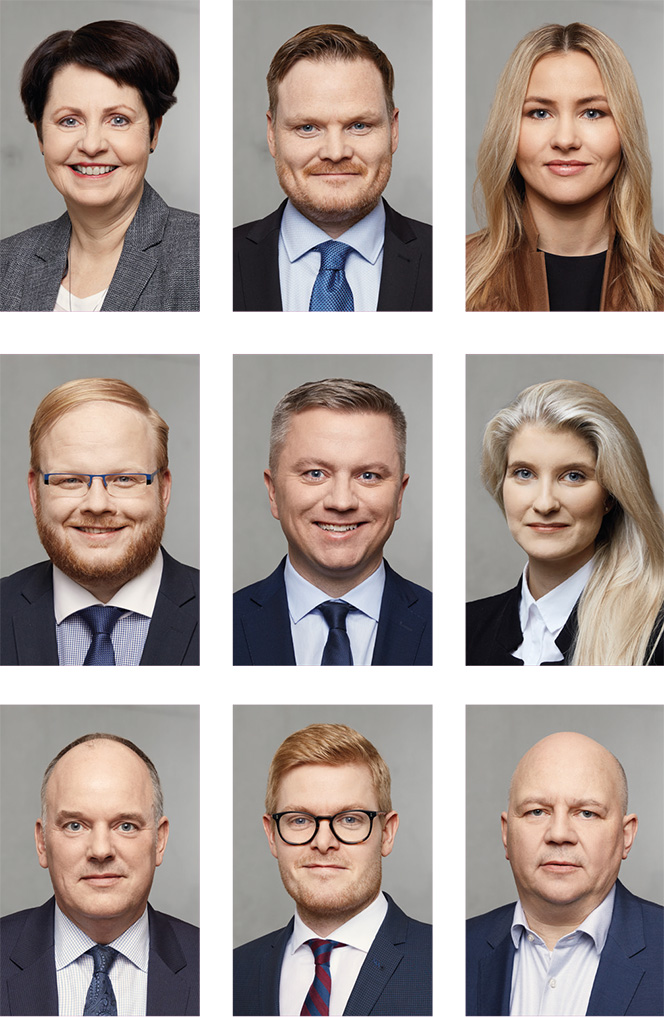
L-R: Erla S Árnadóttir, Eyvindur Sólnes, Fanney Frímannsdóttir, Garðar Víðir Gunnarsson, Guðmundur Ingvi Sigurðsson, Lára Herborg Ólafsdóttir, Ólafur Haraldsson, Stefán Orri Ólafsson, Örn Gunnarsson

At a glance: LEX Law Offices

Headcount: partners 18, assistants 4, associates 16, paralegals 4

Offices: Reykjavík (Iceland), Selfoss (Iceland)

Key clients: Arion Bank hf.; Sjóvá-Almennt tryggingar hf.; Síldarvinnslan hf.; Sjávarsýn ehf.; Samskip hf.; Reykjavík Energy; Mjólkursamsalan hf.; Olíuverslun Íslands hf.; Iceland Seafood International hf.; Toyota Iceland

Sponsored briefing: Q&A with Eversheds Sutherland El Heni

Can you give our readers an overview of Eversheds Sutherland El Heni Law Firm’s legal practice in Tunisia?

We have five main legal practices in our law firm:

  • Corporate/ M&A: One of the strongest team in the Tunisian market (an average of 20 deals per year) mainly focusing on international investments or very high-profile projects in Tunisia.
  • Business law including IP/IT, labour, civil, commercial and contract: The team is fully dedicated to foreign clients who use, fully or partially depending on their internal legal team, our legal outsourcing service enabling them to focus efforts on their core business.
  • Infrastructure, energy, transport: The work is mostly centred around renewable energy, customs and real estate.
  • Banking and finance: The team is used to assisting the biggest DFIs in Tunisia such as IFC, EBRD, and AFD. In addition, we have a strong insurance activity including the main ones in the Tunisian market (Maghrebia Assurance, Star Assurance, Biat Assurance), and act in project finance.
  • Dispute resolution: We offer market-leading pre-contentious, and contentious assistance with day-to-day complex matters. We play a key role in shaping the law and adapting it to the needs of our international clients. For instance, our multilingual team is able to report in French, English and Arabic. We also manage and lead high-profile arbitration.

What do you see as the main points that rank Eversheds Sutherland El Heni Law Firm as a leading firm in the Tunisian legal business market?

We operate under international standards, which means that we respect our deadlines, we have a sophisticated billing system, and our flexible team is always available to respond to a client in need. Furthermore, we are a full-service law firm, so we are able to assist our clients in every aspect of their projects. Our large law firm of 20 (in comparison to the Tunisian market) and its organisation in several practice areas, enable us to work on several projects simultaneously and different aspects of the same projects at the same time. Finally, being part of a global network of 70 Eversheds Sutherland international offices across 36 countries, we can offer our international clients, multi-jurisdictional advice across the five continents.

Given the problems created by the Covid-19 pandemic, how did you successfully manage your firm?

Our first two goals were the safety of the team and establishing a strong internal organisation in order to maintain a high quality of deliverables. When the above conditions have been filled, it allowed us to nurture our clients and to fully support them by focusing on their needs. As an example, during the first phase of the pandemic, we sent weekly newsletters informing the clients of the measures taken by the government, as it was constantly changing, making it easier for them to take decisions.

Which sectors are/will be of most interest to foreign investors, and why?

From our knowledge and experience, the promising sectors for investments are the new technology, renewable energy, healthcare and diversified industries.

We are currently drafting the digital and telecoms legislation, as well as assisting many successful startups, and we’ve noticed that new tech is still new but very attractive for foreign investors as regulations are moving towards a more digitalised economy.

As far as the renewable energy sector goes, Tunisia has a good positioning and significant projects are currently ongoing. On the other hand, the healthcare and diversified industry sectors are still stable for the moment despite the current situation, but they should be expanding soon.

Are there any main changes which you have personally made within the firm that will benefit clients?

As a business-oriented law firm, we recognise our clients’ needs and risks. We understand urgent matters may arise at any time in a business, especially during a global pandemic, so we took the decision to organise the team in total flexibility. This way, our team is available at any time, which was truly appreciated and very beneficial to our clients. In addition, we put significant financial efforts into supporting our clients economically, which means that we accept to postpone payment deadlines, split/reduce our fees etc.

What is the main added value of Eversheds Sutherland El Heni as a corporate law firm in Tunisia?

We are able to offer our clients the high-level of service and thoroughness that our international clients are used to receiving in mature markets (US, EU, Middle East) adapted to the Tunisian market.

For more information, please contact:


Fares Koussay El Heni
Deputy head Africa (Paris) and managing partner (Tunis)

T: + 216 71 116 720 (Paris)
F: + 216 98 337 117 (Paris)

T: + 33 1 55 73 41 08 (Tunisia)
F: + 33 6 68 20 65 33 (Tunisia)

E: [email protected]

Sponsored firm focus: Focus on Eversheds Sutherland El Heni in association with El Heni Law Firm

13 Rue du Lac Tana, Les Berges du Lac I, 1053 Tunis, Tunisia

T: +216 71 116 720 | E: [email protected]

Practice areas: Corporate M&A; commercial, social, IP/IT; digital; infrastructure, renewable energy and transport; banking and finance and project finance; litigation and arbitration

Firm profile

Based in Tunis, El Heni Law firm was created in 1980 and joined the Eversheds Sutherland Africa Group in 2013 creating Eversheds Sutherland El Heni in association with El Heni Law Firm. With our managing partner and deputy head of the Africa Group, Fares Koussay El Heni, founding partner, Mohamed Raouf El Heni, and banking and finance partner, Soundès Mejdoub, our multilingual team of 20 represents a diverse range of clients, from multinational and regional corporations to small and medium businesses, governmental bodies, investors, and entrepreneurs.

The firm has a longstanding presence in Tunisia and can offer 30+ years’ worth of knowledge and experience of the Tunisian government, administration, and market. Our clients benefit from the international experience of our lawyers in various legal matters such as corporate/M&A, commercial, social, IP/IT, legal outsourcing, banking and finance, energy and infrastructure, litigation and arbitration, telecoms and digital.

We have a unique strategy that differentiates us from other law firms:

  • We know how to bridge the cultural and legal gap between the Tunisian market and the investors’ culture by understanding their business.
  • We anticipate all the potential legal issues and problems that could arise during the project lifecycle by considering every aspects even including currency, customs, and taxes.
  • We find innovative solutions, respecting clients’ needs and policies, adapted to the local market to allow the project realisation.
  • We take care of our clients (reactiveness), we think with them (proactiveness), and we are engaged with them (partnership).

Team profile

Our office is divided into five practice groups according to the experience and expertise of the lawyers. Our large team of multilingual lawyers are well-versed on every aspect of business law and operate under international standards. We are able to advise on various projects simultaneously, but also on different aspect of the same project at the same time. We are business-oriented and value offering an innovative client-experience by anticipating the risks and considering the unique needs of their organisation such as the environment and regulations they operate in.

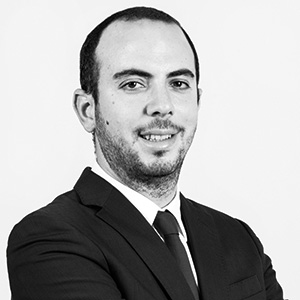
Fares Koussay El Heni (managing partner and deputy head Africa group, corporate M&A/commercial, social, legal outsourcing, energy and infrastructure, project, IP/IT)
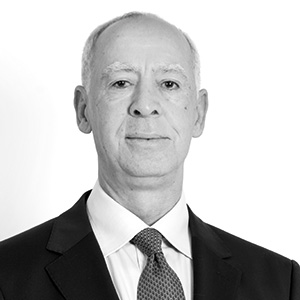
Mohamed Raouf El Heni (founding partner, banking and finance, litigation and arbitration)
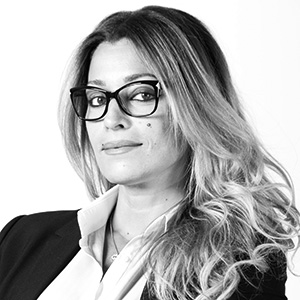
Soundès Mejdoub (partner, banking and finance)

At a glance: Eversheds Sutherland El Heni in association with El Heni Law Firm

Headcount: 3 partners, 18 associates

Number of offices: 74 offices in 35 countries – 1 office in Tunisia

Key clients: GE, Nokia, IFC (World Bank Group), Scatec Solar, Emerson, Bulgin, Rina, Turkish Airlines, Roche, Kone

Sponsored briefing: Q&A with Matouk Bassiouny Algeria

Can you give our Legal Business readers an overview of Matouk Bassiouny’s practice in Algeria?

Matouk Bassiouny in association with SH-Avocats is a full-service Algerian law firm headquartered in Algiers. We offer an integrated and efficient service combining a true on-the-ground knowledge with international standards. Our teams in Algiers work seamlessly with our other offices in the MENA region (Egypt, Sudan, and the UAE) enabling us to build on the expertise of our regional practice groups specialised in specific industries and legal practices.

We provide advisory and transactional services to local and foreign investors in the most efficient and cost-effective manner. Our team also provides our clients with comprehensive dispute resolution services in English, French and Arabic before Algerian courts as well as regional arbitral tribunals. Our Algiers litigation team includes attorneys qualified before the Appellate Courts and the Court of Cassation of Algeria.

We are client-centric and results-oriented. Building on our sector-focused approach, we provide ‘actionable advice’. Our role is to act as a business adviser identifying and resolving key issues to achieve our clients’ strategic objectives.

What do you see as the main points that rank Matouk Bassiouny as a leading firm in the Algerian legal business market?

Our team of two dedicated partners and three lawyers are trilingual and licensed to practice in Algeria. As we routinely advise international corporations, we operate in line with international best practices, but are also deeply entrenched in the local market, cultural and political environments. It is to be noted that both partners, Houda Sahri and Jean-Jérôme Khodara, have a vast experience in Algeria. Both have worked in Algeria for many years,have a deep knowledge of the Algerian market and are very familiar with the complications of the legal framework in Algeria.

In addition, our firm maintains good working relationships with key Algerian authorities including, the Algerian Central Bank, the Governmental Agency for Investment Promotion, the Algerian Customs Authorities and the Competition Authority, thus allowing us to fast-track administrative hurdles.

Our Algiers office is also licensed to plead before Algerian courts. This puts us in a unique position in the Algerian market, allowing us to serve our clients in all their legal needs, whether of a cross-border or local nature.

Given the problems created by the Covid-19 pandemic, how is this affecting your firm and the legal business market generally in the Algeria?

Despite the political and health instability over the past year, we have seen enormous interest from foreign investors since the issuance of the new finance law that has alleviated the restrictions on foreign investment and the so called 49/51 rule.

Algeria has chosen a highly cautious approach to the Covid-19 pandemic that has slowed down the economic activity of the country. This has of course impacted the legal business, however, the need to diversify its economy has triggered a reform of the investment framework and we have been advising a lot of clients either to explore new opportunities created by this reform or to help existing clients to navigate the changes. So in terms of activity, we have no complaints.

Can you talk about any trends or changes in the landscape you are seeing emerge in the Algerian legal business market?

Algeria is witnessing large changes in the investment legal framework. It started with the alleviation of the general restriction on foreign investment including the restriction to 49% of foreign ownership and the state’s preemption right over foreign transfer of ownership and continues through a pipeline of pro-investment legislation in different sectors including banking, oil and gas and food industry.

In 2020, Algeria also lifted the prohibition on international financing and it is in the process of becoming a member of the European Bank for Reconstruction and Development. Such developments are expected to result in a significant growth of project finance in Algeria.

We are witnessing a surge of requests to understand the ongoing modifications to the investment framework in Algeria which reflects the raise of interest in the Algerian Market which was considered for a long time as a closed market.

How is your firm positioned for an anticipated resurgence in activity in the Algerian legal business market?

Our team of two dedicated partners and three lawyers are trilingual and licensed to practice in Algeria. We have also access to a pool of more than 200 lawyers of Matouk Bassiouny regional offices with a regional experience.

We are also planning to build our capabilities by growing our team in our Algiers office. Our goal is to train young Algerian lawyers to operate in line with our international standards and believe we also have our role to play to add to the legal market in Algeria.

With the experience of our leading partners and the support of the team, Matouk Bassiouny in Algeria is the first full fledged independent law firm and we are planning to be one of the big market players within the next few years.

Which sectors are/will be of most interest to foreign investors, and why?

We are seeing two tendencies: first, the existing clients having their activity in the sectors that are witnessing major amendment mainly: importation, pharmaceuticals and automotive. While importation and pharmaceuticals are still subject to the 49/51 rule, Algerian authorities, with the objective of promoting the local car manufacturing industry and preserving the country’s foreign exchange reserves, have passed stringent legislation over the last few years in order to curb the importation of new vehicles. The most recent is the exclusion of foreign investors from the activity of importation and dealing in new cars must be 100% owned by Algerian residents.

The second is the rising interest of international financing organisations in the financing of big projects in banking and renewable energies.

Are there any main changes which you have personally made within the firm that will benefit clients?

There are no major changes, however since the firm is evolving rather fast we are expanding our capabilities and enlarging the team of lawyers by recruiting new young and experienced lawyers to provide the best services to our clients.

What has been your greatest achievement, in a professional and personal capacity?

Working on successful M&A operations and recovering debt amounts to our clients over the last two years.

For more information, please contact:

Houda Sahri, managing partner, Algeria, Matouk Bassiouny in association with SH-Avocats

E: [email protected]

Jean-Jérôme Khodara, Matouk Bassiouny, LB303, August 2021

Jean-Jérôme Khodara, partner, head of the Algeria Practice, Matouk Bassiouny in association with SH-Avocats

E: [email protected]

matoukbassiouny.com

Sponsored firm focus: Focus on Matouk Bassiouny in association with SH-Avocats

1 bis, Chemin des Glycines, Algiers, Algeria

T: +(213) 21 239 723 | E: [email protected] | W: www.matoukbassiouny.com

Practice areas: Corporate and M&A, capital markets, dispute resolution, and finance and projects

Firm profile

Matouk Bassiouny is a leading, full-service MENA law firm with offices in Algiers, Algeria (Matouk Bassiouny in association with SH-Avocats), Cairo, Egypt (Matouk Bassiouny & Hennawy), Abu Dhabi and Dubai, UAE (Matouk Bassiouny) and Khartoum, Sudan (Matouk Bassiouny in association with AIH Law Firm), as well as a country desk covering our Libya practice. Our four offices are strategically located to better serve our clients’ business interests across the entire MENA region.

Our team of over 200 lawyers specialises in advising multinationals, corporations, financial institutions and governmental entities on all legal aspects of investing and doing business in the MENA region.

Trained both locally and internationally in civil and common law systems, our lawyers are deeply ingrained with international best practices and are fully conversant in English, Arabic and French.

Our firm collectively has access to a vast amount of knowledge and experience. We harness this knowledge via our 16 sector-focused groups that support our practice groups. We are therefore able to deliver legal services catered to the industry-specific needs of our clients. Our mission is to find the most innovative and cost-effective solutions for our clients, as we understand that our clients need to drive maximum value from their legal spending. We do this by maintaining a proactive commercial approach to all our legal services.

Team profile

Matouk Bassiouny joined forces with SH-Avocats, a full-service Algerian law firm headquartered in Algiers, to create Matouk Bassiouny in association with SH-Avocats. Led by Houda Sahri (managing partner of the Algiers office) and Jean-Jérôme Khodara (head of Matouk Bassiouny’s Algeria practice), Matouk Bassiouny in association with SH-Avocats has earned a stellar reputation for providing high-quality legal services across a wide range of sectors in the Algerian market.

Houda Sahri, managing partner, Algeria, Matouk Bassiouny in association with SH-Avocats
Jean-Jérôme Khodara, partner, head of the Algeria practice, Matouk Bassiouny in association with SH-Avocats

At a glance: Matouk Bassiouny in association with SH-Avocats

Headcount: 200+ lawyers, 24 partners, 100+ support staff

Offices: Algiers, Algeria; Abu Dhabi, UAE; Cairo, Egypt; Dubai, UAE; Khartoum, Sudan

Key clients: CDC Group, Uber, Etisalat Misr, Pfizer, LafargeHolcim, Lekela Power, First Abu Dhabi Bank, Development Partners International, Hassan Allam, Hilton

Sponsored briefing: Q&A with Matouk Bassiouny & Hennawy

Can you give our Legal Business readers an overview of Matouk Bassiouny’s practice in Egypt?

Matouk Bassiouny & Hennawy is a premier full-service business law firm in Egypt. We started in Egypt, and since then have expanded across the MENA region with offices in the UAE, Sudan and Algeria. Our firm is organised within four main practice groups, and we have recently developed core sector focus capabilities organised into 16 specialised sector groups. With over 170 lawyers in our Egypt office, our firm collectively has access to a vast amount of legal knowledge and experience. We are therefore able to deliver legal services catered to the sector-specific needs of our clients. Our lawyers are trained both locally and internationally in both civil and common law systems, our lawyers are fully conversant in English, Arabic and French. Our firm is ideally placed to advise on high-profile, high-value complex matters.

What do you see as the main points that rank Matouk Bassiouny as a leading firm in the Egyptian legal business market?

Firstly, our strict core practice groups. Unlike other top-tier law firms in Egypt, we are the only law firm in Egypt that has strict practice groups enabling us to efficiently deliver innovative solutions to our clients. Hand in hand with, I also believe our dedicated sector-focused groups give our lawyers and clients a massive advantage. Our firm has made a tremendous investment in implementing 16 sector-focused groups that cut across all our practice groups in order to achieve an even higher level of intellectual and practical synergy. We have created a space for our lawyers to meet, discuss developments, debate ideas, share precedents, anecdotes and add to each other’s and their clients’ knowledge within specific business sectors. And last, but certainly not least, our diversity and inclusion programme which launched last year, headed by our partner, Mariam Auda. Our biggest source of pride at our firm is that we have implemented a horizontal meritocratic philosophy in order to foster an environment where the brightest minds, no matter their gender, ethnicity, sexual orientation, religion or socio-economic background, can come together and flourish professionally.

Given the problems created by the Covid-19 pandemic, how is this affecting your firm and the legal business market generally in Egypt?

Well, the first year of the pandemic was very challenging. Considering that we are the largest firm in Egypt, in the context of the pandemic, size has not helped us. When you are a smaller firm, you are more agile and perhaps able to weather the storm more easily. However, when you are as large as us it becomes more challenging. That being said, we did manage to weather that storm and in fact rose from the pandemic stronger. In a way, it prepared us to manage future crises more efficiently as they may come. From a work standpoint, the first six months of the pandemic were a disaster. The world just froze. Starting from September of last year, however, work began ramping back up. Today we are busier than we have ever been and we have enshrined concepts of mobility and distance working, which will enable us to efficiently manage any future lockdowns or other future safety precautions.

Can you talk about any trends or changes in the landscape you are seeing emerge in the Egyptian legal business market?

We are now seeing Egypt rise to being one of the top destinations for foreign direct investment, which means that inbound M&A has been very hot. Secondly, I believe Egypt is starting to get traction as being seen as a new start up scene. We are seeing a lot of new innovative startups and accordingly, a lot of investment in the startup scene. Accordingly, we are starting to see a slight shift in M&As. In the past M&A was mainly focused on oil and gas, FMCG, health care and education, but now we are starting to see that focus diversify a bit, mainly by honing in on the tech and startup scenes.

How is your firm positioned for an anticipated resurgence in activity in the Egyptian legal business market?

As previously mentioned, we have never been busier than we are today. And so this year, starting from January 2021, the firm has added around an additional 15 lawyers to our teams. Accordingly, we are completely equipped and ready to handle all of our clients’ needs, whatever they may be. Additionally, we were very humbled to have won Corporate and M&A Law Firm of the Year at this year’s Chambers Middle East Awards 2021.

Which sectors are/will be of most interest to foreign investors, and why?

Traditionally speaking, FMCG, education and healthcare sectors are fuelled by strong demographics, however, as I touched upon earlier, Egypt is now witnessing new sectors emerging, namely the tech and startup sectors. We are also witnessing innovative efforts to link the tech sectors with more traditional sectors, for example one of our startup clients is Ashtar which does e-learning, Jilatee which sells secondhand fashion and Shift EV which does acceleration for the transition to electric mobility for fleets in the emerging markets.

Are there any main changes which you have personally made within the firm that will benefit clients?

I think the main, most recent change has been building up our dedicated sector-focused groups. Our 16 sector groups support our practice groups by providing sector-specific expertise, which has proven to be a significant added-value to each practice group’s offerings to clients. This initiative has underlined our commitment to understanding our clients’ industry-specific commercial needs and allows us not to just be lawyers to our clients, but also valuable business partners with them. We remain the only firm in Egypt to adopt such a structure.

Also quite important, is our regional expansion. Our regional firm has continued to grow over the past few years, and just last year we officially opened our fourth office in Algiers, making us one of the largest regional firms in the MENA region.

What has been your greatest achievement, in a professional and personal capacity?

Honestly, I believe my greatest achievement is having found my amazingly supportive wife. Building a regional top-tier law firm like Matouk Bassiouny from the ground up is incredibly time consuming and demanding, and there is no way I could have done it without the patience and support of my wonderful wife.

For more information, please contact:

Omar S. Bassiouny, founding partner and head of corporate and M&A, Matouk Bassiouny & Hennawy

E: [email protected]

matoukbassiouny.com