‘A bright horizon, but without the stepping stones to get there’ – top fintech lawyers react to the Chancellor’s Mansion House speech

Leading City partners have warned that making London more attractive to fintechs will require more than the reforms put forward by Chancellor Rachel Reeves, with better access to capital and a shift in attitude from regulators required in order to bring the financial services market out of the doldrums.

London fintech partners have reacted with cautious optimism to Reeves’ Financial Services Growth & Competitiveness Strategy – set out in her Mansion House speech earlier this week (15 July) – which aims to make the UK the ‘world’s most technologically advanced global financial centre, a leading jurisdiction for fintech firms to start up, scale and list.’

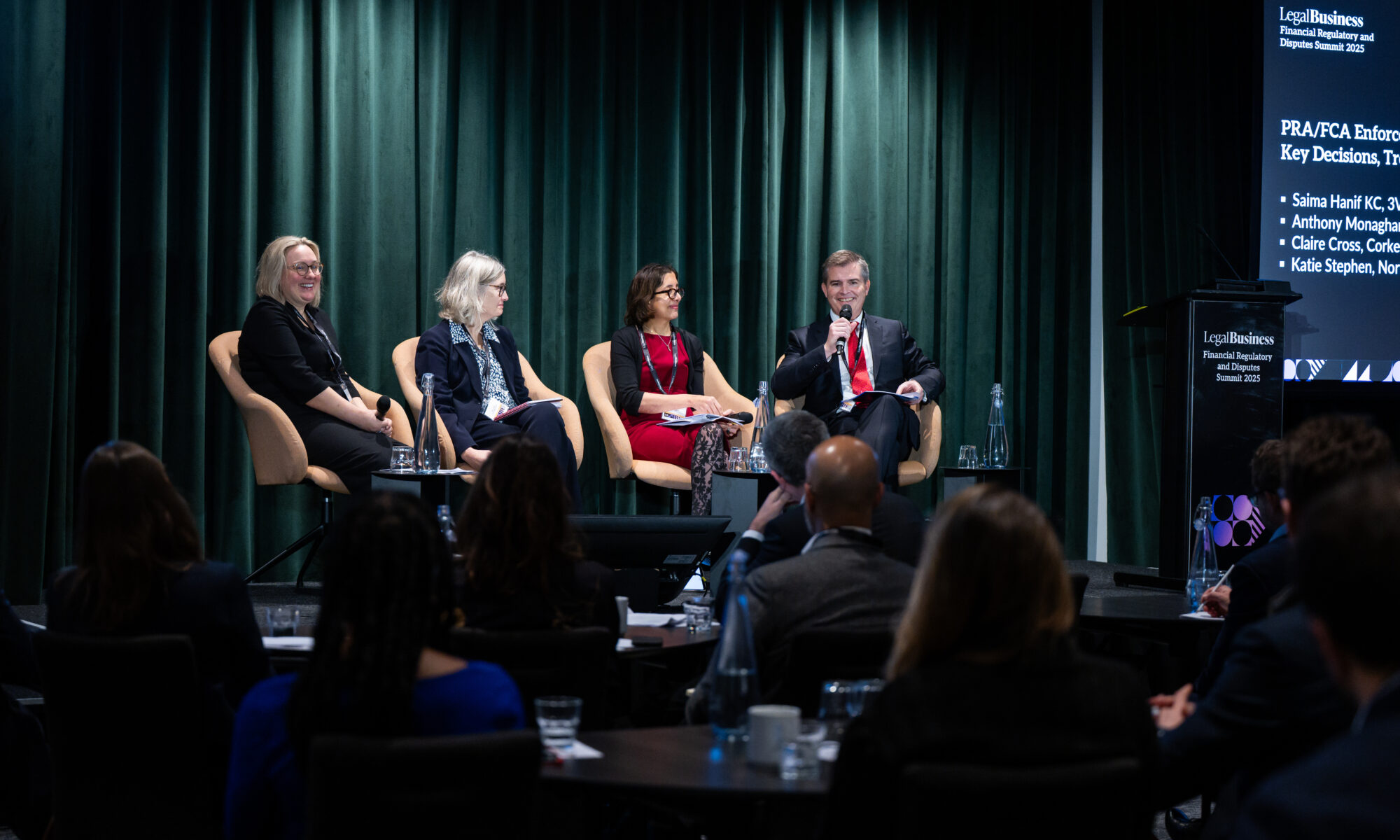
‘What fintechs need is immediate access to cash and liquidity, and this is still some way off. So there’s a harsh reality of being able to see a bright horizon but not having ready access yet to the stepping stones to get there,’ said Fiona Ghosh (pictured right), a partner at Ashurst’s digital economy transactions practice.

The reforms include the launching of a bespoke fintech scale-up unit led by the PRA and the FCA, the creation of a brand-new type of stock exchange for private company share trading (PISCES), and the piloting of a digitally native, tokenised UK government bond, a ‘Digital Gilt Instrument’ (DIGIT), using distributed ledger technology.

‘To grow unicorns into major global businesses, you have to provide a supportive regulatory environment where you’re not going to pull them back from innovation unnecessarily, but where they’ll be able to access capital to fund what they need to do to get to the next stage,’ commented Arun Srivastava (pictured right), a corporate partner and fintech regulatory advisor at US firm Paul Hastings.

A stifled market?

In her speech, which came a week after City AM reported that fintech executives from Zilch, Atom Bank and Revolut had told the Chancellor that they would need to be incentivised to list in London, Reeves stated that regulators had gone too far in seeking to eliminate risk. She said: ‘Regulators in other sectors must take up the call I make this evening, not to bend to the temptation of excessive caution, but to boldly regulate for growth in the service of prosperity across our country.’

This approach was broadly welcomed by partners. ‘They have to empower them to regulate in a way that is not zero risk, that is proportionate, but also creates space for these businesses to enter the market and to grow,’ said Srivastava.

Clifford Chance partner Diego Ballon Ossio (pictured right) highlighted the tension between consumer safety, innovation and growth: ‘It cannot be the case that you put customer protection as the only paradigm of financial services regulation, because ultimately that is one of the factors which stifled the market.’

Stuart Davis, global co-chair of the fintech industry group at Latham & Watkins, noted that while much of the regulation targeted by Reeves is not directed at fintechs, a shift in the regulatory climate could still prove beneficial.

‘Fintechs will be closely watching whether regulators now deliver on the calls to lighten the regulatory burden, as many of the suggested areas for deregulation focus on banks and traditional financial services rather than challengers.’

‘Fundamentally what I think needs to be calibrated correctly is openness to new business models, to new activities, to new ways of doing old things,’ added Ballon Ossio, ‘I think that will come with an increased risk appetite and understanding that things sometimes go wrong.’

A step in the right direction

Despite the residual challenges, the Chancellor’s speech has generally been positively received by financial services lawyers.

Ben Koehne, head of financial services at Addleshaw Goddard, said that ‘unlocking pension and insurance capital for UK investment is essential—not just for scale-ups but also for deepening the UK capital markets. A joined-up strategy between the Treasury, regulators and market participants will be key to delivering on this ambition.’

Davis called the proposed reforms ‘another step in the right direction. The narrative around regulators being facilitators and, in essence, getting out of the way, is the right narrative’.

Etay Katz, head of digital assets at Ashurst, went further, calling the strategy ‘sensationally refreshing.’ ‘This is now a reality and may be a historical moment in a new chapter of making the UK a global leader in this tremendously important field of digital finance.’

Looking at the reforms from a fintech perspective, Ghosh remarked that ‘this is symptomatic of a wholesale mindset shift of our domestic economy from one that is quite heavily regulated sector by sector, to one that is genuinely looking at global growth driven, hopefully, through simplification.’

‘London is now clearly the least frictional place to access the public markets in Europe,’ added Davis. ‘The go-live of PISCES later this year could also be a very attractive gateway to listing for UK fintechs as they rightsize themselves and their cap tables ahead of any IPO.’

Srivastava said that the reforms could lead to ‘cultural transformation, adding: ‘they have the potential to deliver tangible output, and I think they’re genuine in their desire to make the UK competitive and supportive for the tech industry.’

Speaking about Reeves, Ghosh concluded: ‘the markets feel that they genuinely have in front of them somebody who’s trying to make systemic change for fintechs – root and branch.’

Katherine Ryan to host LB Awards as top in-house names join judging panel

Award-winning comedian Katherine Ryan is set to host the 2025 Legal Business Awards, which will be held at the Grosvenor House Hotel on 30 September.

The comedian, writer and actor has been confirmed as the host for the prestigious awards, which recognise the very best in the legal profession across 26 categories spanning the Bar, in-house and private practice.

With the shortlist set to be announced next month, firms will battle it out to take home coveted awards including Law Firm of the Year and US Law Firm of the Year alongside a host of practice-area focused awards, while in-house teams will be competing for recognition including GC of the Year and In-house Team of the Year.

This year’s awards are being judged by a more than 30-strong panel including well-known names from corporate legal teams and former private practice partners.

Judges include BT Group GC Sabine Chalmers, Rio Tinto legal governance and corporate affairs COO Chris Fowler, VodafoneThree GC Andrew Yorston, Smith & Nephew group GC Helen Barraclough, Starbucks EMEA GC Huma Allana van Reesch and News UK GC Angus McBride.

The panel also includes former Law Society president I. Stephanie Boyce, former Weil London head Mike Francies and former Travers Smith managing partner David Patient, as well as editors from Legal Business and the Legal 500.

For more information about the awards click here, and to book your table click here.

Full LB Awards judging panel:

  • Sabine Chalmers, general counsel, company secretary and director of regulatory affairs, BT
  • Chris Fowler, COO, legal governance and corporate affairs, Rio Tinto
  • Nicki Schroeder, group GC, Reach
  • Dan Guildford, GC, Financial Times
  • Andrew Yorston, GC, VodafoneThree
  • I. Stephanie Boyce, former President of the Law Society of England and Wales
  • Nigel Paterson, GC and company secretary, Currys
  • Helen Barraclough, Group GC, Smith & Nephew
  • Angus McBride, GC, News UK
  • Huma Allana van Reesch, GC, EMEA, Starbucks
  • Mike Francies, former London managing partner, Weil Gotshal & Manges
  • Matthew Wilson, GC, Fremantle
  • Stuart Brown, GC, Bupa UK
  • Samantha Thompson, head of group strategic projects legal affairs, Ericsson
  • Harpreet Sagoo, GC, Ricardo
  • Fiona Bradley, head of legal, Mitchells & Butlers
  • Jeremy Mavor, UK GC, National Grid
  • David Patient, former managing partner, Travers Smith
  • Blair Parker, head of legal services UK and Ireland, DHL
  • Harriet Gallagher-Powell, GC (group corporate), Legal & General
  • Meghan Foreman-Purves, head of legal, Europe, CIBC
  • Daniel Winterfeldt, GC, EMEA and Asia, Jeffries
  • Ruth Anderson, Head of legal EMEA, SEKO Logistics
  • Gideon French, Group M&A legal counsel, ArcelorMittal
  • Vivienne Inmonger, assistant GC, Ameresco
  • Simon White, Deputy GC, IQVIA
  • Rosie Teo, GC, Tillo
  • Joy Van Cooten, former associate GC – EMEA & APAC, ACI Worldwide
  • Lara Oyesanya, non-exec director, PensionBee
  • Nayeem Syed, senior legal director – Technology Procurement, London Stock Exchange Group
  • Georgina Stanley, editorial director, Legal Business and Legal 500
  • Ben Wheway, data editor, Legal Business and Legal 500
  • Joseph Boswell, global editor, GC Powerlist
  • Melissa Yebisi, research editor, GC Powerlist

Big law firms are betting on Boston – but does the market have room for more?

‘Historically Boston was a very insular market’, says Andrew Sucoff (pictured right), chair of Goodwin’s Boston office. ‘There weren’t a lot of lateral moves. That was true across the industry, but it was particularly true in Boston.’

Now, the market is changing. In Sucoff’s words: ‘What was acceptable in New York, London, and other major metropolitan areas in terms of lateral hiring started to become more acceptable in Boston. Once that happened, other firms who saw Boston as an attractive market started to establish beachheads.’

Boston is, unquestionably, on the up. No fewer than five leading law firms opened offices in the city across 2024 and 2025, with Paul Hastings launching in April 2024, Simpson Thacher and Blank Rome in May, Freshfields in February 2025, and Fenwick & West in April this year.

‘Boston is a popular location for firms to open new offices’, says Brown Rudnick transactions partner John Cushing, ‘Many times, those new offices are led by and staffed, initially, with lawyers from other firms already established in Boston. A number of well-known local and regional firms have been acquired by national players.’

According to data provider Leopard Solutions, there were a total of 97 partner hires into AmLaw 100 firms in Boston in 2024 – a 73% increase on the previous year’s tally of 56 hires, and nearly double 2022’s figure of 49.

‘Compared to New York or the Bay Area, Boston is still underpenetrated’ – Wesley Holmes, Latham

Wesley Holmes (pictured right), Boston managing partner at Latham & Watkins, which became an early new entrant in 2011 when it saw the opportunity to bring its global offering to the city, believes there is still more room for growth from international firms.

‘There were a number of historically Boston-based firms that had been around for 100-plus years that really dominated the market’  he says in reference to how the city legal market used to look before insisting that  ‘compared to New York or the Bay Area, Boston is still underpenetrated in the legal market.’

On partner numbers alone, the data bears his point out. While partner recruitment has increased dramatically in recent years, Boston saw significantly fewer lateral hires into top 100 firms in 2024 than Chicago (142 hires) and Los Angeles (123), not to mention the larger markets of Washington DC (291) and New York (449 hires).

However, Boston has seen far faster growth than any of these other markets. Alongside Washington DC it was the only city in that group where lateral partner hires did not dip at least once in the years between 2022 and 2024.

The reason for the new interest from international firms comes down to what Sucoff refers to as Boston’s reputation for ‘eds, meds, and finances’.

He explains: ‘There are 44 colleges and universities in the greater Boston area, as well as 22 full-service inpatient hospitals. We have the Route 128 corridor, which is called the Silicon Valley of the East, so we also have an incredible tech sector. And we have the largest life science cluster in the world, by almost any way of measuring.

‘The colleges and universities work with the medical schools in a symbiotic relationship. Then there’s the city’s active financial services sector, which provides funding for companies in tech and life sciences, whether those companies are startups or further along in their life cycle.’

The history

Proskauer chair Tim Mungovan (pictured right) says: ‘What makes Boston such a good market is that it has a very stable knowledge-based economy. It has world-class educational institutions, all clustered in a small geographic area, with extraordinary graduate schools, including law schools, engineering schools, and business schools.

‘In the 1980s it was an economy very much focused on banking and mutual funds, which according to legend were developed and initiated in Boston, and it was also at the forefront of the computer revolution. In the 1990s there was a strong push towards private equity and venture capital, and in the 2000s that focus on capital management shifted to hedge funds and private capital, and Boston became, if not as big as New York, a credible rival to New York.’

But while this economic backdrop made Boston attractive to law firms, new entrants still lacked the opportunity to establish themselves in the market. For Proskauer, which launched in Boston in 2004, this opportunity came via  the collapse of local firm Testa, Hurwitz & Thibeault.

‘Testa Hurwitz was focused on what we can call the internet economy version 1.0, and was therefore very exposed when the dot-com bubble burst in 2001’, says Mungovan. The firm also suffered succession issues after the untimely 2002 death of founding partner Dick Testa, with the combination enough to provoke a growing exodus of partners.

‘With the rise of private capital, Boston became a credible rival to New York’ – Tim Mungovan, Proskauer

‘Proskauer originally recruited an IP and patent litigation team that was intended to be an extension of our IP practice in New York’, says Mungovan, referring to the 2004 hires of partners Steven Bauer, Joseph Caprano, and Daniel Bernstein, who launched Proskauer’s office in the city. ‘But as Testa started to disintegrate, a lot of the partners there wanted to speak to us.’

This culminated most notably in Proskauer’s hire of seven private equity partners at the end of 2004, including Robin Painter and David Tegeler, who went on to co-head Proskauer’s private funds group for almost two decades from 2005 through 2023.

The ripples of Testa’s spring 2005 collapse continued to spread, and other new entrants benefited from the firm’s demise. In 2007, for instance, Cooley opened in the city, launching an office with 10 new partners including office co-heads John Hession and Lester Fagen. The partners joined from a range of firms, including McDermott, but all 10 had previously worked at Testa.

But it was not just new firms in the market that benefited. Sucoff comments: ‘About 20 years ago we absorbed 90 lawyers from Testa, which was the leading technology firm in the country. It provided the perfect opportunity for us to launch into the tech space, as well as giving us a big boost in life sciences.’

Among the Testa partners Goodwin brought over in 2005 were current management and executive committee members Mark Bettencourt, who became the firm’s managing partner in 2019, and Carl Metzger, who was named litigation department chair in October 2024.

Other notable Testa alums at the firm include global life sciences chair Mitchell Bloom, technology co-chair Kenneth Gordon, public M&A/corporate governance practice co-chair Deborah Birnbach, and special purpose acquisition companies (SPAC) practice lead Jocelyn Arel.

Testa’s collapse may have done much to shape the Boston legal market of today but other firm failures also played a part. Collapsed financial restructuring firm Bingham McCutchen was unsuccessful in its attempts to achieve a rescue merger with Morgan Lewis in 2014, with the Philadelphia firm instead cherry-picking more than 200 of its partners, including an influx of talent for the Boston office it had launched in 2003. Meanwhile, Burns & Levinson’s wind-down in September 2024 provided the raw material for Blank Rome and Simpson Thacher’s launches in the city.

Looking ahead

As rate increases push the highest-paying global elite firms to focus on only the most profitable work, they are also creating opportunities in the mid market. Michael Scott, co-managing partner of Nutter McClennen & Fish, a Boston-headquartered firm with four offices across the United States, comments: ‘Partners from the AmLaw 50 are interested in our firm, citing resource constraints, bureaucracy, billing rates, and intense focus on driving the highest profit margin. At a firm like ours, there are a lot more opportunities to expand a practice and leverage our entrepreneurial and collaborative platform.’

Russell Beck, co-founding partner at Boston litigation and employment firm Beck Reed Riden, argues that smaller boutique firms are well placed to thrive: ‘Small firms with a specialty are the ones that’ll survive’, he says. ‘Boston really lends itself to boutique firms.’

But whether you are looking at the biggest international firms or the mid-market, some question how much more expansion the Boston legal market can support.

One Boston head at a top 100 firm describes the raft of recent market entrants as making only ‘very nascent efforts’, and expresses doubts over those firms’ abilities to grow in the longer term.

‘The NIH has been a massive contributor to R&D in life sciences. A lot of that funding has now been cut back’ – Andrew Sucoff, Goodwin

There are also warning signs on the demand side, too, with partners reporting a slowdown in real estate in particular.

While higher interest rates impact activity levels across the board, with real estate particularly affected, in Boston there are specific concerns around such work for the once-booming life sciences sector.

‘There’s currently a glut of empty lab space’, says Mungovan. ‘Some companies haven’t grown fast enough to fill the space that they paid for. That’s driven a slowdown in real estate.’

However, Mungovan is not overly concerned: ‘Every industry goes through cycles’, he says, noting that his firm is ‘taking a countercyclical approach’.  ‘We see a tremendous amount of opportunity in investment of all kinds in real assets, whether those assets are digital infrastructure or top-tier office space. What we see in London and New York, we also see in Boston – there is still demand for the premium properties.’

Others though fear that there’s a risk that issues in the life sciences market could be further exacerbated by cuts to federal funding. ‘The National Institute for Health has traditionally been a massive contributor to research and development in life sciences’, says Sucoff. ‘A lot of that funding has now been cut back.’

Goodwin life sciences chair (and Testa alum) Mitch Bloom (pictured below right) expands: ‘The life sciences sector – particularly in Boston – has been navigating a period of short-term uncertainty. Factors like reduced research funding, leadership transitions at the FDA, and proposed federal drug pricing reforms have all contributed to a more cautious investment climate. Additionally, the recent administration’s stance on tariffs and vaccine regulation could potentially further complicate the life sciences landscape.’

On the whole, though, partners have faith that the industry will find a way through, despite any challenges triggered by Trump’s administration. ‘There are other sources of capital that will come in’, says Holmes. ‘There’s a lot of talent here, and dollars tend to find that.’

Bloom takes a similar view: ‘Boston’s ecosystem—bolstered by a deep talent pool, world-class academic institutions, and committed investors—continues to be a global hub for innovation. While regulatory shifts may pose challenges, I believe businesses and investors alike will adapt, and the sector will continue to thrive.’

Holmes concurs: ‘Big pharma moved away from having massive internal R&D programmes and started relying on the broader life sciences ecosphere and emerging companies to be their external R&D. Then when those companies reach a level of maturity that’s attractive, big pharma comes in. That will continue, though it’s possible you’ll see earlier-stage investment from big pharma.’

Sucoff predicts this will lead to ‘consolidation’ – which will benefit the firms best placed to advise larger companies and funds, with private capital set to remain a big driver of work in Boston.

‘There are funds being formed with a ton of dry powder, to come in and buy companies and be rescue capital’, says Sucoff. Meanwhile, Holmes notes a longer-term dynamic whereby, ‘Growth in the [Boston] private equity sector has been similar to that in law firms, with longstanding major players and newer entrants contributing to the expansion.’

Here, as in other financial centres, partners predict that the amount of capital currently held by buyout houses and their need to deploy it and return money to investors will be enough to bring deal activity back.

Simpson Thacher, Paul Hastings and Freshfields are among the firms which have been hiring in private capital partners to meet this demand as a key cornerstone of their respective launches.

To this extent, the situation in Boston echoes that of other key legal markets. Speaking of his firm’s historic growth, Proskauer chair Mungovan concludes: ‘We increasingly focused on what’s now called private capital. That was the rocket fuel – not just for Boston but for the entire firm.’

In Boston, as elsewhere, firms are looking to gain access to that rocket fuel.

For more on Boston, see our coverage of the Legal 500 US elite rankings.

[email protected]

Firms that opened in Boston 2024-25

Firm Office launched Total lawyers (partners)* Lateral hires
Fenwick & West April 2025 9 (5) Matthew Pavao, Cooley, IP, April 2025
Heidi Erlacher, Cooley, IP, April 2025
Chen Chen, Cooley, IP, April 2025
Jim Hauser, Gunderson Dettmer, corporate, June 2025
Freshfields February 2025 4 (1) Matthew Goulding, Latham, private capital, February 2025
Blank Rome May 2024 33 (17) Michael Andreasen, Burns & Levinson, corporate, May 2024
Frank Segall, Burns & Levinson, cannabis, May 2024
Josef Volman, Burns & Levinson, M&A, May 2024
Catlin Barrett, Burns & Levinson, finance, May 2024
Rodney Bedow, Burns & Levinson, tax, May 2024
Max Borg, Burns & Levinson, cannabis, May 2024
Gil Breiman, Burns & Levinson, tech and life sciences, finance, May 2024
Alison Harrall, Burns & Levinson, corporate, May 2024
Mark Manning, Burns & Levinson, finance, M&A, May 2024
Scott Moskol, Burns & Levinson, cannabis, May 2024
Robert Petitt, Burns & Levinson, corporate, May 2024
Chard Porter, Burns & Levinson, corporate, M&A, May 2024
Thomas Reith, Burns & Levinson, litigation, May 2024
Stephen Brook, Burns & Levinson, corporate, M&A, May 2024
Robert Chow, Burns & Levinson, corporate, M&A, May 2024
Luke Reid, K&L Gates, maritime, June2024
J. Fraser Collin, Dragonfly (in-house), corporate, MYA, August 2024
Simpson Thacher May 2024 26 (10) Kenneth Burdon, Skadden, funds, May 2024
Matthew Fisher, Kirkland, PE, November 2024
Zachary Hafer, Cooley, government and internal investigations, February 2025
Yonatan Levy, Ropes & Gray, funds, February 2025
Joseph Conahan, Wilmer, M&A, March 2025
John Ilardo, Kirkland, PE, May 2025
Paul Hastings April 2024 17 (7) Bill Schwab, Sidley, PE, May 2024
Alex Temel, Sidley, PE, May 2024
Andrew Goodman, Goodwin, M&A, shareholder activism and takeover defense, August 2024
Ian Engstrand, Goodwin, M&A, September 2024
Scott Chase, Goodwin, securities and capital markets, October 2024
Sarah Gagan, Latham, technology transactions, February 2025

*Lawyer and partner numbers from firm website. Accurate at time of publication. 

‘Ten years ago those opportunities weren’t there’ – change at the top as DACB marks 11 years of growth

DAC Beachcroft has extended its growth streak to 11 years, posting a 6.4% revenue increase to £348.1m from last year’s £326.5m, the firm revealed in results issued today (17 July).

Profit per member, meanwhile, passed £750k for the first time, with pre-tax profit up a little over 7% to £76m. In the UK, revenue rose 6.6% to hit £313.6m, up from £294.3m.

Outgoing managing partner David Pollitt (pictured) told LB he was ‘really pleased’ with the results, adding, ‘It’s been a hard year, and everyone’s put in a real shift. None of this happens overnight, it’s down to hard work.’

Pollitt told LB that the firm had enjoyed a strong year ‘across the board’, but highlighted the employment practice as a ‘particular highlight’.

Real estate was also singled out as having had a strong year. DACB boosted its offering in the area with its March hire of partners Gerald Kelly and Jim Roberts from Macfarlanes in London, as well as its September 2024 hire of Joanne Sears from Gateley.

Pollitt said the laterals had been involved in high-profile transactional work for some of the firm’s key clients.

The last financial year also saw the firm commit to international expansion. Last May it opened an office in Peru, in September it opened a Hong Kong base, and this January it launched offices in New York and Los Angeles following the recruitment of a 30-strong group of lawyers from two local firms. The firm also signed strategic association agreements with firms in Australia and Ecuador in May and June, respectively.

Of the US move, Pollitt said: ‘We’ve landed well, and I think our plans are to expand carefully, but in key states across the US, starting in insurance, and then perhaps, over time, expanding into other sectors.’

This November, he will step down after ten years as managing partner to be succeeded by the firm’s head of insurance Helen Faulkner (pictured). 

Of the change, Pollitt said: ‘I am delighted to be handing it over to Helen, who’s sat with me on exec for the last 10 years, and has been one of the key architects of the growth and success that we have achieved.’

Pollitt, who will stay on at the firm as a partner,  is proud of what he has achieved during his tenure. He has overseen revenue growth throughout each of his 10 years at the top, with the firm growing 75% from £198.9m in 2015 to £348.1m in 2025.

Under his watch, the firm has also expanded its global footprint significantly, opening offices in Paris and Belfast in 2019 and Buenos Aires, Rome, and Milan in 2023, as well as its 2024-25 launches.

Of his legacy, Pollitt described a transformation of the firm: ‘I don’t think the firm is recognisable from what it was when I started. Over that time, the brand reputation, client demand, quality of clients, international reach, and culture have all evolved significantly. I mean, it’s all there now, we think. But the mix here — the blend — is really quite special. Ten years ago, the opportunities we now have available to us as a firm weren’t there.’

Faulkner delivered a succinct appraisal of Pollitt’s impact: ‘He’s given us confidence.’

She described herself as ‘keen to roll up my sleeves and get started’ with the managing partner position.

However, she clarified that she did not feel pressure to begin with all guns blazing: ‘I’m in a lovely position. I’m taking over when the firm is very strong and stable, which gives us the freedom to decide what we want to do next. I can build and develop from a solid platform. There’s no urgency for me to act immediately, so I have time to listen, reflect, and think about how to build on what we’ve already achieved.’

She continued: ‘The majority of what we’ve done internationally has been insurance-led, and I’ve been at the forefront of that. I do quite like change — not disruption, but change — as long as it’s controlled, making sure we bring our colleagues and clients along with us and listen to their needs.’

[email protected]

Trading places: Paul Hastings picks up from Latham and Paul Weiss as Linklaters continues US push

Paul Hastings has added to its New York finance bench with its hire of high-profile partner duo Corey Wright and Lisa Collier (pictured) from Latham & Watkins.

Wright is a Legal 500 leading partner for capital markets: debt offerings and high-yield debt offerings, as well as for commercial lending advice to banks.

Before moving to Latham in January 2023, the duo worked together at Cahill, where Wright made partner in 2007 and Collier in 2011.

They have a track record of work for banks and other financial institutions on a range of major leveraged finance transactions, with notable recent work including advising on the $17.5bn leveraged bridge loan agreement relating to Warner Bros. Discovery’s separation into two entities, as well as acting on a $4bn high-yield loan relating to Rocket Companies’ acquisition of home loan servicing company Mr. Cooper.

Paul Hastings chair Frank Lopez said in a statement: ‘We’re thrilled to welcome Corey and Lisa. Their longstanding relationships serving top-tier financial institutions are highly synergistic with many of our core practices. Corey’s reputation is stellar as one of a handful, if not the leading, finance practitioner of his generation. Corey and Lisa’s arrival will further elevate our position as the go-to firm for complex, high-stakes financings and create significant opportunities to gain even more market share at the top of the market.’

The firm also made a pair of hires from Paul Weiss, including hiring M&A partner Kristiina Leskinen in New York, as well as bringing antitrust litigator Joshua Soven into its Washington DC office, in one of a number of ongoing litigation exits from Paul Weiss.

Soven joined Paul Weiss in 2022 after four years at Wilson Sonsini and five years at Gibson Dunn. Before that he spent nearly a decade at the Department of Justice (DOJ), including as chief of the litigation 1 section of the antitrust division. He joins Paul Hastings with a wealth of experience advising on antitrust matters relating to high-profile M&A, including for major tech clients such as LinkedIn on its $26bn sale to Microsoft in 2016.

Paul Weiss has also seen two more partners leave to join Dunn Isaacson Rhee, the DC litigation boutique established by four partners who left Paul Weiss in June.

The hires see the new firm expand beyond the US capital, with Erin Morgan joining in New York and Meredith Dearborn in San Francisco. Dearborn joined Paul Weiss from Boies Schiller Flexner in 2020, at the same time as Bill Isaacson and Jessica Phillips – two of the four partners who left to form Dunn Isaacson Rhee. Morgan, meanwhile, is a Paul Weiss lifer, who spent almost 12 years at the firm and made partner there in 2023.

Also in the capital, Latham has hired former deputy assistant attorney general Andrew Forman as a partner in its antitrust and competition practice.

Forman served as deputy assistant attorney general in the DOJ antitrust division from May 2022 to this January, after leaving Paul Weiss in 2021, before which he spent nine years at Cadwalader.

At the DOJ, Forman led a range of antitrust enforcement matters relating to both merger and non-merger conduct, covering a range of industries including technology, healthcare and life sciences, pharmaceuticals, insurance, and finance.

Mandy Reeves, managing partner of Latham’s DC office, said in a statement: ‘It’s wonderful to welcome Andy to our team here in the nation’s capital. His deep history of leadership in managing complex civil enforcement programs and special competition initiatives, honed through his experience at both the DOJ and FTC as well as private practice, will be a tremendous asset in providing our clients with best-in-class advice and counsel.’

Also on the move is Silicon Valley tech litigator and trial lawyer Neel Chatterjee, who has left Goodwin for King & Spalding, where he will co-lead the firm’s intellectual property practice.

In April, Chatterjee cofounded Law Firm Partners United (LFPU) with fellow Goodwin trial lawyer David Cross, who is based in Washington DC. Now with more than 870 members on LinkedIn, LFPU is a forum for partners at top 200 US firms to discuss and organise on matters relating to the rule of law, in particular in response to the Trump administration’s ongoing battles with law firms.

In a LinkedIn post announcing his move, Chatterjee said that he intended to continue his work on LFPU as well as his pro bono cases and his roles with nonprofits and legal organisations.

On his plans for his time at King & Spalding, he said: ‘Simple and ambitious – we plan to build the best, most inclusive, next generation IP litigation trial practice in the Bay Area and the Country.’

In New York, Linklaters has expanded its corporate offering with its hire of capital markets and M&A partner Kristina Trauger. Trauger joins from Proskauer where she was a partner for three years and co-headed the firm’s capital markets group. She was previously a partner at legacy Shearman & Sterling, where she worked with George Casey and Heiko Schiwek, who both joined Linklaters in January 2024.

In June, Linklaters named Casey as its first chairman of the Americas, at the same time reappointing Tom McGrath as Americas managing partner. Later last month, the firm also announced that it had extended to 2029 the terms of both senior partner Aedamar Comiskey and firmwide managing partner Paul Lewis, with a statement that reiterated the firm’s commitment to growth in the US.

Other firms making notable recruits in New York include Simpson Thacher, which has brought Fried Frank M&A partner Lawrence Natke into its fund transactions practice and Milbank M&A partner Kyle Smit into its energy and infrastructure practice, and Ashurst, which has boosted its New York finance bench with its hire of partner Joe Giannini from Norton Rose Fulbright.

Also in New York, Willkie has brought over A&O Shearman debt finance partner Gus Atiyah. Atiyah co-headed the global debt finance group at A&O Shearman, and has expertise across a range of private finance transactions.

Elsewhere, Weil has hired entertainment, sports and media partner David Markman into its Los Angeles office. Markman joins from DLA Piper, where he co-chaired the firm’s entertainment transactions practice.

Vinson & Elkins has made a trio of partner hires across its US offices, bringing over investment management partners Samuel Francis in New York and Reed Schuster in Austin, as well as project finance partner Caitlin Lawrence in Houston.

Francis and Schuster join from Kirkland & Ellis, and bring expertise in a broad range of fund formation and operation matters, with Francis specialising in regulatory guidance and investment support and Schuster specialising in Securities and Exchange Commission (SEC) examinations and investigations.

Lawrence, meanwhile, rejoins the firm from Baker Botts, where she made partner in 2023 after leaving V&E as a counsel in 2022.

In Chicago, Jenner & Block has hired a five-strong mass tort team from Mayer Brown led by partners Richard Bulger and Daniel Ring. Ring was co-lead of both the litigation and dispute resolution practice and the product liability and mass torts practice at Mayer Brown, while Bulger co-led the firm’s environmental action group.

At Jenner they will co-chair the firm’s expanded mass tort practice alongside current Jenner partners, and special counsels Tyler Alfermann and Daniel Rottenberg.

Jenner co-managing partners Ishan Bhabha and Rany Mehrberg said in a statement: ‘Adding leaders of Rich and Dan’s calibre, along with their experienced team of litigators, builds upon our already strong foundation and further expands Jenner & Block’s ability to fully serve clients at the highest levels in mass tort and product liability litigation. Their leadership adds to our existing capabilities to defend, litigate, try, and resolve matters. Combined with Dean and Joanna’s tremendous experience and track record of success, and our well-established litigation bench, we have a comprehensive offering that can handle these matters from first filing through final resolution.’

In addition to its New York moves, Simpson Thacher has also hired Bryce Kaufman into its banking and credit practice in Houston. Kaufman was a counsel at Latham, and brings expertise across a range of energy and infrastructure financing matters.

Finally, regulatory insurance partner Steven Davis has rejoined Philadelphia-headquartered firm Stradley Ronon Stevens & Young after leaving in 2023 for Duane Morris, where he headed the firm’s insurance and reinsurance industry group.

[email protected]

PE heavyweight Allardice leaves White & Case for Latham

Latham & Watkins has hired prominent private equity partner Ross Allardice (pictured), the firm announced today (16 July), bolstering its London M&A and buyout practice.

Allardice is making the move to Latham less than four years after he returned to White & Case from Dechert in 2021. He first joined W&C in 2013 from Kirkland & Ellis, before leaving the firm for Dechert in 2016.

He joins Latham with experience advising PE houses, financial sponsors, and portfolio companies on a range of complex cross-border transactions, with particular expertise in the healthcare and life sciences sectors, as well as in financial services and technology.

Nordic Capital has been a key client for Allardice during his time at both Dechert and White & Case, with deal highlights including advising on its €2.1bn sale of financial institutions trading tech and services provider Itiviti to Broadridge Financial Solutions in 2021, on its acquisition of innovation and IP management tech solutions and services provider Anaqua last November and, most recently, on a significant investment by Canada Pension Plan Investment Board (CPP Investments) in Nordic Capital portfolio company Regnology, which provides regulatory, risk, and supervisory tech solutions, in January.

Ed Barnett, who took over as managing partner of Latham’s London office last September, said in a statement: ‘Ross is an outstanding addition to our market-leading private equity M&A practice in London. We’ve built one of the best private equity teams in the City and have fantastic momentum in the market. Ross has a well-earned reputation for advising some of the most active global investors on their most important transactions. His deep knowledge, experience, and connections are a perfect fit for our platform, and we’re thrilled to welcome him to the firm.’

London PE partner and executive committee member Kem Ihenacho added: ‘Ross is an excellent fit for our practice both in London and globally. His track record in advising on large-cap LBO transactions strategically complements our leading capabilities, and his arrival marks another major milestone in the continued growth of our practice. Beyond adding one of the City’s leading dealmakers to the team, Ross brings a wealth of deal expertise, an extensive client network, and entrepreneurial drive that will be highly accretive to the practice and an asset to our clients.’

Allardice is the sixth partner Latham has hired into its London office in 2025, with notable laterals including A&O Shearman structured finance partners Franz Ranero and James Smallwood in April. The pair’s arrival followed a clutch of finance laterals in 2024 including Cahill trio Jonathan Brownson, Joydeep Choudhuri, and Prue Criddle in May and Akin partners Paul Yin and Fergus Wheeler at the turn of the year.

The firm has also seen a number of departures from its London office, including a total of nine partners who moved to Sidley Austin in 2024-25.

For its part, White & Case strengthened its City PE bench recently with the hire of Helen Croke from Ropes & Gray in June. Against this growth, White & Case has also lost a total of eight energy and infrastructure partners around the world to Paul Hastings since George Kazakov and Din Eshanov left the firm in the spring.

[email protected]

Kirkland and Davis Polk lead as Ferrero seals $3.1bn tie-up with cereal giant Kellogg

Davis Polk and Kirkland & Ellis have won the lead roles as Nutella-maker Ferrero Group prepares to buy US cereal company WK Kellogg Co for $3.1bn.

A team from Davis Polk in London and New York is advising  Ferrero on the deal, with New York M&A partners Daniel Brass and Michael Senders leading a team that also includes lawyers across the firm’s executive compensation, tax, IP, antitrust and competition departments. Partners Nick Benham and Aaron Ferner are providing financing advice from London.

The New York firm is a regular adviser to Ferrero, with Brass advising the chocolate and confectionary company on a number of recent deals, including  its acquisition of protein snack maker Power Crunch earlier this year, Wells Enterprises in 2022 and Nestlé’s US confectionary business in 2018.

WK Kellogg has turned to longstanding adviser Kirkland for advice. New York corporate partners Allison Wein, Alix Simnock and Daniel Wolf are leading on the transaction alongside capital markets partner Bob Hayward.

The firm has advised the US food company for almost 25 years, with lawyers from its debt finance, tax, executive compensation, antitrust, employment, technology and IP transactions practices also advising on the latest deal.

The transaction, which is due to close in the second half of 2025, will see Ferrero acquire all outstanding equity in Kellogg for $23 per share. Once the deal completes Kellogg will no longer trade on the New York Stock Exchange and will instead become a wholly owned subsidiary of family-owned private company Ferrero, which also owns brands including Kinder, Tic Tac and Ferrero Rocher.

Cereal company WK Kellogg, which owns iconic brands including Rice Krispies, Frosted Flakes and Foot Loop, became an independent company in 2023 when Kellogg split into two. The rest of the business became Kellanova, which is in the process of being acquired by Mars Inc, subject to antitrust clearance.

Kirkland advised Kellanova when the planned $36bn acquisition was announced last year, with Wein leading the firm’s team alongside Erich Schiele. That deal saw Skadden advising Mars. 

‘Buyers are out there’ – why M&A partners are feeling positive despite geopolitical thunderstorms

stock market illustration

‘The volatility in the world isn’t going away anytime soon, it just has to be priced in. We have to focus on what deals can get done,’ says White & Case London M&A partner Sonica Tolani about her predictions for H2 following a mixed start to the year.

The latest data from LSEG shows that M&A activity increased by 33% year-on-year over the first half of 2025 to $1.98trn – the strongest opening period for dealmaking by value since 2022.

But with Trump’s 2 April Liberation Day tariff announcements triggering geopolitical chaos, this increase in value obscures the fact markets have been far from stable, with global deal volume down 10% over the six-month period – representing a five-year low by deal numbers.

‘It’s been an interesting H1, April saw significant volatility with many deals being paused. That said, there’s still plenty to play for in H2, and I’m relatively positive,’ comments Nigel Wellings (pictured right), co-head of European corporate at Clifford Chance. ‘Buyers are active and on the hunt for opportunities. We’re seeing them team up to pursue some of the larger, more complex deals.’

The rankings

The LSEG data shows Freshfields was the best performing UK-origin firm in the global value rankings, working on 104 deals worth $166.7bn to come in seventh place behind first placed Latham & Watkins (380 deals worth $277.5bn), Sullivan & Cromwell (92 deals worth $229.5bn), Wachtell (55 deals worth $204.9bn), Kirkland & Ellis (312 deals worth $203.4bn), Skadden (106 deals worth $173.3bn) and Davis Polk (79 deals worth $169.6bn). The tally makes Freshfields the only UK firm to feature in the top 10, with A&O Shearman the next best placed UK-origin firm in 11th place with roles on 140 deals worth almost  $123bn.

Significantly, US firms didn’t just lead the tables in the global rankings. They also took the top six spots in LSEG’s UK involvement table by value, with Kirkland, Latham and White & Case taking the top three places, ahead of Freshfields, Norton Rose Fulbright, A&O Shearman and Slaughter and May in spots seven to ten in the table respectively.

Notably Freshfields, A&O Shearman and Clifford Chance all climbed up LSEG’s global principal adviser table, with all three making the top 10 in a table headed by Latham.

Mega deals

A quick glance at the LSEG numbers highlights some key trends, with the number of mega deals valued at more than $10bn in particular helping drive up the total global M&A value over the first half of the year.

Despite the total number of deals falling to around 24,000 globally, the number of mega deals close to doubled year-on-year, helping to inflate total global values up by a third.

In total, there were 32 mega deals worth a combined total of $606.9bn – making it the strongest H1 for $10bn+ deals since record-keeping began in 1980. These transactions were particularly prevalent in industries such as technology and in markets like the US, which accounted for three of the top five global announced megadeals. These saw Latham and Wachtell advise on Cox Communications’ $35bn acquisition, Davis Polk and Skadden advise on the spinoff and US listing of Holcim’s North American business Amrize for $33bn and Freshfields and Fenwick & West advise on Alphabet’s $32bn acquisition of Wiz.

Freshfields head of global transactions, Julian Pritchard (pictured right), explains: ‘There are always some deals for which the strategic logic is so compelling that they won’t be put off course by short term volatility, and that is more likely to be the case for the larger strategic deals that are transformational for the parties.’

Breaking it down

With more large single buyer deals announced in recent weeks– such as Merck’s $10bn acquisition of respiratory-focused pharmaceutical company Verona Pharma, which has generated roles for Freshfields and Latham, or Ferrero’s $3.1bn bid for cereal maker Kellogg, on which Davis Polk and Kirkland are advising, partners are generally feeling more confident about the rest of the year than H1.

‘There’s some incredible momentum, and while macroeconomic factors remain challenging, there is capital to be deployed and appetite for deals in sectors where investors see strategic value and growth potential,’ points out Sam Newhouse (pictured right), Latham & Watkins’ global vice chair of M&A.

This is particularly true in busier sectors such as tech, financial services and energy. According to LSEG data, tech M&A accounted for 18% of global deal value at $347.4bn, driven in large part by acquisitions of AI businesses and an increase in fintech activity. Financial services was the next busiest sector, with deal activity up 49% from H1 2024 to 17% of global deals value, followed closely by energy and power M&A.

White & Case’s London head of public M&A, Patrick Sarch, suggests that energy in particular is ripe for consolidation, predicting a ‘Supermajor mega merger’ between large publicly traded international oil and gas companies.

He adds: ‘the stars are aligning and conditions are becoming more conducive for consolidation amongst these massive competitors.’

Elsewhere, private equity-backed buyouts accounted for almost a quarter of global deal activity in H1, with the total value of  private equity-backed deals climbing 24% year-on-year to $413.3bn; a figure that represents the third largest opening period ever for PE-backed M&A.

‘Activity levels are positive and our private capital clients are investing across a range of sectors and deal sizes, with momentum in take-private transactions and real assets, especially digital and broader infrastructure,’ says Kirkland corporate M&A partner Matthew Elliott.

Looking at deal activity by geography, while US target M&A still accounted for the greatest proportion of deals at 43%, the value of European target M&A fell 4% to $340.6bn.

In contrast, Asia Pacific deal making saw its strongest performance in three years, with combined deal value hitting $408.8bn –  an increase of 82%.

‘The Asia IPO market has seen a dramatic shift in momentum,’ said Pritchard, ‘with dozens of companies now looking to IPO in Hong Kong, as one of the limited number of international listing venues available for China based companies.’

Looking ahead

According to partners, while challenges remain, the underlying fundamentals suggest a robust pipeline and an active market for the second half of 2025.

Tolani (pictured right) remains positive about the M&A market’s prospect for H2:  ‘I’m an eternal optimist, and I’d like to think that the second half of the year is going to be strong.’

Ian Lopez, head of European M&A at Fried Frank, is similarly hopeful about the outlook for the second half of the year: ‘We are watching the markets closely as geopolitical conflicts, interest rates and tariffs on the US side play out. There’s a cautious climate right now, but if it turns around, we can expect private equity exits to pick up, which will hopefully result in a pickup in deal activity.’

Over at Freshfields, Pritchard also predicts markets will become more stable. He concludes: ‘M&A is often described as a conviction play, and the thunderstorms in the market following the geopolitical events and major shifts in global trade policy in Q2 certainly had an impact on conviction levels. Now there is a sense that global trade policy will move away from the extremes that had been previously feared, and M&A feels more navigable.’

LSEG Top Legal Advisers H1 2025: by global deal value

Firm Rank (last year) Total deal value Number of deals
Latham & Watkins 1 (3) $277.5bn 380
Sullivan & Cromwell 2 (8) $229.5bn 92
Wachtell 3 (5) $204.9bn 55
Kirkland & Ellis 4 (4) $203.4bn 312
Skadden 5 (1) $173.3bn 106
Davis Polk 6 (7) $169.6bn 79
Freshfields 7 (6) $166.7bn 104
White & Case 8 (13) $148.7bn 143
Paul Weiss 9 (2) $140.2bn 103
Cleary 10 (10) $123.3bn 64


LSEG Top Legal Advisers H1 2025 – UK involvement by value

Firm Rank (last year) Total deal value Number of deals
Kirkland & Ellis 1 (6) $37.4bn 34
Latham & Watkins 2 (2) $37.2bn 64
White & Case 3 (11) $34.4bn 34
Fried Frank 4 (12) $31.7bn 4
Debevoise & Plimpton 5 (87) $31.6bn 10
Gibson Dunn 6 (31) $27.3bn 9
Freshfields 7 (7) $21.5bn 30
Norton Rose Fulbright 8 (64) $19.7bn 31
A&O Shearman 9 (8) $15.1bn 42
Slaughter and May 10 (1) $13.9bn 13

‘Lifting ourself into the upper mid-market’ – Taylor Wessing posts double-digit revenue growth and breaks £1m in UK PEP

Taylor Wessing has broken through £500m in global revenue and £1m in UK partner profits for the first time.

The firm posted its 2024-25 financial results today (15 July), with topline turnover of £526.2m (€619m), up 10% from £480.7m last year. The result marks a second consecutive year of accelerating growth, following increases of 9.5% increase in 2023 and 4% in 2022.

UK Managing Partner and global co-chair Shane Gleghorn (pictured) described the result as a ‘great outcome’, adding that it was ‘testament to the hard work of our people, particularly their focus on premium, high-profile transactions, high-stakes disputes and complex regulatory work.’

The UK was a standout performer, with profit per equity partner (PEP) rising 20% to £1.1m, up from an estimated £915,000 last year. Revenue kept pace, increasing 15% to £283.7m from £227.1m.

The results mean that UK revenue has now increased by 80% in the five years since 2020.

Gleghorn said that the firm’s recent UK success is partly down to a sharpened focus on high-value work, describing it as ‘lifting ourself into the upper mid-market.’

He added that this approach also applied to the firm’s private equity practice, which he described as ‘effectively a fifth sector’ for the firm, in addition to its four key international sectors of technology, media and communications; life sciences and healthcare; real estate, infrastructure and energy; and private wealth.

Gleghorn highlighted several practice areas as having had strong years: ‘Our disputes and investigations teams delivered fantastic growth. In the UK in particular, we saw strong double-digit growth in that area. The regulatory piece as well played out very effectively. We also saw strong momentum in our patent litigation practice and were delighted with our corporate team’s performance in a somewhat difficult market.’

Beyond the UK, Gleghorn identified the Benelux region as an area with ‘very strong growth’, adding that the firm had seen growth across all of its European regions.

He also singled out the firm’s Dublin office, opened in September 2021: ‘This was the year Ireland really came online for us. Three years ago it was essentially a startup and it’s now becoming a strong, profitable contributor to our global revenue.’

Posting €619m in revenue takes Taylor Wessing closer to its target of reaching €1bn in revenue by 2028–29.

The firm will need to grow by a further 61.6% over the next four years to meet that goal, something that Gleghorn believes is ‘absolutely attainable’ with the right strategy: ‘We planned on the basis that it would be difficult to achieve through internal promotion alone, so we have anticipated it requires an ambitious strategy of inorganic growth supporting strong organic growth.’

Gleghorn points to team hires such as the 2021 addition of corporate partners Andrew Edge, Chris Cowley and the now-retired Andrew McLean from Stephenson Harwood, along with a 13-lawyer private wealth team from BCLP, as evidence of the firm’s approach to headcount expansion.

With that strategy set to continue, Gleghorn is keen to add to UK headcount. ‘Growth through the hire of teams is very effective and can be better than one-off individual lateral hires,’ he said. ‘In this coming financial year, we will look to do some team hires in the UK.

In recent years, the firm has set about expanding in Europe. In 2023, the firm announced a partnership with Iberian law firm ECIJA, and in January this year it announced a partnership with Italian firm Orsingher Ortu, a 29-partner firm with offices in Rome and Milan.

Gleghorn said that the firm had no immediate plans to plant further flags: ‘This year, our primary focus is likely to be on consolidating our expansion in our existing locations, including the new alliances in Iberia and Italy, rather than pursuing new geographies.’

He added that Europe was crucial to the firm’s aim of increasing the amount of work the firm does for US companies coming into Europe. Taylor Wessing has two US outposts in New York and San Francisco, which it uses to facilitate access to its European network.

‘We now have the five major European economies covered, which means we’re well positioned to mirror US clients’ expectations’, said Gleghorn. ‘And, of course, Ireland is a particularly important jurisdiction in that context.’

[email protected]

‘Ignoring it doesn’t make sense’ – the Green Ambassadors navigating a shifting ESG landscape

The stakes surrounding sustainability have never been higher.

Over 2024 and the first part of 2025, private practice lawyers and in-house counsel grappled with the increased corporate, regulatory, and political scrutiny surrounding ESG policies and activities. Anticipating the introduction of the Corporate Sustainability Reporting Directive (CSRD) and Corporate Sustainability Due Diligence Directive (CSDDD), legal teams were increasingly called upon to chart the scope and application of these regulations and navigate how policies, targets, and statements could best satisfy new requirements.

Increasing regulatory focus in the sustainability space went hand-in-hand with an increase in the maturity of the actors involved, changing the nature of legal work. As Sarah Haugvad Andresen at Arntzen de Besche explains, ‘We have seen a shift from preventive compliance-based work to a more mature market which is giving rise to more disputes and risk management concerns’.

Owing to the nature of major European corporates – which reach global stakeholders, fall in scope of cross-border and extraterritorial regulation, and which are impacted by policy decisions including tariff borders – private practice and in-house lawyers must maintain a broad oversight of the sustainability horizon and take an holistic view of the emerging risks. As Linklaters’ Victor Louvet notes, ‘we must remain cognisant of developments outside the EU. You can’t simply limit advice to EU requirements when clients operate internationally’.

However, legal challenges emerge due to a lack of global cohesion between regulatory regimes, corporate cultures, and trade and supply chain policies. To Hogan Lovells’ Sebastian Gräler, moving forward, ‘the conflict between different regulations across jurisdictions will be a key issue’.

An impact can be felt across each aspect of ESG. On an environmental level, companies required to publish against EU regulation like the CSRD and CSDDD will likely be active in jurisdictions which either require more partial reporting, or which currently set no reporting requirements. Social policies, including European best practice regarding DEI, are opening companies up to scrutiny, particularly in the US. Amid these processes, corporate governance becomes particularly tricky where activist stakeholders either seek to push companies further along their green development, or scrutinise corporate ESG behaviour as potentially violating antitrust laws and conflicting with the fiduciary duty to prioritise financial returns.

Risk and reward

In this unsteady regulatory, political, and cultural landscape, legal teams must be able to find a solid footing. ‘Crucially’, Louvet argues, ‘we must maintain position-neutral guidance – our role isn’t to judge the morality of ESG strategies but to clearly outline risks’.

Owing to legal teams’ longstanding expert roles in helping clients navigate risk landscapes, framing ESG as a vital modern risk allows private practice and in-house lawyers to take up a key role in embedding sustainability throughout corporate activities. In this way, through combining a focus on regulatory risk and climate need, legal teams are also well-placed to communicate the importance of faithfully adopting green best practice.

As Anna Kuusniemi-Laine at Castrén & Snellman explains, ‘Frankly, when we talk about risks for a company, why should it matter whether it’s called an ESG risk or something else? It’s still a financial risk and ignoring it doesn’t make sense’.

Taking into perspective how certain geographies approach ESG issues, Kuusniemi-Laine argues that ‘it is also a question of how we frame these issues’ and ‘using terms which are apolitical’ helps counsel to translate the importance of sustainability considerations in hesitant environments.

Despite these challenges, Gräler doesn’t foresee ‘a fundamental shift in the overall goals, at least in Europe. Climate neutrality targets will remain, and human rights and environmental standards will continue to rise’.

However, anticipating more enforcement and regulatory action, Gräler argues ‘it is crucial to integrate ESG into your overall strategy. That way, you’ll be ready to respond effectively to these changes’.

How can in-house legal teams best integrate sustainability into corporate strategy? To Line Berg Madsen at Kromann Reumert, ‘It is about tying sustainability together as a cross-sectional discipline, bringing together legal, sustainability, the C-suite, the board, and operational people.

‘Then it’s about creating more detailed governance, with a specific arena which houses the necessary tools: policies, action plans, contracts, risk and litigation mitigation. Once you establish the overall governance side – including responsibility and oversight – you are better-placed for reporting and implementation’.

Underscoring the important impact a well-organised and holistic ESG structure can create, Haugvad Andresen suggests that ‘companies which have already invested heavily in building ESG systems are starting to see it give them a competitive advantage’.

Building materiality

Yet regulatory vacillations are, in certain ways, engendering uncertainties as to the advantages to be gained. ‘The Omnibus package is – on an unprecedented scale – simplifying and deregulating ESG regulations before they’ve even fully come into force’, Berg Madsen notes.

Noting the extent to which companies moved to integrate CSRD and CSDDD before their postponement and alteration under the Omnibus process, Louvet identifies ‘growing client frustration about the compliance costs they’ve already incurred to align with current requirements, only to face the prospect of a complete regulatory revamp by the end of the year’.

Importantly, Haugvad Andresen notes that regulatory uncertainty creates ‘unpredictability at a time when many companies are starting to take meaningful action’. On the one hand, companies which have consciously served as early adopters of sustainability reporting standards and best practice find themselves ahead of the regulatory suite; on the other hand, acknowledging significant compliance costs and the anti-ESG sentiment that exists among particular stakeholder groups, certain companies are looking to reconsider the strategy steps and investments previously considered crucial to their transition plans.

However, Louvet sees a way of reconciling these outlooks: ‘while there is frustration about costs already accrued, most view the Omnibus as welcome relief’. Despite initial strategy and competence costs, future reporting requirements will be simplified. Moreover, since certain sectors and stakeholders will continue to expect climate reporting, many companies will find ‘the effort is not wasted’.

Importantly, suggestions remain that the Omnibus package allows companies and counsel to pause for breath and appropriately navigate a more realistic way to understand ESG and sustainability in relation to their particular corporate cultures and requirements and embed it into their operations like any other business need.

Berg Madsen thus suggests that in-house counsel and companies should ‘focus on materiality and use this time to practice deploying sustainability frameworks operationally and strategically. By doing so and making it quantifiable and qualitative, sustainability impact, risk, and opportunity can be an effective decision-making tool’.

By remaining focused on the ‘more material aspects within ESG regulation’, Berg Madsen believes companies can ‘promote longer-term decisions for climate, biodiversity, and human rights purposes’ which serves as a north star to guide them during uncertainty.

Leading lights

How can private practice lawyers best place themselves to assist clients in maximising the opportunities inherent in the shifting ESG regulation? To Haugvad Andresen, ‘we need cross-sector knowledge. We need to understand clients’ suppliers, industry-specific challenges, and any potential implementation issues’.

Just as sustainability knowledge should not be isolated according to industry sectors, particular legal specialisms – whether transaction-, regulatory-, or disputes-focused – will each need to understand how ESG and climate regulation impacts their client-base and practice. By speaking consistently with clients, engaging in legal and industry sector dialogue, and bringing the entire firm along on the sustainability journey, private practice lawyers can remain attuned to new developments and play a key role in the formulation of best practice as it emerges.

By remaining on the front foot, as Kuusniemi-Laine expresses, the legal sector can ‘maintain a proactive role’ and serve a crucial dual task. ‘As lawyers, we must actively assist our clients in navigating both the regulatory landscape and the green transition that needs to happen’.


More Green Ambassadors:

Europe 2025 Green Ambassadors

Submissions are open for our UK and APAC Green Ambassadors:

How we select Green Ambassadors

All submission information

Freshfields lands major US mandate advising Merck on $10bn Verona Pharma acquisition opposite Latham

Freshfields Bruckhaus Deringer office reception

Freshfields is advising Merck on its $10bn acquisition of respiratory-focused pharmaceutical company Verona Pharma, in a major US mandate for the UK-headquartered firm, with Latham & Watkins advising Verona.

The Freshfields team is led by US corporate and M&A co-head Damien Zoubek and M&A partner Jenny Hochenberg in New York, while key lawyers in London assisting on the deal include corporate partners Rhys Evans and Kate Cooper.

This is the first significant US transaction Freshfields has advised Merck on. The firm has been aggressively expanding its US presence in recent years, with major hires into its New York office including Zoubek in 2021 and Hochenberg shortly after at the start of 2022. Both lawyers joined from Cravath.

Verona turned to Latham for advice on the deal, with a team comprising Boston and New York-based Peter Handrinos and Orange County-based Scott Shean, as well as global vice chair of M&A and private equity Sam Newhouse and corporate and M&A partner Douglas Abernethy in London.

Latham has advised Verona on a number of occasions previously, including in 2020 on a $200m private placement and in 2024 on a $650m strategic financing.

Verona Pharma is focused on developing treatments for chronic respiratory diseases, and the acquisition will see Merck expand its offering in this area, particularly through Verona’s chronic obstructive pulmonary disease treatment Ohtuvayre (ensifentrine), which was approved by the Food and Drug Administration (FDA) in June 2024.

The deal follows a string of M&A activity from Merck. In 2023 the company was advised by Paul Weiss on its $10.8bn acquisition of Prometheus Biosciences Inc, broadening its immune-mediated disease treatment offering. In 2024 it expanded its portfolio further by acquiring EyeBio, which offers treatments for retinal diseases, advised by Gibson Dunn.

Merck is reportedly on a path to expand its treatment portfolio before 2028, when the patent for its leading cancer treatment Keytruda expires. The deal is expected to close in the last quarter of 2025.

[email protected]

Revolving Doors: Linklaters adds eight-lawyer Paris team as Goodwin hires in London and Broadfield recruits from Sidley and Kirkland

Linklaters has made a significant addition to its global restructuring and insolvency bench, hiring an eight-lawyer team from French firm Darrois Villey Maillot Brochier in Paris.

The high-profile group is led by François Kopf, who joins as global chair of restructuring and insolvency, and Legal 500 next-generation partner for insolvency Mathieu Della Vittoria. Both spent the past decade at Darrois, where they played a central role in the firm’s restructuring practice. They are joined by two counsel and four associates.

Aedamar Comiskey (pictured), Linklaters’ senior partner and chair, commented: ‘We are focused on having the very best talent in all our markets. François is a leader in the French restructuring and insolvency market and, working alongside our top-tier global practice, will deliver exceptional outcomes for our clients on their most transformational, cross-border mandates.’

Andy Vickery, Linklaters’ global head of finance, added: ‘Restructuring and insolvency is a key investment area for us and François, Mathieu and their team further strengthen our offering in the French market and globally.’

The moves mark the latest high-profile hires for Linklaters in Paris. Last July, Hubert Segain, who is now the firm’s Paris corporate head,  joined following a 20-year stint at legacy Herbert Smith Freehills, while financial regulatory partner Marc Perrone rejoined the firm in October after five years at Freshfields.

In London, Goodwin has continued its private equity buildout with the hire of debt finance partner Tom Roberts from Kirkland & Ellis.

Roberts, who specialises in leveraged finance and event-driven financings, has joined after a three-year stint at Kirkland. During his time at the firm, he advised on deals including TPG Rise Climate’s €6.7bn acquisition of Techem and JBT Corporation’s €3.5bn acquisition of Marel. Prior to Kirkland, he spent nine years as an associate at Freshfields.

Goodwin has added a number of partners to its UK private equity practice in recent years. Travers Smith duo Ian Keefe and George Weavil joined last April, while secondaries partner Jacqueline Eaves, who also joined from Kirkland, arrived in early 2023.

The firm also recently bolstered its debt finance team with its addition of real estate finance partners Paul Gray and Lewis Gaut from DLA Piper last October.

Roberts highlighted Goodwin’s ‘extensive private equity client roster, deep industry immersion and collaborative culture’ as key factors behind his decision to join.

Goodwin has also seen the departure of a partner after boutique disputes firm Signature Litigation launched a white-collar crime and investigations practice with its recruitment of London partners Mark Beardsworth and Duncan Grieve from Goodwin and Cadwalader Wickersham & Taft, respectively.

The pair had previously worked together at Cadwalder, with Beardsworth spending four years there before moving to Goodwin in late 2023 to become the firm’s head of European investigations. During his career he has represented clients including KEA, BAE Systems, Rolls-Royce, and G4S Serco in Serious Fraud Office investigations.

Grieve joins after five years at Cadawaldaer and brings experience in leading cross-border investigations involving issues in foreign jurisdictions.

Meanwhile, Broadfield has hired seven lawyers across its London and Hong Kong offices, marking a clear statement of intent from the firm.

In Hong Kong, the firm has appointed Gordon Davidson from Sidley Austin as head of restructuring and insolvency and a member of Broadfield’s executive committee. Also joining in Hong Kong is Fergus Saurin, formerly Kirkland’s Asia arbitration head and litigation co-head. He joins as head of dispute resolution and investigations for Broadfield Asia.

Three Sidley associates have moved to Broadfield in Hong Kong, along with restructuring associate Dylan Rogers and Baker McKenzie restructuring counsel Will Swan, who both join as partners.

Addleshaw Goddard infrastructure and planning specialist Mike Dempsey has joined Broadfield as a partner in London, having previously held the role of legal director.

Broadfield launched in late 2024, following the rebrand of national firm BDB Pitmans. The launch was supported by SHP Legal Services, a subsidiary of turnaround specialists Alvarez & Marsal.

In Milan, A&O Shearman has added leveraged finance partner Diego Esposito from Linklaters. Esposito has made the move after 17 years at Linklaters, becoming a partner in 2023.

He brings experience in acquisition and leveraged finance, syndicated lending, corporate loans, super senior revolving credit facilities, high-yield bonds, and private bond structures.

‘Diego’s arrival marks a very important milestone in our growth strategy and reflects our ambition to be a leading player in private capital,’ said Paolo Nastasi, managing partner of A&O Shearman in Italy.

In Germany, Milbank has hired Jan Häller from Hengeler Mueller into its Frankfurt office. Häller has joined after seven and a half years at Hengeler, becoming partner in January this year.

At Hengeler, Häller’s mandates included advising Deutsche Bahn on the sale of Schenker and advising Viessmann Group on the sale of its Climate Solutions division.

Finally in Sydney, CMS has hired BCLP’s Asia real estate and infrastructure practice co-head Ilan Freiman as a partner in its energy, projects and construction practice.

Freiman spent 10 years at BCLP and previously had spells at Haley & Co in Hong Kong and in-house at Chinese hotel and casino resort Venetian Macao Limited.

[email protected]

Bird & Bird keeps sights on €1bn target as revenue climbs 6%

Bird & Bird  has posted a 6% increase in turnover to €672.6m (£580.5m) for 2024-25, with the results marking the firm’s 33rd consecutive year of revenue growth.

Net profit edged up 3%, however profit per equity partner (PEP) dipped marginally to €831,000 from €837,000 in 2023-24.

The increase in revenue was slower than the 10% growth the firm recorded in last year’s results – but CEO Christian Bartsch (pictured) told Legal Business that Bird & Bird remains on track to hit the €1bn target it set last year as part of its new five-year strategy.

‘Our target remains €1bn in revenue by the end of FY2029′, he said. ‘It’s ambitious, but entirely realistic.’

He continued: ‘It’s challenging to get momentum in any professional services firm, but we have it around this strategy. It wasn’t top down. A couple of years ago we had 40 workshops with our people, holding up a mirror to the firm and deciding what they wanted from it. It’s got massive buy-in.’

Natasha Owoh, who became Bird & Bird’s chief financial officer in May this year having joined as UK finance director in 2022, said the slower growth was explained by tough economic conditions.

‘FY2025 was a challenging market, with widespread economic uncertainty. Despite that, we were able to deliver another year of growth in revenue, and to maintain our PEP.’

She continued: ‘All of our practices and sectors had a good year. The growth in corporate was especially pleasing, particularly in the face of a challenging corporate market.’

The firm remains committed to its core sectors, including life sciences, energy and utilities, aviation and defence, and media, entertainment, and sports, with a cross-cutting focus on technology.

Tech has also been a focus internally, with the firm rolling out AI platform Legora in February. ‘We’ve established a real market presence in AI’, said Bartsch. ‘Our brand has always been associated with tech and IP, and now we’re associated with AI too, and in particular transformation of legal services delivery.’

Other investments over the last year included opening offices in Tokyo and Riyadh, with the latter announcement seeing Bird & Bird join a clutch of US and UK firms expanding into Saudi Arabia.  Overall, the firm added 20 lateral partner hires globally during the last financial year, as well as 17 partner promotions.

Looking ahead, Bartsch pointed to India in particular as a potential growth market. ‘I’m personally passionate about India’, he said. ‘I’ve been going out there twice a year for around 15 years. I’ve been fairly open that we’d be interested in opening there. We’re actively looking at the legislation.’

[email protected]

The price of going public: how has law’s IPO experiment played out?

‘I thought I pulled off a really smart trick, but actually I was a complete idiot’.

This is the verdict of Ian Rosenblatt on his former firm’s IPO, which ultimately resulted in Rosenblatt leading a 40-lawyer breakaway from parent company RBG Holdings in late January this year. The walkout came just days after RBG announced the suspension of its shares on London’s Alternative Investment Market (AIM).

The move saw him relaunch Rosenblatt as an independent firm less than eight years after it originally floated on AIM in May 2018.

Since Gateley became the first UK law firm to list 10 years ago, five other firms have gone public in London.  Five of these firms floated on AIM: Gateley, The Ince Group, Keystone Law, RBG Holdings and Knights, while DWF opted to IPO on the London Stock Exchange’s Main Market.

Today, only three of these firms are still publicly traded:  Gateley, Knights and Keystone. Instead, more recent attempts to secure external capital have seen firms turn to private equity investment rather than public money.

Here, LB crunched the numbers to give you the lowdown on how all six listed firms have got on.

Gateley

  • Listing date: 8 June 2015
  • Market cap at listing £100m; capital raise: £30m
  • Issue price 95p; Current price 134p (correct as of 9 July 2025)
  • All-time high: 262p (Sept 2021); all-time low: 93p (Feb 2016)

Click here to read more on Gateley’s 10 years as a listed firm in ‘a step into uber-entrepreneurial territory’ – Gateley’s CEO reflects on a decade as a listed law firm. 

The Ince Group

  • Listing date Aug 4 2017 (as Gordon Dadds)
  • Market cap at listing £18.8m; capital raise: £20m
  • Issue price: 140p
  • All-time high 189p (Jan 2019); all-time low: delisted (Jan 2020)

In August 2017, Gordon Dadds became the second UK law firm to list, and quickly set about growing, acquiring five smaller firms between 2017 and 2018. In January 2019 it upped its ambitions, acquiring troubled shipping firm Ince for £21m in a pre-pack deal and rebranding as Ince Gordon Dadds, later, The Ince Group. The merger initially paid off, with Ince’s fee income helping to generate an 87% revenue boost in 2020, while 4% growth in 2021 nudged revenue up to £100.2m – a 400% rise from the  £25m posted by Gordon Dadds in 2017.

But 2022 saw the combined firm crashing down to earth: a cyber-attack in March, estimated to have cost £5m, misconduct allegations in May and a string of partner exits destabilised the firm. It was delisted in January 2023, after failing to file accounts, and entered administration in April. Later that month, Axiom DWFM acquired it for £2.2m in a pre-pack deal, but it proved to be out of the frying pan into the fire as the SRA shut the merged firm down within six months to protect client interests.

Keystone Law

  • Listing date: 27 Nov 2017
  • Market cap at listing: £50m;  capital raise: £50m
  • Issue price: 160p; current price: 608p (correct as of 9 July 2025)
  • All-time high: 910p (Jan 2022); all-time low: 178p (Nov 2017) 

Keystone was the third UK law firm to list. The firm operates under a model where partners keep a higher percentage of the fees they generate, rather than sharing in the firm’s profits. Founder and CEO, James Knight (pictured), says that this structure suits external investment, as ‘senior fee earners do not have a stake in the profitability of the business’.James Knight

Knight maintains that Keystone’s listing wasn’t driven by a need for capital. He insists: ‘We didn’t need to raise the money to grow, but thought that becoming a public company would enhance our reputation and enable us to engage with a more sophisticated client base.’

It also offered an exit for private equity backer Root Capital, which had invested £3.15m in 2014 and exited gradually after the IPO.

Keystone’s journey as a listed firm has been largely serene, with its current share price of £6.08 representing a 280% gain for IPO investors. Meanwhile, the firm’s revenue has more than tripled – climbing from £31.6m in 2018 to £97.7m in 2025, with lawyer numbers more than doubling over the same period, rising from 266 in January 2018 to 576 in January 2025.  The headcount expansion includes a large number of junior lawyers directly employed by Keystone’s senior lawyers, with this figure soaring from 12 to 121.

Rosenblatt (RBG Holdings)

  • Listing date: 25 May 2018
  • Market cap at listing: £76m. Capital raise £43m
  • Issue price:  76p 
  • All-time high: 169p (Jul 2021); all-time low: delisted Jan 2025 

Rosenblatt founder and senior partner Ian Rosenblatt tells LB that the firm’s May 2018 float was driven by succession planning: ‘I wanted to find a way of slowly de-emphasising myself and building an organisation around – and eventually away from – me. The world of law firm founders is littered with the disappointed bodies of people who were done over by those they trusted to protect their legacy.’

The firm used proceeds from the IPO to set up a litigation funding arm – LionFish, with former chief executive Nicky Foulston telling LB at the time: ‘If someone says they have a case and they want our resources, we can take risks because we can afford to.’

‘The whole thing was an absolute shitshow’ – Ian Rosenblatt

In September 2019, it acquired corporate finance boutique Convex Capital for £22m, changing the name of its parent company to RBG Holdings (RBG) at the same time. RBG went on to acquire corporate boutique Memery Crystal in 2021, with the acquisition adding 28 partners and 66 fee earners to RBG. However, by the start of 2023, chief exec Nicola Foulston had been dismissed. Convex Capital was sold in March that year for up to £2.6m, with LionFish disposed of for up to £3.1m in July.

Meanwhile, the firm’s financials released in May 2024 showed a 12.6% drop in  2023-24 revenue from £44.9m to £39.2m, with gloomy half-year financials to follow.

By 31 December 2024, RBG’s share price had tumbled to 2.85p and a tumultuous January 2025 saw a very public falling out between Ian Rosenblatt and the RBG board, the suspension of trading on 27 January and the eventual winding down of the business in February.

‘The whole thing was an absolute shitshow,’ concludes Rosenblatt.

Knights

  • Listing date: 29 June 2018
  • Market cap at listing: £103.5m; capital raise £50m
  • Issue price: 145p; current price 192p (correct as of 9 July 2025)
  • All-time high 500p (Sep 2020); all-time low: 60.4p (Oct 2022)

Knights turned to the public markets to pay down debt, fund acquisitions and corporatise, with its CEO David Beech (pictured) telling LB in 2018 that a partnership is ‘not a suitable model for profitable business.’David Beech

Its first year on the market saw four acquisitions and a 51% revenue jump from £34.9m to £52.7m. 2020 brought six more acquisitions and 108 new fee earners, while 2021 marked two milestones: breaking £100m in revenue and entering the LB100 top 50.

While the firm in 2023 described its post-listing performance as resilient, the data shows that its share price fell by 60% in March 2022, from 361.44p to 142.19p. The price has yet to recover from the drop, with shares still trading well below their former highs at 192p.

Despite the changes in share price, the firm has pressed ahead with bolt-on acquisitions. In January 2024, it secured a new £70m revolving credit facility, and in April 2025 announced its largest deal to date: the £30m acquisition of Thames Valley firm IBB Law, a four-office, 140-lawyer business with £23m in revenue for 2024.

DWF

  • Listing date: March 15, 2019
  • Market cap at listing: £366m; capital raise £95m
  • Issue price: 122p; Current price: taken-private at 97p (plus a 3p special dividend) (Oct 2023) ; all-time high: 143p (Feb  2020); all-time low: 45p (Jul 2020)

In March 2019, DWF became the first law firm to list on the London Stock Exchange’s main market. With a £366m valuation and £95m offer, it instantly became the UK’s largest listed law firm.

The firm’s outgoing CEO, Sir Nigel Knowles (who was chair at the time of the listing),  confirms that generating capital for expansion was a key reason for the float.

In 2019, DWF acquired Spanish independent law firm Rousaud Costas Duran for up to £42.5m and alternative legal services provider Mindcrest for £14.2m. It also opened a Polish office, with the hiring of a Warsaw team from K&L Gates Jamka.

However, a precipitous share price drop in early 2020 saw the firm enter March at 135.5p per share and end June at 49.5p. While the price would steadily recover, a renewed slide began in April 2022.

Despite revenue increasing from £272.4m in 2019 to £451.6m in 2023, the turnover growth did not have a positive impact on the share price – a situation described as ‘desperately frustrating’ by Knowles, as the lower share prices limited the firm’s ability to issue equity to fund acquisitions.

In 2021, DWF’s acquisitions were limited to a total outlay of £4m: compliance training business Zing 365 Holdings (£1.8m) and  Canadian insurance claims firm BCA Claims & Consulting (£2.2m).

‘When you’re public, external issues can restrain your access to capital’ – Sir Nigel Knowles

Spending increased in 2022 – Canadian law firm Whitelaw Twining  (up to £27.7m) and UK legal costs specialists Acumension (initial consideration of £5.5m), but the board wanted to be able to make more investments. As a result, in July 2023, the board recommended a takeover from mid-market PE specialist Inflexion that saw the firm go private in October 2023.

Under Inflexion, DWF has expanded into the Australian insurance market, acquiring claims manager Proclaim in September 2024 and shortly after adding a 62-strong, 9-partner team from Melbourne’s Hall & Wilcox.

Elsewhere, it hired a three-partner team from Hogan Lovells in Warsaw in December 2024 and four marine insurance partners from Kennedys in London this February.

In April, however, it began a redundancy consultation affecting 108 staff across its commercial and central services divisions, citing the ‘changing needs’ of clients.

Knowles, who is due to retire from his position as DWF CEO on August 1, says there are benefits to the firm from not being on the public markets.  ‘When you’re public, external issues like Brexit, COVID, Russia’s invasion of Ukraine, people not buying shares, can severely restrain your access to capital. When private, the impact of these external events is less pronounced as private capital will take a longer-term view.’

[email protected]

Cripps and Michelmores call off talks to create £100m firm

National firms Cripps and Michelmores have shelved their proposed £100m merger, around a month after the two firms confirmed discussions were underway.

The proposed tie-up would have united South East firm Cripps and South West firm Michelmores, creating a 400-lawyer firm spanning six locations across southern England.

In a joint statement, the two firms confirmed that they had ‘mutually agreed not to proceed.’

‘We each remain committed to our strategic priorities and to delivering exceptional value to our clients, people, and the communities we serve. This has been a positive experience, and we wish each other continued success,’ the statement continued.

A recent report from LexisNexis showed a sharp decline in appetite for M&A among small and medium-sized law firms with only 5% considering M&A as a growth strategy. This is down from 10% in 2024 and 13% in 2023.

However, despite the decline deals are still being done:

In March, Scottish firms Macnabs and Thorntons merged, with Macnabs’ five partners and 39 staff joining Thorntons.

In April, Lincolnshire and Yorkshire firms Wilkin Chapman and Rollits combined to create Wilkin Chapman Rollits: a 70-partner outfit with a combined annual turnover of £40m.

In June, Foot Anstey expanded into Northern Ireland via a combination with Belfast’s McKees, now known as Foot Anstey McKees.

[email protected]

Revolving Doors: Weil continues London funds rebuild as Dechert hires in-house PE star from GIC

Weil is pushing ahead with rebuilding its London funds bench, picking up A&O Shearman partner Phil Baynes, who rejoins the firm three years after he left to join legacy Shearman & Sterling as a partner.

Baynes’ hire comes after Weil brought in private equity secondaries partner Simon Saitowitz from Ropes & Gray in a move reported in April, and less the two months after former private funds head Ed Gander moved to Sidley Austin in May with fellow Weil private funds partners Peter Boulle and Steven Fox.

Weil has also named longstanding partners James Sargent and James Bromley as co-heads of its London private funds group as part of the practice overhaul.

Baynes brings experience across a range of funds including private equity, infrastructure, real estate and debt, as well as secondaries.

Weil executive partner Barry Wolf said in a statement: ‘In a challenging fundraising environment, our global funds clients need increasingly sophisticated advice, and Phil offers deeply technical skills to support this work. We are delighted he is rejoining Weil.’

Meanwhile, Dechert has recruited Singaporean sovereign wealth fund GIC’s associate general counsel Jarlath Pratt into its private equity and infrastructure practice in London.

Pratt, who began his career at Travers Smith in 2006 and was last year named as one of the top GCs in private equity in LB’s Private Equity Elite, has joined after just over 12 years at GIC, a longstanding and active client of Dechert. Prior to GIC, he spent two and a half years at Barclays’ investment banking division, Barclays Capital.

Pratt is the latest addition to Dechert’s PE bench in London, with the firm tapping Herbert Smith Freehills Kramer for private equity partner Joseph Dennis in April and adding Gibson Dunn & Crutcher private equity partner Nick Tomlinson in February.

Elsewhere, Cleary has hired tax partner Rob Sharpe from Kirkland into its EMEA tax practice in London. Sharpe joined Kirkland as a partner in 2021 from Clifford Chance, where he was a senior associate. He brings experience advising on a range of M&A and PE transactions as well as corporate and contentious tax matters.

Other City hires include Ashurst expanding its private equity practice with the London hire of Christy O’Connell from Cleary Gottlieb. O’Connell joins after just under three years at Cleary where she was a private equity counsel. Prior to Cleary, she spent 11 years at Linklaters.

Proskauer has welcomed international disputes partner Jonathon Egerton-Peters as a partner in its London office from Steptoe. Egerton-Peters is the latest addition to Proskauer’s global litigation buildout. In the past 12 months, the firm has also added Washington DC partner Kevin Abikoff, Paris partner Bryan Sillaman and London partner James Kitching (a Legal 500 leading individual for premium commercial litigation) to its litigation department.

Clyde & Co legal director Lee Biddle has decamped to DWF, joining the firm’s London office as a healthcare regulatory partner. A Legal 500 next generation partner for dispute resolution: professional discipline, Biddle’s practice includes representing healthcare providers in fitness to practice investigations. He joins after three years at Clyde & Co.

EY Law partners Michelle Davies and Rob McNabb have moved to Jones Day, where they will join the firm’s energy practice to focus on energy transition and infrastructure projects and transactions.

Finally in London, Crowell & Moring has hired an 18-strong team from Dentons led by patent lawyer Justin Hill.

Looking outside London, Paul Hastings has hired corporate partner William Watson into its Abu Dhabi office. Watson is the ninth partner to join Paul Hastings from White & Case as part of an infrastructure push, with the recruitment spree including the March hires of George Kazakov and Din Eshanov to launch the firm’s Abu Dhabi base. Watson’s hire comes after the firm added Houston partner Christopher Richardson last month. Richardson  spent the last year in-house at climate technology company 8 Rivers Capital after leaving White & Case.

Also active in Abu Dhabi was Clyde & Co, which has brought in energy partners Josh McFadzen and Bryan Wilson as well as two associates, all from Brodies.

In Paris, Hogan Lovells has turned to A&O Shearman for an IP litigation duo: Alexandre Rudoni, a partner and the firm’s local head of copyright and trademark and videogames; and counsel Andrea Dufaure, a Legal 500 leading associate for intellectual property: copyright. Both have joined as partners.

Also in Paris, restructuring partner Pauline Bournoville has left HSF Kramer for Gide, while Signature Litigation has hired disputes partner Laurent Martinet from Paul Hastings. Meanwhile, Eversheds Sutherland has hired corporate finance partner Torken Volkhoz from Latham & Watkins. Volkhoz will split his time across the firm’s offices in Frankfurt and Hamburg.

In Singapore, Charles Russell Speechlys has hired dispute resolution partners and arbitrators Henry Winter and Gavin Margetson from Mishcon de Reya. In the City, the firm has also hired Wilmer’s London investigations and criminal litigation team co-lead Richard Burger. 

[email protected]

HFW boosts revenue by 8% as PEP dips following lateral hiring spree

HFW has unveiled its 2024-25 financial results today (7 July), with revenue climbing 8% to £270.8m against a slight dip in profits per equity partner (PEP) to £828,000.

The results reflect a year of slower but steady growth for the firm, which posted an 11% revenue increase last year and 13% in 2022-23.

Net profit edged up 2.4% in 2024-25 to £77.2m, a significantly smaller increase than last year, when profit soared by 17% to £75.4m. With equity partner numbers climbing from 88 to 93, PEP dipped 3% from £855,000 in 2024 to £828,000.

Growth in lawyer numbers more broadly mean profit per lawyer (PPL) fell 5% to £132,000 from £139,000. Meanwhile, revenue per lawyer (RPL) stayed almost flat, nudging up from £462,000 to £465,000.

Managing partner Jeremy Shebson pointed to increased investment as a reason for the slowdown in profit growth, alongside headcount growth. He said: ‘We’ve made some significant investments over the past year, not just in people, but in technology and in our property estates across the network, with more investment to come.’

HFW is three financial years into a strategic plan which saw the firm, which counts industries including commodities, transport and insurance among its key areas of focus, set out to become ‘the world’s leading sector-focused law firm’.

The firm said that it had achieved new highs in revenue and profit in all six of its global sectors:  aerospace, commodities, construction, corporate & commercial, insurance, and shipping.

Global senior partner Giles Kavanagh (pictured) told Legal Business: ‘The strategy remains as it has been for the last three years, each of which saw growth. We’re focusing on increasing the presence we have in our 21 offices around the world, with the aim of being number one in every sector that we practice in.’

Since the strategy was first adopted at the start of the 2022-23 financial year, HFW has increased revenue by 36% and net profit by 42%, with RPL up 12% and PEP up 24% – all against the backdrop of a 22% increase in lawyer count to a total of 583 lawyers across the last financial year. Tthe addition of 39 new partner hires since the beginning of the 2022-23 financial year the firm has increased in partnership size by around 20%.

Almost 60% of HFW’s revenue was generated overseas, with international revenue up 12%, marking a third consecutive year of double-digit growth.

Commenting on the firm’s international performance Shebson said: ‘Australia has been a key focus for growth. Other regions where we actively continue to look to invest are the Middle East and mainland Europe.’

In the Middle East, HFW has become one of several firms receiving a licence to operate in the Kingdom of Saudi Arabia, launching a formal subsidiary in Riyadh, having previously operated in the country through an allowance.

Meanwhile, the firm expanded in Australia with 14 lateral hires over the last two years, including four over the last financial year.

While the firm did not provide revenue numbers for London for 2024-25, it said its revenue in the City had grown by more than a third over the past three years.

Looking at the firm’s performance by practice, the firm’s disputes team performed well, with HFW notching up wins in major cases relating to Russian aviation insurance in the English courts and to the collapse of financial services company Greensill Capital, in both the English and Australian courts.

‘We’re very interested in growing our commercial disputes practice across both courts and international arbitration’, said Kavanagh.

He continued: ‘We’ve taken on an insolvency and restructuring team in Australia, which is additive to our overall insolvency and restructuring offering, which is another key area of growth for us.

‘A further area we’re focusing on growing is ship finance. We have a very large shipping practice with a range of clients across the shipping sector. That’s something we’re keen to build, to consolidate our number one position in shipping.’

[email protected]


Gowling WLG and A&O Shearman among firms on Clio’s $1bn vLex acquisition

Gowling WLG, A&O Shearman and Wilson Sonsini are among a line-up of law firms to have advised on Clio’s $1bn acquisition of vLex, a major deal in the increasingly competitive legal AI market.

The tie-up will see Clio combine its practice management platform – which is used by more than 200,000 legal professionals – with vLex’s legal research capabilities, including its much-touted AI offering, Vincent.

Osler Hoskin & Harcourt, Wilson Sonsini and Gowling WLG are advising Clio, which was founded in Canada in 2008.

The Gowling team is led by London-based head of tech M&A and venture capital Rebecca Burford, while West Coast US firm Wilson Sonsini Goodrich & Rosati is fielding a team including M&A co-head Michael Russell, corporate finance co-head John Mao and fellow corporate duo Rezwan Pavri and Colin Conklin.

Osler is handling Canadian law aspects of the deal, with emerging and high growth companies group co-head Mark Longo leading a team from the firm’s Vancouver office, of which he is managing partner.

On the other side, A&O Shearman is leading vLex through the transaction, with a team including technology sector lead Will Samengo-Turner in London, Madrid-based M&A partner Iñigo del Val, and London senior associate Josh Little.

Hogan Lovells advised vLex management, with a team from the firm’s London, New York, and Boston offices led by corporate and finance partner James Cross, while M&A and finance partner Chris Jones from the Toronto office of Blakes is handling Canadian law aspects of the deal for vLex.

Uría Menéndez advised on management tax structuring in Spain, led by Madrid private equity and M&A partner Antonio Herrera and Barcelona-based tax partner Carlos Durán.

The merger was hailed by Clio CEO and Founder Jack Newton as a ‘watershed moment for Clio and the broader legal profession’ describing vLex as an ‘extraordinary legal intelligence platform that combines cutting-edge AI with the world’s most comprehensive global legal research database’.

Macfarlanes and A&O Shearman among advisers on Santander’s £2.65bn TSB takeover

Macfarlanes, A&O Shearman and Uria Menendez have picked up lead roles on Santander’s £2.65bn acquisition of TSB, in the latest instance of consolidation in the global banking sector.

The deal marks a first-time instruction for Macfarlanes by TSB’s owner Banco Sabadell, with the City firm introduced to the Spanish financial services group by its local counsel Uria.

Corporate and M&A co-head Jessica Adam and private equity and M&A partner Justin Hope are leading Macfarlanes’ team on the transaction, with support from colleagues in the firm’s commercial, financial services, tax, reward, competition and employment practices.

Uria is advising Sabadell on all Spanish law aspects of the transaction, fielding a team led by capital markets head Javier Redonet and corporate partner Carolina Albuerne, both of whom are based in Madrid.

Santander has turned to A&O Shearman for advice on the deal, which is expected to close in the first quarter of 2026, following approval from Sabadell shareholders and regulators.

The A&O Shearman team is being led by M&A partners Hugh Robinson in London and  Inigo del Val, Jane Finlayson-Brown, Bob Penn, and David Weaver, supported by counsel Jean Price, and senior associate Leticia Segarra-Osorio, Greg Talbot, Reka Palla, and associate Andrew Pang. 

The planned sale comes a decade after TSB was acquired by Sabadell in March 2015 for £1.7bn. That deal saw legacy Allen & Overy take the lead role for Sabadell, with Linklaters acting for TSB’s former owner, Lloyds Banking Group, and Herbert Smith Freehills advising TSB.

Sabadell is currently facing a hostile takeover bid by Spanish rival Banco Bilbao Vizcaya Argentaria (BBVA), which on Monday announced that it intended to proceed with its bid, despite restrictions issued by the Spanish government. BBVA is reportedly being advised by Garrigues.

HSF Kramer announces post-merger pay hikes as HFW also raises NQ rates

Herbert Smith Freehills Kramer has increased salaries for its newly qualified (NQ) London associates to £145,000 – the first pay hikes firm since the firm’s transatlantic merger went live last month.

NQ rates have been raised by £10,000, equating to a 7.4% hike. The latest increase comes after the firm upped NQ pay from £120,000 to £135,000 last year, meaning starting salaries for associates have gone up by more than 20% in two years.

The increase puts the firm’s NQ pay ahead of all UK-origin firms outside of the magic circle, which all moved up to £150,000 last year after Freshfields moved first in May. Earlier this summer, Ashurst bumped NQ pay to £140,000, bringing it into line with Baker McKenzie, Hogan Lovells and Macfarlanes.

None of the magic circle have yet moved to increase salaries this year, with Slaughter and May holding rates at £150,000 after a full pay review in May. Slaughters will hold a second annual pay review in the autumn, and last year waited till September to raise its NQ rates.

HSF Kramer UK and EMEA executive partner Jeremy Walden said in a statement: ‘We invest in our people at every stage of their careers through a balanced and competitive reward structure. As one of the leading global law firms in today’s fast-moving market, this is important for us to be able to strengthen the experience we deliver to our clients, to maintain our firm’s culture and to ensure the firm’s continued success and growth.’

The firm has also held its trainee pay steady at £56,000 for first-year trainees and £61,000 for second-year trainees – the same as each of the magic circle firms, and just below Ashurst, which pays first and second-year trainees £57,000 and £62,000 respectively.

Elsewhere, HFW has also hiked its NQ salaries, increasing pay from £100,000 to £103,500, after bumping NQ pay from £95,000 to £100,000 last year.

In a statement, chief people officer Corrin Kaye said: ‘It’s important to us that we recognise and reward people for their contributions to the firm, and we offer a combined salary and bonus package that is significantly more generous than our peers for high performers.

‘We also strongly believe that valuing people is about much more than just compensation. We pride ourselves on offering the best possible combination of rewarding and challenging work for our leading sector clients, a genuinely good work-life balance, great benefits, a friendly and supportive environment, and opportunities to develop – including by working in different locations across our global network.’

The firm is holding its trainee salaries steady at £50,000 for first-year trainees and £54,000 for second-year, with an increase scheduled for August.

[email protected]