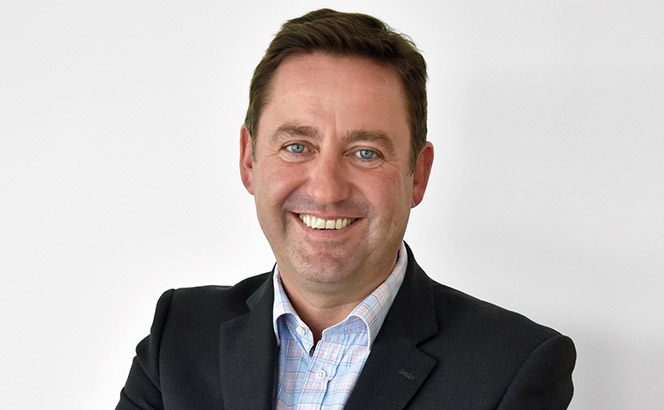


If it is voted through by partners, the Hogan Lovells and Cadwalader merger looks set to be the biggest law firm merger ever, based on revenue at the time of announcement, with combined turnover of $3.6bn. With the proposed union marking the third major law firm tie-up announced within the last month, LB takes a quick look back at the other deals that have defined the legal market.
 Allen & Overy and Shearman & Sterling, 2024
| Revenue | Lawyers | |
|---|---|---|
| Allen & Overy | $2.8bn | 2,900 |
| Shearman & Sterling | $837m | 600 |
Until news of Hogan Lovells’ planned union with Cadwalader, A&O Shearman was the biggest legal merger of all time, based on combined revenues of $3.4bn at the time of announcement. The combined firm posted turnover of $3.7bn for its first full financial year, putting it into the world’s top five. The deal came five years after A&O’s earlier efforts to merge with O’Melveny & Myers hit the buffers, and 25 years after the last major US-magic circle tie-up, when Clifford Chance merged with Rogers & Wells.
 McDermott Will & Emery and Schulte Roth & Zabel, 2025
| Revenue | Lawyers | |
|---|---|---|
| McDermott Will & Emery | $2.23bn | 1,340 |
| Schulte Roth & Zabel | $619m | 365 |
Chicago-headquartered McDermott Will & Emery tied up with New York’s Schulte Roth & Zabel to create McDermott Will & Schulte in 2025’s merger mania. The deal was put together in double quick time, with negotiations over the $2.8bn tie-up – led on the McDermott side by chair Ira Coleman (pictured) – taking just three months.
 Ashurst and Perkins Coie, 2025
| Revenue | Lawyers | |
|---|---|---|
| Ashurst | $1.319bn | 2,137 |
| Perkins Coie | $1.259bn | 1,064 |
For many years, the accepted wisdom on mega-mergers has been that the ideal is a merger of equals, and Ashurst and Perkins Coie are about as close as they come in revenue terms. The combination of Anglo-Australian firm Ashurst with Seattle-headquartered Perkins, led by Paul Jenkins and Bill Malley (pictured), is projected to create a $2.7bn firm.
 Clifford Chance, Rogers & Wells and Punder Volhard Weber & Axster, 2000
| Revenue | Lawyers | |
|---|---|---|
| Clifford Chance | £587m | 2,000 |
| Rogers & Wells | $220m | 400 |
| Punder Volhard Weber & Axster | n/a | 300 |
Clifford Chance’s tripartite merger with US firm Rogers & Wells and Germany’s Punder Volhard Weber & Axster, which went live on New Year’s Day in 2000, was an early indicator of how the legal profession would globalise in the 21st century. Adjusted for inflation, the merged firm’s combined revenues of £937m equate to $2.6bn in today’s money. That same year saw another market-defining triple merger – Freshfields’ combination with Germany’s Bruckhaus Westrick Heller Lober and Deringer Tessin Herrmann & Sedemund.
 Norton Rose and Fulbright & Jaworski, 2013
| Revenue | Lawyers | |
|---|---|---|
| Norton Rose | $1.32bn | 2,200 |
| Fulbright & Jaworski | $597m | 800 |
Norton Rose has done more than its fair share of mergers over the years, including the three-way verein tie-up with South African firm Deneys Reitz and Canada’s Ogilvy Renault in 2011. But its biggest deal was its first major step into the US, combining with Texas firm Fulbright & Jaworski in 2013, a deal which created a $1.85bn firm ($2.5bn adjusted for inflation). And the US expansion did not stop there, with a merger with $250m New York firm Chadbourne & Parke following in 2017.
 Hogan & Hartson and Lovells, 2010
| Revenue | Lawyers | |
|---|---|---|
| Hogan & Hartson | $865m | 1,120 |
| Lovells | $866m | 1,637 |
While many remain sceptical about the merits of international mega-mergers, the 2010 combination of the UK’s Lovells and the Washington DC-based Hogan & Hartson is often held up as a success story. Another merger of equals, the deal created a $1.66bn firm ($2.5bn adjusted for inflation), which has grown steadily in the 15 years since, and is now set to break through $3bn revenue mark via a merger with Cadwalader.
 DLA, Piper Rudnick and Gray Cary Ware & Freidenrich, 2005
| Revenue | Lawyers | |
|---|---|---|
| DLA | £275m | 1,350 |
| Piper Rudnick | $500m | 1,000 |
| Gray Cary Ware & Freidenrich | $213m | 380 |
Often cited as one of the most influential legal mergers, DLA’s three-way verein combination with Piper Rudnick and Gray Cary Ware & Freidenrich came shortly after Baker McKenzie became the first major law firm to adopt the model. The union created a $1.5bn firm ($2.5bn adjusted for inflation), and DLA has maintained separate US and international partnerships and profit pools to this day.
 Dentons and Dacheng, 2015
| Revenue | Lawyers | |
|---|---|---|
| Dentons | $1.275bn | 2,600 |
| Dacheng | $400m | 4,000 |
Dentons – whose brand dates back to UK firm Denton Wilde Sapte – had already gone through a rapid series of transformative mergers, including the 2010 combination with US firm Sonnenschein Nath & Rosenthal, followed by a three-way tie-up in 2013 with European firm Salans and Canada’s Fraser Milner Casgrain.
However, the biggest of all came in 2015, when it combined with China’s Dacheng to create the world’s largest law firm by headcount, with 6,600 lawyers across 50 countries, and revenue of around $1.7bn ($2.3bn adjusted for inflation). That deal only lasted eight years, as the pair split in 2023 as a raft of international firms pulled out of China amid regulatory concerns.
 CMS, Nabarro and Olswang, 2016
| Revenue | Lawyers | |
|---|---|---|
| CMS | £735m | 3,000 |
| Nabarro | £130m | 420 |
| Olswang | £113m | 310 |
In one of the biggest mergers involving only UK firms, in 2016 CMS pulled off an ambitious three-way combination of its UK business, CMS Cameron McKenna, with City firms Nabarro and Olswang. Nabarro’s real estate strengths and Olswang’s TMT credentials added heft to CMS’ capabilities in the UK, forming a $1.3bn firm ($1.8bn adjusted for inflation).
 Herbert Smith and Freehills, 2012
| Revenue | Lawyers | |
|---|---|---|
| Herbert Smith | £475m | 1,400 |
| Freehills | £382m | 800 |
The merger of UK stalwart Herbert Smith and leading Australian firm Freehills came during a period in which many UK firms looked to APAC as the next big thing for international growth. The merger, which created a $1.2bn firm ($1.7bn adjusted for inflation), took place the same year as another similar tie-up – Ashurst’s £550m merger with Blake Dawson. Herbert Smith Freehills went on to secure a $2bn US merger this year, tying up with New York firm Kramer Levin.
 King & Wood Mallesons and SJ Berwin, 2013
| Revenue | Lawyers | |
|---|---|---|
| King & Wood Mallesons | $655m | 1,900 |
| SJ Berwin | £184m | 350 |
While the HSF and Ashurst Blake Dawson tie-ups are generally viewed kindly in hindsight, one other UK-APAC merger serves as the textbook example of a merger gone wrong – the 2013 combination of Sino-Australian giant King & Wood Mallesons and City firm SJ Berwin. The SJ Berwin brand disappeared one year after the merger, and the legacy UK arm was riven with internal politics and financial troubles, collapsing into administration in early 2017.
And the bad news didn’t end there. Earlier this month, KWM announced that its China and Australia partnerships will split next year, reforming as separate firms, 14 years after the merger of King & Wood and Mallesons Stephen Jacques.
 Honorable mentions
Winston & Strawn and Taylor Wessing, 2025
$1.65bn, 1,400 lawyers
Arnold & Porter and Kaye Scholer, 2017
$1bn ($1.3bn adjusted for inflation), 1,000 lawyers
Squire Sanders & Dempsey and Patton Boggs, 2014
$870m ($1.2bn adjusted for inflation), 1,600 lawyers
Bryan Cave and Berwin Leighton Paisner, 2018
$900m ($1.2bn adjusted for inflation), 1,600 lawyers
Mayer Brown and Rowe & Maw, 2002
$650m ($1.2bn adjusted for inflation), 1,250 lawyers
Reed Smith and Richard Butler, 2007
$725m ($1.1bn adjusted for inflation), 1,400 lawyers
Eversheds and Sutherland Asbill & Brennan, 2017
$770m ($1bn adjusted for inflation), 2,300 lawyers