

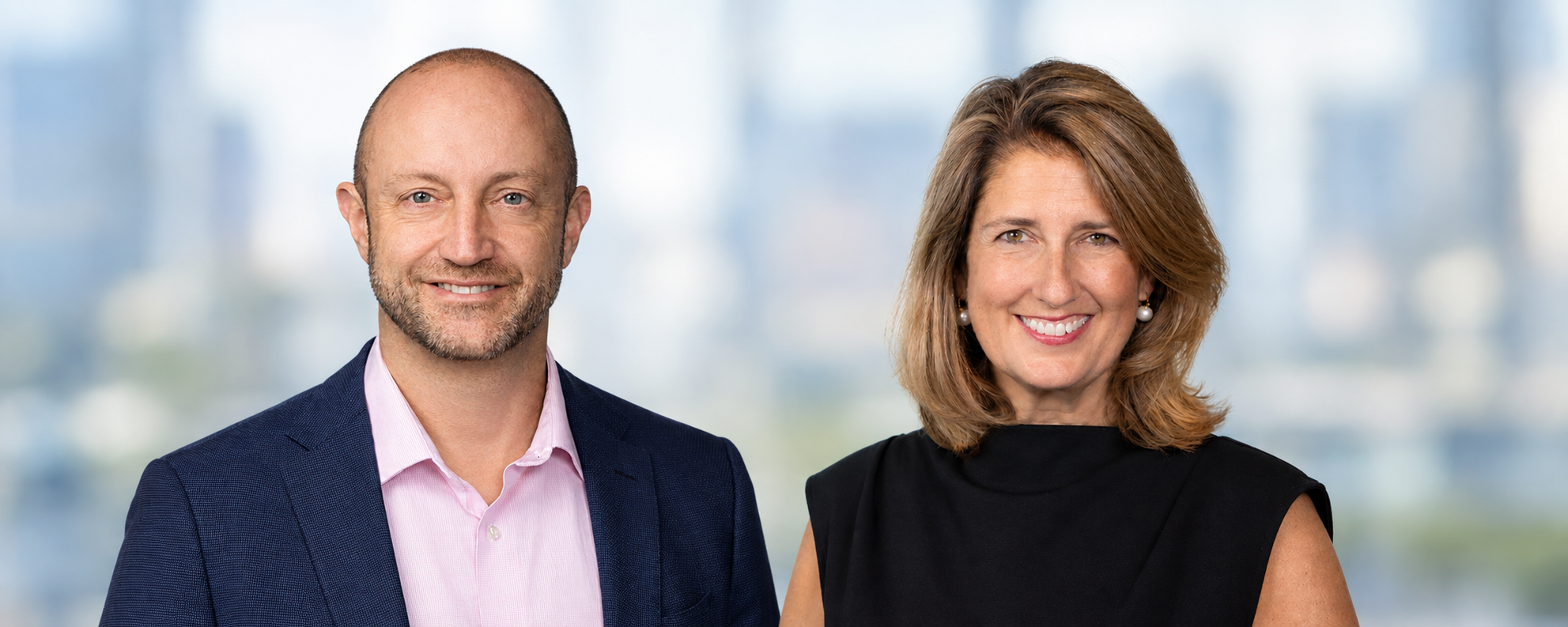
‘We are unabashedly in growth mode,’ says Reed Smith global managing partner Casey Ryan. ‘We frequently use the word ambition because people need to feel it.’
Ambition has been a defining theme of Ryan’s tenure. Since succeeding Alexander ‘Sandy’ Thomas in 2023, she has overseen rising profits, the expansion of key practices, the launch of four new offices in Atlanta, Denver, Boston and Riyadh, and some of the largest deals in the firm’s history.
In 2025 alone, Reed Smith added 226 lateral lawyers, including 55 partners. The momentum has continued into 2026, with the firm adding a further 127 lawyers, including 38 partners, so far this year.
But both Ryan and Europe and Middle East managing partner Gregor Pryor stress that despite all the activity, the cornerstone of Reed Smith’s strategy is deepening its capabilities in areas where client demand is strongest.
Reshaping
‘Our strategy has been to grow in the markets where we need greater strength from a practice and client perspective,’ Ryan says. ‘In the case of our four most recent openings, they were driven in large part by clients asking us to be in those markets.’
‘There’s been a great focus on private equity,’ she adds. ‘We’ve expanded that bench globally, with a primary focus in the US and London. We’ve continued to build out the corporate side of the house.’
The recruitment strategy reflects that focus. In London, Reed Smith has added a series of corporate and transactional partners, including PE partner Tom Whelan from legacy McDermott Will & Emery in 2024, Gowling WLG corporate and ECM partner Samantha Myers and Proskauer corporate and PE partner Andrew Houghton in 2025, and corporate, ECM and M&A partner David Brennan from Gowling in 2026.
Other recent arrivals include financial regulatory partner Damian Carolan, energy partners Tallat Hussain and Nina Howell, competition partner Paul Johnson, and disputes lawyers Richard Kovalevsky KC and Michael Darowski.
In the US, Reed Smith’s launches in Atlanta, Denver and Boston brought in sizeable teams focused on private equity, M&A, fund formation, private credit and finance. More recently, the firm added New York private funds partner Nathan Noh from Cravath, and senior managing director of private equity Robert Fox from McGuireWoods in Los Angeles.
‘Often you’ll go to a client meeting and they’ll say, why you? That’s a fair question. There are hundreds of law firms. Why you?’
The strategy is paying dividends, Ryan says: ‘The deals have been bigger, and we’ve just done the biggest deal the firm has ever done in its history.’
In May, Reed Smith advised music group Concord on its $14bn merger with BMG, its largest deal to date, led by Century City-based entertainment and media industry group co-chair Stephen Sessa. The mandate also fits squarely within the firm’s sector-led strategy, with entertainment and media one of five core sectors alongside energy and natural resources, financial services, healthcare and life sciences, and transportation.
Sector-led expertise is key to how Reed Smith goes to market. As Ryan says: ‘You can’t be great at everything. Firms have to decide what they want to be best at, what they want to be known for, and then communicate that.’
‘Often you’ll go to a client meeting and they’ll say, “Why you?” That’s a fair question. There are hundreds of law firms. Why you? You have to be able to answer that credibly and then back it up every day of the relationship.’
The strategy is also helping the firm move up the market without abandoning its roots. ‘We’ve been middle market and in a great place in the middle market for years,’ says Pryor. ‘The number of billion-dollar-plus deals we’re doing has never been higher and that will continue. The size and scope of deals is increasing and we’ll continue to play in that space.’
And while the mandates are getting bigger, Ryan, a former trial lawyer and vice chair of the firm’s litigation department, has not forgotten the disputes side of the practice. ‘The firm is hedged well now. It’s almost a 50-50 split between corporate and litigation, with both sides serving each other very well and servicing the same clients.’
Business growth
The push into larger and more sophisticated work has been accompanied by a more commercial approach to running the business. Current and former partners describe Reed Smith as becoming more focused on the bottom line under Ryan’s leadership – something neither she nor Pryor shies away from.
‘We are a large global business with a lot of moving parts,’ she says. ‘If we’re not focused on whether the machine is running well, eventually the machine stops running.’
Pryor, however, says that the firm is striking a good balance between profitability and culture: ‘“We are definitely not a lifestyle firm; we want to be ambitious without creating a culture that burns people out.’
‘We have worked really hard to get [PEP] to the magic $2m figure’
Perhaps the most obvious beneficiary of what one current partner describes as Ryan’s ‘laser-focused approach’ has been the firm’s profit per equity partner, which topped $2m for the first time in its most recent financial year.
The firm posted revenue of $1.58bn and PEP of $2.02m in its latest financials. When Ryan took the helm in 2023, revenue stood at $1.42bn and PEP at $1.58m. In three years, revenue has increased by 11%, while PEP has risen 26%.
‘We have worked really hard to get to the magic $2m figure,’ Ryan says of the firm hitting the milestone for PEP.
AI and FOMO
AI is another area where Ryan and Pryor feel Reed Smith is well placed. The firm launched an AI leadership programme with Cornell University in June, designed to improve the AI skills of its partners.
Ryan says that AI comes up ‘in every client meeting, without exception.’ She also believes that firms that are able to move quickly could be set to harvest long term benefits. We have always been an innovative firm, so we are running hard at this and moving quickly,’ she says.
‘There is an advantage to getting there early. If you can work with a client on AI in a credible way, helping them solve real problems and build something together, you have the opportunity to create a much deeper, longer-term relationship.’
Beyond formal training, Pryor says the firm is encouraging senior lawyers to share how they are using AI in partner meetings. ‘It creates a little FOMO,’ he says. ‘Someone sees a colleague doing it well and asks, “What am I missing?” Lawyers inspiring other lawyers is incredibly effective.’
And while they concede that AI is having an impact on pricing, Pryor doesn’t see this as necessarily negative: ‘A lot of the opportunity is about communicating with the client and being open to alternative fees. If it’s about the value delivered rather than the hours it took, there’s a real chance to win more work and for everyone to be happier with the outcome.’
Taken together, Ryan and Pryor argue that they are clear-eyed about how to take the firm to the next level and the imperative for doing so. ‘There is no time in this industry for a firm to be stagnant or satisfied with itself,’ Ryan says. ‘If you’re not moving up, you’re falling behind.’
That said, both are keenly aware of the risk that can come with growth: ‘We have wildly talented lawyers and really good people,’ Ryan says. ‘People stay here for decades. That doesn’t happen in all law firms. When you have a culture like that, you protect it fiercely.’