


After two years of building out its London finance practice, Proskauer is still growing, turning its attention to a new avenue of growing interest for private credit investment: real assets.
‘Many of our clients have been developing real asset strategies,’ says Philip Bowden, co-head of Proskauer’s global finance group.
‘Our private credit clients have so much dry powder to deploy and there isn’t enough activity just in pure private equity M&A. So they need to find other places to deploy, and an obvious place is infrastructure and real assets,’ he continues.
This market shift is what’s driving Proskauer’s latest push, as the firm has made two hires in the area in the last nine months, bringing in real estate finance partner Usman Khan from McDermott in April, and infrastructure finance lawyer Sean Darling, who joined as a partner from Ropes & Gray last November.
When discussing how his work would fit in to Proskauer’s global finance practice, Darling and Bowden crafted a five-pronged sector-focused approach to building the firm’s infrastructure financing arm.
Darling says: ‘At the business planning discussion last year, the five sectors that we landed on were: digital, then transport and logistics, energy, social and healthcare, and then infrastructure services, i.e., so anything that services all of these other sectors.’
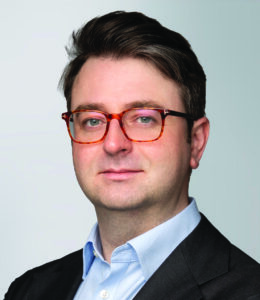 Darling (pictured right) notes that his decision to join the firm was influenced by Proskauer’s strong connections to private credit, which has been fuelling an ongoing real asset boom.
‘At Proskauer we traditionally do all this work on the private credit side, but we also have all the fundraising that we do within the broader infrastructure private capital ecosystem,’ he says.
He continues: ‘So when we started to plan we thought it was key to cater for the full lifecycle of raising the infrastructure fund, deploying it both on an equity and debt basis and then managing that investment as it matures.’
The strategy has already taken off, with Darling and Bowden co-leading the firm’s team that advised nexfibre, the joint venture of InfraVia, Liberty Global and Telefonica, on its £2bn acquisition of Substantial Group in February this year.
The strategy of maximising the firm’s private credit connections is something Bowden and the Proskauer team have been very focused on in the last few years, as the firm has made notable investments into its London office in the midst of the private capital boom.
Bowden’s move to the firm in 2024 was part of the first phase of that buildout, when he joined from A&O Shearman after serving as co-head of legacy Allen & Overy’s global banking and finance practice.
He was joined by acquisition finance partner Megan Lawrence, also of A&O Shearman, as well as former Cahill finance partners Jake Keaveny and Warren Newton, who made the move to Proskauer at the same time.
‘You need scale to tackle the market, but the bigger you get, the more challenging it is to maintain that cohesion’
Since then, the firm’s London presence has grown rapidly, citing 45% revenue growth in the City last year as its office revenue hit $226.8m.
Proskauer’s London office is also one of the fastest growing in the City by headcount, with this year’s Global London report highlighting that it has increased its total lawyer count by nearly 84% over the last five years. In the same time period, the number of partners in London has nearly doubled, up 90% from 32 to 61.
Despite now working with a bigger team, Bowden notes that the key is maintaining a collaborative culture that blurs the lines between the different specialisms within global finance.
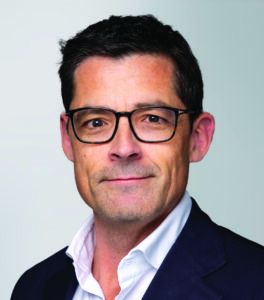 Bowden (pictured right) notes: ‘What we’re growing here, and I think which mirrors what our clients are doing, is a multidisciplinary offering – it’s all part of the same spectrum in a way, because you can do a data centre deal, and there are real estate finance elements to it. There are infrastructure elements to it. There’s definitely leverage finance elements to it as well.’
‘You need to be able to talk the language of all three and not have people approach it in a siloed way. The real asset-infra practice we’re building is integrated with our leverage finance practice and that’s how we will continue to grow it,’ he adds.
This philosophy has led to additional hires outside of the real assets space, including structured credit and CLOs partner Kos Vavelidis from DLA Piper last month, and restructuring partner Andrew Payne, who moved to Proskauer’s London office from Linklaters in Singapore last November. Payne has since been active, taking a lead role advising Tilray Brands on its acquisition of BrewDog this March.
The firm’s growth has also extended beyond London, with three PE partners joining Proskauer’s Paris office from Hogan Lovells in February this year. In the US, Proskauer opened an office in Charlotte last September, led by a four partner leveraged finance team from Cadwalader.
For Bowden, the space for growth in Proskauer’s London practice is a key part of its edge within the competitive City market.
‘One of the things I love about Proskauer is we’ve got the advantage of taking something that’s relatively discrete and has never been branded at Proskauer as a distinct go-to-market strategy before and we’re just pulling it together and growing it from scratch. We’re building it in exactly the shape we want, which is easier because there’s fewer internal obstacles to navigate, you’re not having to overcome existing structures,’ he says.
However, Bowden also notes how becoming a bigger office can come with challenges: ‘We’re growing, and we will be bigger again in another 12 months, so it’s about maintaining that cohesion as we expand. It’s a big challenge for all professional services – you need scale to tackle the market, but the bigger you get, the more challenging it is to maintain that cohesion.’
That said, the firm’s London growth plan is not yet finished: ‘I’ve been asked more than once, when is the buildout going to be finished Philip? But I’m not going to put a cap on growth. It’ll finish when we don’t think we can continue to win market share. That’s when we’ll stop,’ concludes Bowden.