


In 2008, Perry Shwachman, a Legal 500 Hall of Famer for non-contentious insurance, was instructed to act on the formation of a new insurance carrier that had ‘aspirations to become a leading retirement services company.’ Unbeknownst to him, the transaction would prove pivotal for both Shwachman and his firm, Sidley Austin, more broadly.
Athene, the newly created insurance provider that Shwachman advised, was brought to life by Apollo, marking one of private capital’s first forays into the life insurance market. The deal kick-started a series of unions between insurers and private capital that has been blossoming ever since.
‘I don’t think folks in 2008 thought that sponsor involvement with life insurers would grow into what it has grown into today,’ Shwachman tells Legal Business. ‘It has been a real sea change in this space.’ And Sidley has been riding the coattails of this growth area of private markets ever since, leveraging its insurance roots to adapt and grow with its clients.
‘We’ve grown really significantly in private equity and private capital in the US in the last five or six years’
The firm now counts Carlyle, KKR, Ares and Clearlake among its private capital clients, but Apollo Capital Management remains one of its most important relationships. And it was Shwachman’s role advising Athene that started the relationship that has gone on to fuel Sidley’s wider private capital and London build-out.
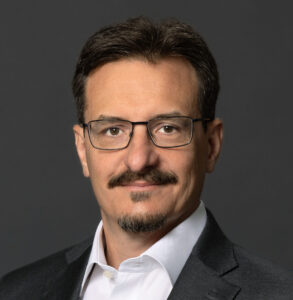 ‘We’ve grown really significantly in private equity and private capital over the last five or six years and our client base has expanded dramatically,’ says Sean Carney (pictured right), one of the co-leaders of Sidley’s private equity practice, who relocated to London earlier this year, in part to meet growing demand for London advice for US PE clients.
In 2021, the then Chicago-based Carney advised on the formation and initial £2.1bn capitalisation of Athora, the Bermuda-based insurance group that spun out of Athene’s European operations. Last year, Carney counselled Athora on its £5.7bn acquisition of UK insurer Pension Insurance Corporation.
For Carney, these deals show how far his career has come since starting out in Sidley’s insurance practice doing M&A and governance work. His first move into private capital came when General Electric sold off its insurance companies in the mid-2000s; the former GE lawyers moved to GE Capital and Carney began servicing their M&A needs. His transition towards working for sponsors has also been mirrored by the firm more broadly.
‘My practice became more heavily focused on private equity starting around 2008/9 after Apollo and other PE sponsors started delving more significantly into the life and annuity insurance space,’ he recalls. ‘Financial services and insurance became a more prominent strategy for many private equity firms after the great financial crisis. Our insurance practice and private equity practices began to grow together in tandem, and we are continuing steadily on that growth trajectory.’
‘The insurance sector is awake to new forms of capital and transactions’
Though it wasn’t the first, Apollo’s relationship with Athene became a template for other alternative asset managers to tap life insurers for stable capital from long-term premiums. In return, the insurer gains access to higher rates of return. Private capital’s entry into insurance has helped transform the once-sleepy sector, requiring firms to tool up for increasingly complicated transactions.
 ‘The insurance sector is awake to new forms of capital and transactions,’ says Carl Hotton (pictured right), an insurance M&A partner who joined Sidley from DLA Piper in July. ‘The convergence of insurance, alternative capital and asset management is reshaping how our clients think about growth and capital strategies.’
As the market has matured, law firms have had to bolster their finance capabilities to service the emerging hybrid structures – rated note feeders, collateralised fund obligations and other securitised assets – that are allowing regulated insurers to invest efficiently in private markets.
Sidley has continued to invest in its practice, with the firm’s insurance heft helping attract finance partners who can help service the growing needs of the insurance and private capital nexus. ‘Sidley’s insurance practice, which is top of the market, was a huge draw,’ explains Patrick Calves, who moved from Cadwalader in New York in August.
Brian Foster, a fellow fund-finance partner who moved with Calves, adds: ‘The fund finance market has expanded not just in size but in terms of the products offered, you have an expanding universe of products that require ancillary practices. That Sidley had this platform was a huge attraction for us.’
Hotton explains: ‘The attraction was a platform that marries deep insurance capability with real fluency in private capital – and that can serve not just the insurance channel but the increasingly sophisticated capital chains that link into insurance.’
‘This deal helped become the foundation of our growth in the private equity space’
While the growing private capital viewpoint is important, Hotton stresses the value of a firm that can advise the insurers, intermediaries and other market participants on these new flows of alternative capital and explain, as he puts it, ‘how this capital is shaped, how it looks and how it moves.’
 Back in 2009, when the Apollo-Athene deal closed, it wasn’t clear to Shwachman (pictured right) where the matter would lead. ‘Working with Apollo and the Athene founders was incredibly interesting and fun,’ he says. ‘We knew we were helping change the industry but I’m not sure any of us could have predicted how significant it would be.’
But over the intervening decade and a half, the deal helped ‘spur our growth in the private equity space and served as a foundation for our practice,’ Shwachman continues. ‘This matter was incredibly pivotal.’ And it did not take long for what began as a stroke of serendipity to morph into a coherent strategy. ‘We started to see more sponsors begin to take an interest in insurance, in a way they had not previously been,’ Carney says, ‘and given our relationships and our practice it was simply a natural focus for us.’
Over the last decade, as other private capital sponsors have followed Apollo’s lead, Sidley has acted for several major sponsors on their insurance matters. In 2023, the firm advised Global Atlantic, KKR’s insurance arm, on a $19.2bn reinsurance mandate and last year Sidley acted for Ares’ insurance subsidiary Aspida Re.
Carney and Shwachman say these matters have led to further instructions from KKR and Ares outside the narrow insurance brief. ‘We had and still have a top tier insurance practice,’ Shwachman says. ‘But having worked with Athene and Apollo from the start helped spur our PE practice as other sponsors became interested in entering the insurance market.’
 While private capital’s play into the US insurance market is now well established, over the last decade the UK insurance market has also started courting new sources of capital. ‘The Solvency UK reforms have allowed greater flexibility in how insurers invest, with further reforms coming across the EU in 2027’, James Phythian-Adams (pictured right), one of the co-leaders of Sidley’s global insurance practice, explains.
This flexibility has coincided with the increasing presence of private capital, which is pushing boundaries in product innovation and structuring expertise. This has caught the attention of regulators keen to keep tabs on how insurers are using these new tools. As a result, Phythian-Adams says firms need deep technical and sponsor-side expertise so insurance clients ‘can take advantage of these reforms and opportunities whilst ensuring compliance.’
‘It’s about being able to marry private capital and insurance and service all the capital chains that link into insurance’
But Phythian-Adams and Hotton say the firm also aims to deliver deal structures on the cutting edge of what is possible. The pair are currently acting on a novel UK reinsurance transaction, and Sidley’s four decades of experience in the sector gives the firm an advantage, Hotton explains. ‘Our US team have seen similar structures and we can bring them in around the deal structuring and technical aspects; there are a handful of these transactions across the globe but Sidley has done several of them.’
While insurance is also a core part of other firms’ business, such as Debevoise, Willkie and Skadden, at Sidley it is ‘a founding pillar of the firm’s whole practice’ according to Hotton.
‘How does a firm like Sidley approach growth areas within private capital and differentiate itself?’ asks Phythian-Adams. ‘To have credibility with large asset managers and private capital firms as they increase their involvement in insurance, you need deep experience of transactions across the insurance value chain. You need to understand how it all feeds through from the underlying insurance business to the investment and capital structure. That combination is a real differentiator in building broader private capital and asset manager relationships.’