


‘We knew when we launched last autumn that this was something that hadn’t been done before, and that we would probably take the market by surprise,’ says AGRD chief executive Maria-Pia Hope.
Last year, while much of the attention around private equity’s advance into the legal sector was focused on the UK and US markets, AGRD Partners (pronounced ‘agreed’) – the legal group backed by Nordic private equity firm Axcel – launched with six Swedish member firms: Allié, Born, Morris Law, Next, Synch and TM & Partners.
Member firms retain their brands and management structures while collaborating on technology, training and client offerings.
AGRD also comes with some notable UK names attached. The launch was advised by Dejonghe & Morley, PE-in-law consultancy founded by former legacy Allen & Overy heads Wim Dejonghe and David Morley, and the group now counts former Travers Smith managing partner David Patient among its board members.
The model has expanded rapidly. In January 2026, AGRD added transactions-focused firm Wigge and competition boutique Bokwall Rislund. Four months later, Icelandic full-service firm BBA//Fjeldco became the first non-Swedish member, before Malmö-based business law firm Moll Wendén joined later that month.
Today, AGRD comprises ten firms, around 350 lawyers and 13 offices across Sweden and Iceland. Combined revenue stands at approximately SEK1.2bn (€110m), placing the group among Sweden’s five largest legal services providers by revenue.
In less than a year, AGRD has gone from a six-firm Swedish experiment to a sizeable Nordic legal platform – and the UK is now firmly in its sights.
The UK: a ‘natural next step’
Hope says the UK is a ‘very natural next step for AGRD. Given that it’s Europe’s largest legal services market, it’s certainly of great interest to us and a very important part of our expansion strategy.’
And while the story of private equity investment in UK law firms has, to date, largely been one of regional consolidation, Hope suggests AGRD is thinking bigger.
‘We’re looking at firms that are slightly larger, but not the very largest. The upper mid-market is probably where our focus lies,’ she says. ‘There would certainly be funding available for a sizeable UK acquisition. I wouldn’t rule out a firm with revenues of £200m.’
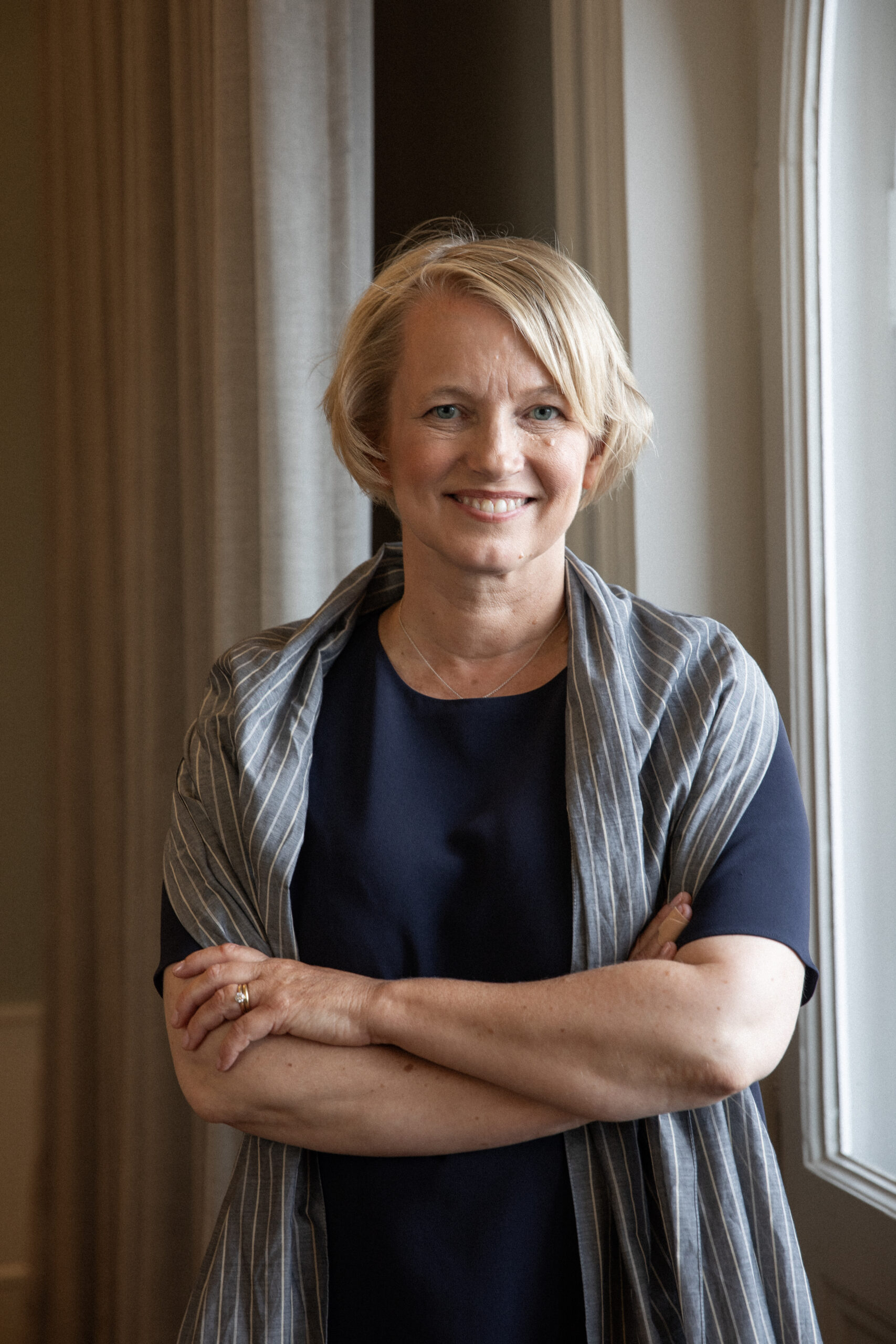 A glance at the 2025 LB100 gives a flavour of the type of firm that could fit that profile. Burges Salmon (£178m revenue), Mills & Reeve (£180.7m), Travers Smith (£210m) and Shoosmiths (£217m) all sit around the range Hope (pictured right) describes.
One of the traditional objections to private equity investment in full-service law firms is that, unlike in many businesses, the key assets can leave.
Until now, PE investors in the UK have largely concentrated on specialist businesses such as personal injury firm Fletchers, backed by US investor Sun Capital Partners, family law firm Stowe Family Law, backed by Bahrain-based Investcorp, or regional consolidation plays such as Lawfront, which has acquired seven regional firms since receiving backing from London-based investor Blixt Group.
The reluctance to back larger corporate firms stems from a longstanding concern: that the principal value of a law firm, its people, can leave at any point, taking client relationships and revenues with them.
It is a challenge Hope knows well. Before joining AGRD, she was managing partner of Swedish full-service firm Vinge, which has more than 400 lawyers and over 70 partners, for 12 years.
Yet recent deals suggest attitudes may be shifting. In May, Dallas-based private equity firm Trive Capital invested in leading Los Angeles corporate boutique Massumi + Consoli, signalling a growing willingness among investors to back firms whose value is closely tied to individual lawyers and their relationships.
Hope is confident that AGRD’s model can work in these relatively uncharted waters.
‘We try to stay really close to our firms,’ she says. ‘To make sure that what we adopt is very much done in conversation with them.’
‘There is also a financial element,’ she continues. ‘The partners sell their firms, and they are required to reinvest part of that purchase price in the group. That’s a way of making sure they stay committed and also benefit from the group doing well.’
It is not all about the group, though. Hope stresses that AGRD is structured to ensure partners remain motivated to grow both their own firms and the wider platform.
What’s in it for the firms?
‘What you get access to is a central team with capabilities to execute our strategy – to embrace AI and tech (all member firms get access to Harvey), to think smartly about pricing, and to think about packaged services in a new world.’
Beyond the operational support, however, Hope believes the real attraction is the collective knowledge base the platform creates: ‘In this very rapidly changing world, it’s important to have access to more people, to share everything from client opportunities to day-to-day headaches. Having people getting to know each other is a great way of building for the future.’
And for those sceptical of private equity’s role in law, Hope offers a rebuttal:
‘I think one misconception when it comes to private equity is that you would just throw money at quick wins, quick fixes — slash and burn. That’s not the case, or at least not for the ones that are doing it well. What we are really trying to do is build something that is substantially more valuable the day the sponsor moves on, which is in the nature of all private equity investment.’