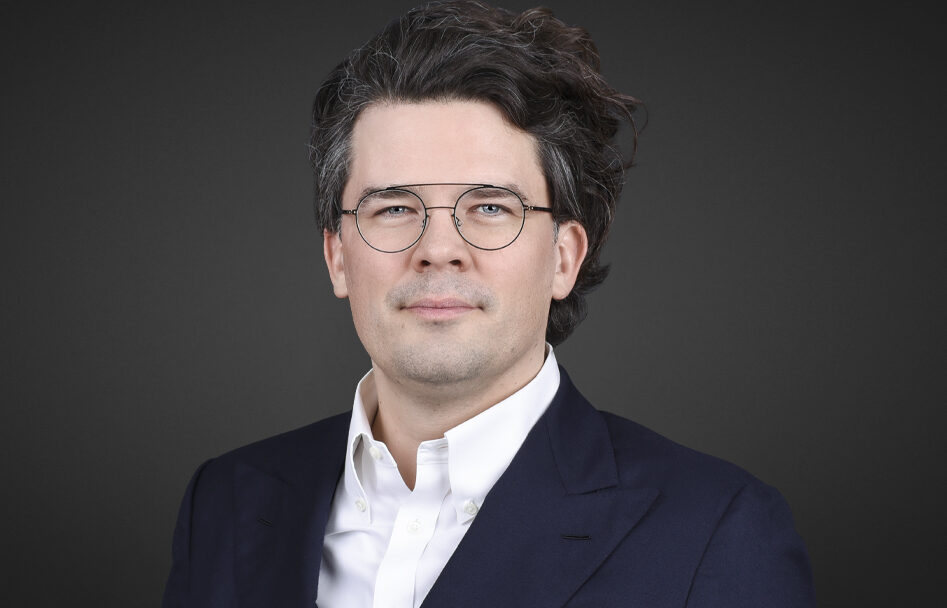
‘This is now a market dominated by national firms,’ says Houston-based Kirkland & Ellis corporate partner and executive committee member Andy Calder.
Since 2022, O’Melveny & Myers, Steptoe, and Nelson Mullins are among the firms to have opened in Houston, as well as the UK-headquartered Clifford Chance.
And, if further proof were needed of how hot the market is right now, news emerged earlier this month that Sullivan & Cromwell is set to expand its US national presence by hiring a lawyer from Kirkland in Houston, while Dechert announced last week that it would be setting up home in the city with the addition of trial lawyer Jim Wetwiska from Akin.
Movers and shakers
Hiring data tracked by legal market intelligence provider Surepoint highlights the city’s growth more starkly than individual moves.
In 2024, Houston saw a total of 104 lateral partner hires into top 100 US firms, up from 53 in 2023 and 96 in 2022.
This activity continued into 2025, when significant recruitment efforts saw Paul Hastings add Houston partners including trial lawyer Craig Stanfield, who joined from King & Spalding in April and Chris Richardson, who joined from White & Case in July. Richardson was one of nine energy and infrastructure partners to join the firm’s energy and infrastructure practice around the world, predominantly from W&C.
The hires came after Paul Hastings, which opened in Houston in 2012, added an eight-partner finance team across Houston and Dallas from Vinson & Elkins in 2024.
Confirming its commitment and intent in the city, in November, the firm also announced plans to move to a bigger office, at the same time signing the lease for a new Dallas office.
‘If you’re looking for growth, Texas is one of the top markets’
For its part, White & Case made hires including project development and finance partner Patrick Johnson, who joined in January from Norton Rose Fulbright, and energy and infrastructure partner Joshua Teahen, who joined from Kirkland in November.

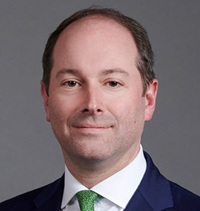
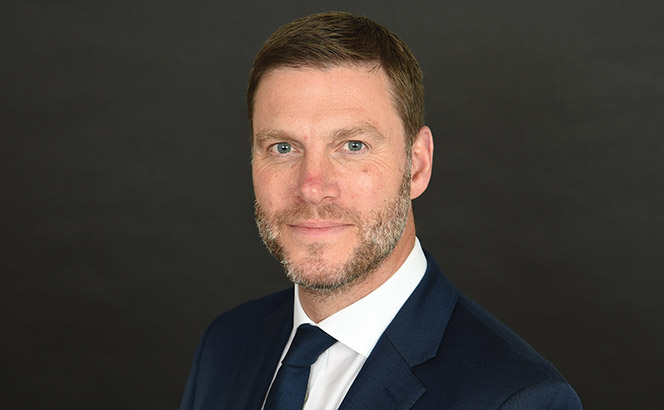
‘Every firm is trying to gain scale, to find new areas where they can grow revenue,’ explains Calder (pictured right). ‘There’s a limited amount of growth possible in the traditional markets of New York, California, and London, because those are very mature markets. If you’re looking for growth, Texas is one of the top markets.’
It’s easy to see why. The 2024 GDP of Texas was nearly $2.8trn – the second largest of any state in the US behind California, and enough to put it in the top ten largest GDPs by country, ahead of Italy, Russia, Canada, and Brazil.
Helping this GDP position is the fact that Texas touts itself as a business-friendly environment, home to the headquarters of 54 Fortune 500 companies, as well as to one in ten of all publicly traded companies in the US.
‘We’re seeing new clients who want to take advantage of Texas,’ says Russell Lewis, partner in charge of Baker Botts’ Houston office. ‘There are companies coming in from other states and other countries, and there are also investors who are coming in looking to spend money on the companies, assets, and startups here. There’s a lot of money flowing into Texas right now.’
‘Houston is obviously the energy capital of the world’
In Houston, one sector still dominates: energy. ‘Houston is the energy epicentre of the US,’ says Lewis McDonald, London-based co-head of the global energy practice at HSF Kramer – a firm that is open about its ambitions to establish a presence in Texas.
McDonald continues: ‘It is important to add that capability in order to build a credible energy and infrastructure brand in the United States.’
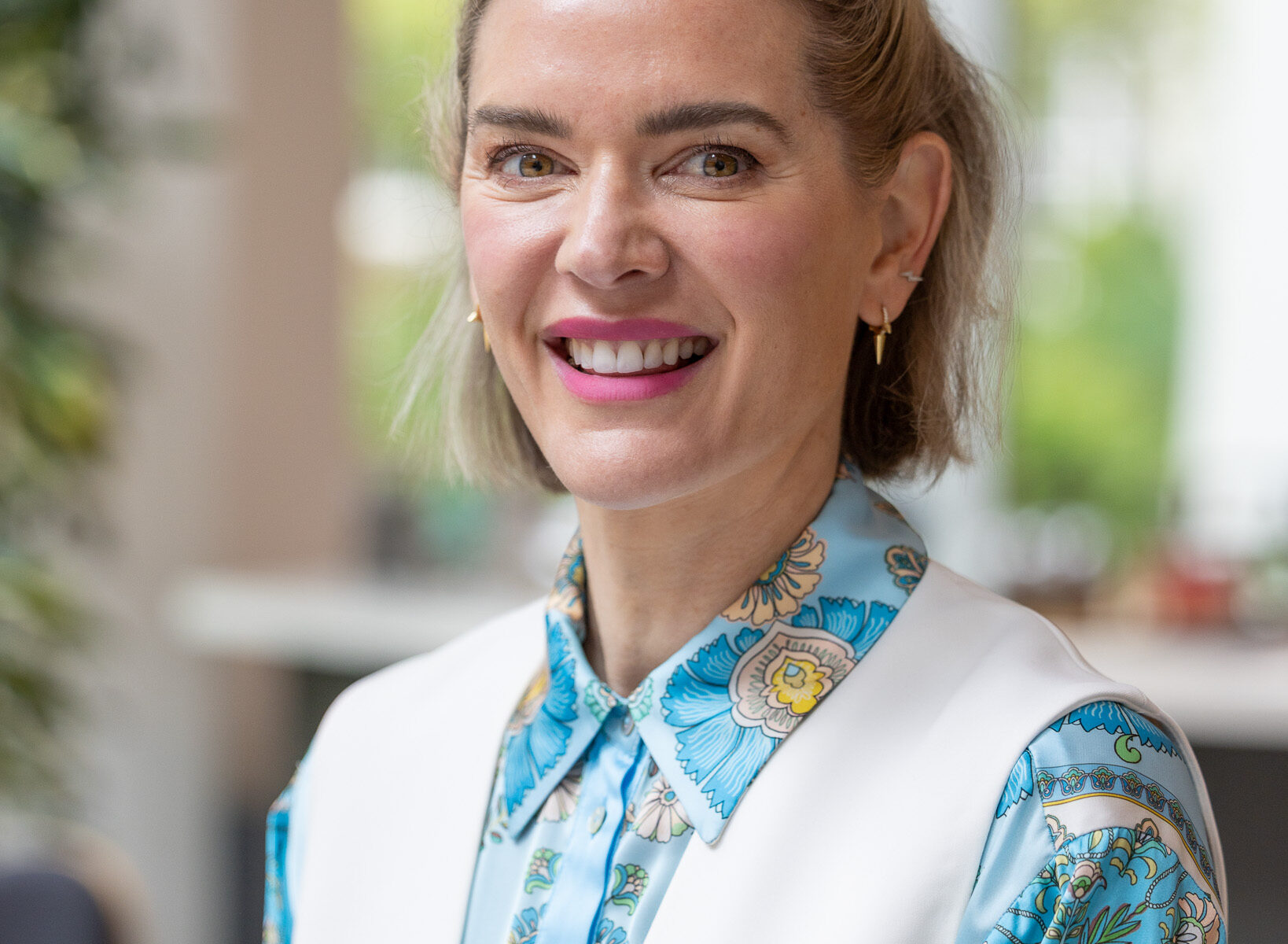
Hillary Holmes (pictured right), capital markets co-chair and co-partner-in-charge of the Houston office at Gibson Dunn, concurs but points out that energy no longer just means oil, even in a state with a history like Texas’s.
‘Houston is obviously the energy capital of the world,’ she says. ‘When I started doing this 25 years ago, energy largely meant oil and gas and the subsectors of that, producing and moving the hydrocarbons and servicing that activity. But now energy is a lot broader and even more innovative.’
Archie Fallon, project finance and investment practice group co-chair and Houston managing partner at Willkie, makes a similar point: ‘There’s a growing technology industry in Houston. The different subsectors of the energy industry are all converging with the technology sector in the form of data centre projects.’
This confluence of energy and technology has seen even more money flowing into the sector – and even more attention turning to Houston.
Enter the disruptors
For a long time, the primacy of the energy industry in Houston allowed local firms to dominate. ‘It used to be great for the big four,’ says one Houston partner at a top global firm, in reference to locally founded firms Baker Botts, Vinson & Elkins, legacy Fulbright & Jaworski, and legacy Andrews Kurth. ‘There was a lot of talent to choose from, and very few top firms from outside the market were here. The problem now, for those firms, is that the top firms are here.’
Another Houston partner at a different global elite firm outlines the change. ‘Latham opened in Houston in 2010, other firms including Sidley came in around the same time, and Kirkland opened in 2014. Around this point, the market changed. Until that time, both the Houston market and the energy transactions market across the United States were dominated by Texas firms.’
‘Before 2010, a lot of firms were swinging and missing’
There had been earlier waves of expansion – notably, Mayer Brown launched in Houston in 1982 with Weil following in 1985 – but nothing of the same scale.
‘Before 2010, a lot of firms were swinging and missing,’ says one Houston partner. ‘Firms would come in and try to mimic the full-service offerings that they had in other markets. Or otherwise they’d try to go into a niche area that was already well covered.’
The difference after 2010 was in how firms opened. The partner continues: ‘How did Latham open? It opened by grabbing teams who already worked together at top firms.’
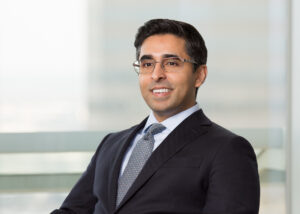
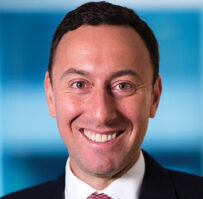
Nick Dhesi (pictured right), Houston managing partner at Latham, explains: ‘The partners we hired already had a strong base of expertise in the key areas of work in Houston, in particular across the energy sector. What we were able to do was add that deep industry expertise to a comprehensive platform, the likes of which hadn’t existed in the market previously. That connected with the market, and we were able to lift out key partners who were experts in the core Houston markets and add them to our full-service platform.
‘We continue to view that as the most effective model: have the best people in the market, and ensure that they’re connected to key centres of excellence in the firm.’
‘On the rates side, Texas isn’t as distinct as it was a decade or so ago’
From seven partners at launch, Latham’s Houston office now has 130 lawyers, including 27 partners.
With their larger full-service global platforms, firms like Latham have been able to command higher rates.
Texas-based Major, Lindsey & Africa partner recruiting director Dave Beran comments: ‘On the rates side Texas isn’t as distinct as it was a decade or so ago. There’s still a difference, but the gap is closing, at least when it comes to the top 50 firms.’
This has piled pressure onto the old Texas-founded firms – a heightened version of the squeezed-middle dynamic that expresses itself across the US and around the world as top global elite firms grow ever larger.
How to stand out?
But in a market with so many new entrants and so much growth, how do newcomers distinguish themselves?
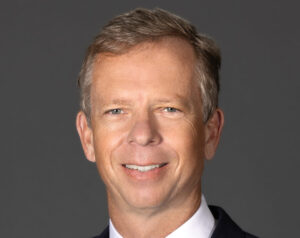
‘At this point, the market is very well served,’ says Cliff Vrielink (pictured right), executive committee member and global energy, transportation and infrastructure practice lead at Sidley, and co-managing partner of the firm’s Houston office. ‘A new firm coming in can’t really say to clients that they bring anything that’s not already on offer here.’
And even those who can argue that they provide a unique offering face hurdles. Notably the competition for talent. Calder explains: ‘When you come to town, there’s still room in the market, but it’s a question of whether you can hire the lawyers to do the work.’
Vrielink concurs: ‘To get the top rainmakers is really hard. People are settled recently.’
‘Growth for growth’s sake is not the way to do it. Especially in Texas’
For Holmes, this means firms need to be careful about how they expand: ‘The legal business is all about meeting client needs and market demand – not hiring for numbers or size. Growth for growth’s sake is not the way to do it. Especially in Texas, where there’s a smaller pool of truly excellent lawyers. It’s more competitive to get the best talent who has that entrepreneurial and client-first mindset we want.’

Even those that already have scale in the city need to stay on their toes. As Collin Cox, Gibson Dunn trial attorney and Houston office co-partner in charge, notes: ‘Clients value both loyalty and results. Both are important, and we try to work on both every day. But we have to prove we’re good at what we do to keep our place.’
For new entrants, the problem is more acute, as those who want to access the market must look for new ways to play. One firm that has sought to make such a bet is Clifford Chance, which opened in Houston in 2023.
‘Our clients were asking us to be there,’ says CC’s Houston office managing partner and global tech group co-chair Devika Kornbacher (pictured right). ‘We already had energy clients worldwide, and those clients said, “We need you in Houston.”’
Kornbacher moved to CC from Vinson & Elkins in 2022. Based at first in the magic circle firm’s New York office, she returned to Houston the following year to help launch the office there.
‘Our strategy is to expand our capabilities in the markets where we can support clients with our global offerings,’ she says. CC bases part of its Houston pitch on its established presence in markets that US-headquartered firms have been less keen to invest in, in particular in Latin America.
‘Gain a foothold in Texas, then use the revenue generated there to effectively open in New York’
Other firms too see opportunities there. ‘It’s very easy for investment to flow in and out of the United States through Houston,’ says Ricardo Garcia-Moreno, Houston office managing partner at Haynes and Boone. ‘For many years, a certain city in Florida advertised itself as the gateway to Latin America, but that has changed, and in particular with respect to opportunities with Mexico.’
Little wonder given everything Texas has going for it, that local firms have long-been linked with transatlantic merger rumours, with Vinson & Elkins and Baker Botts among local players to have been regularly linked in the past with UK firms known to be seeking a merger partner, such as Ashurst.
However with Ashurst last year confirming plans to combine with Perkins Coie, some believe a significant merger is now less likely, while maintaining that it would still be a sensible move.
‘Gain a foothold in Texas, then use the revenue generated there to effectively open in New York,’ one partner suggests, adding that such a deal would also provide the Texan firm ‘the global heft they need to compete.’
Irrespective of whether a UK/Texas merger comes to pass, what is clear is that with this many new entrants, it is unlikely that all will succeed. As a result, local partners suggest new and recent entrants will need to try hard to avoid becoming ‘zombie firms’ – living gravestones to big law ambition that litter the Houston landscape.
[email protected]
Partners at top Philadelphia firms on the state of play in a burgeoning lateral recruitment market



 A tech showdown in the CAT: Epic Games v Alphabet and Google
 Below the surface: Various investors v Glencore, Ivan Glasenberg and Steven Kalmin
  Controlling the flow: the Thames Water restructuring
 Show me the money: Municipio de Mariana v BHP, phase two
 Dieselgate: Various claimants v Mercedes-Benz Group, Volkswagen, Ford Motor Company, Nissan Motor Co

 Commercial knowledge
 Quality of partners
 Overall client service
 Ravi Aswani, 36 Stone
 Rosemary Davidson, 6KBW College Hill
 Timothy Killen, 3 Verulam Buildings
 Christopher Knight, 11KBW
 Alasdair Mackenzie, Doughty Street Chambers
 Laura Newton, Brick Court Chambers
 Caroline Pounds, Quadrant Chambers
 Nehali Shah, One Essex Court
 Professor Philippa Webb, Twenty Essex
 Nicholas Wilkinson, 1 Hare Court





 In a statement, he said: ‘