
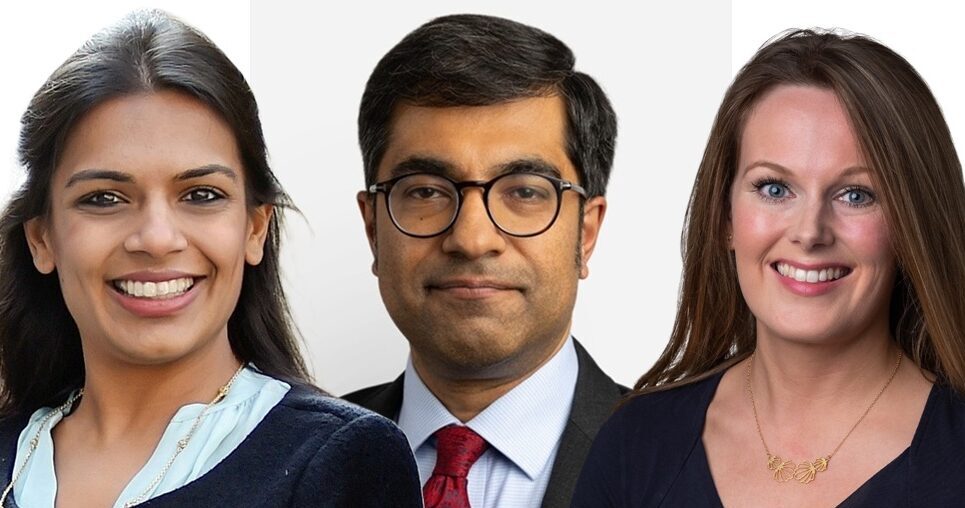
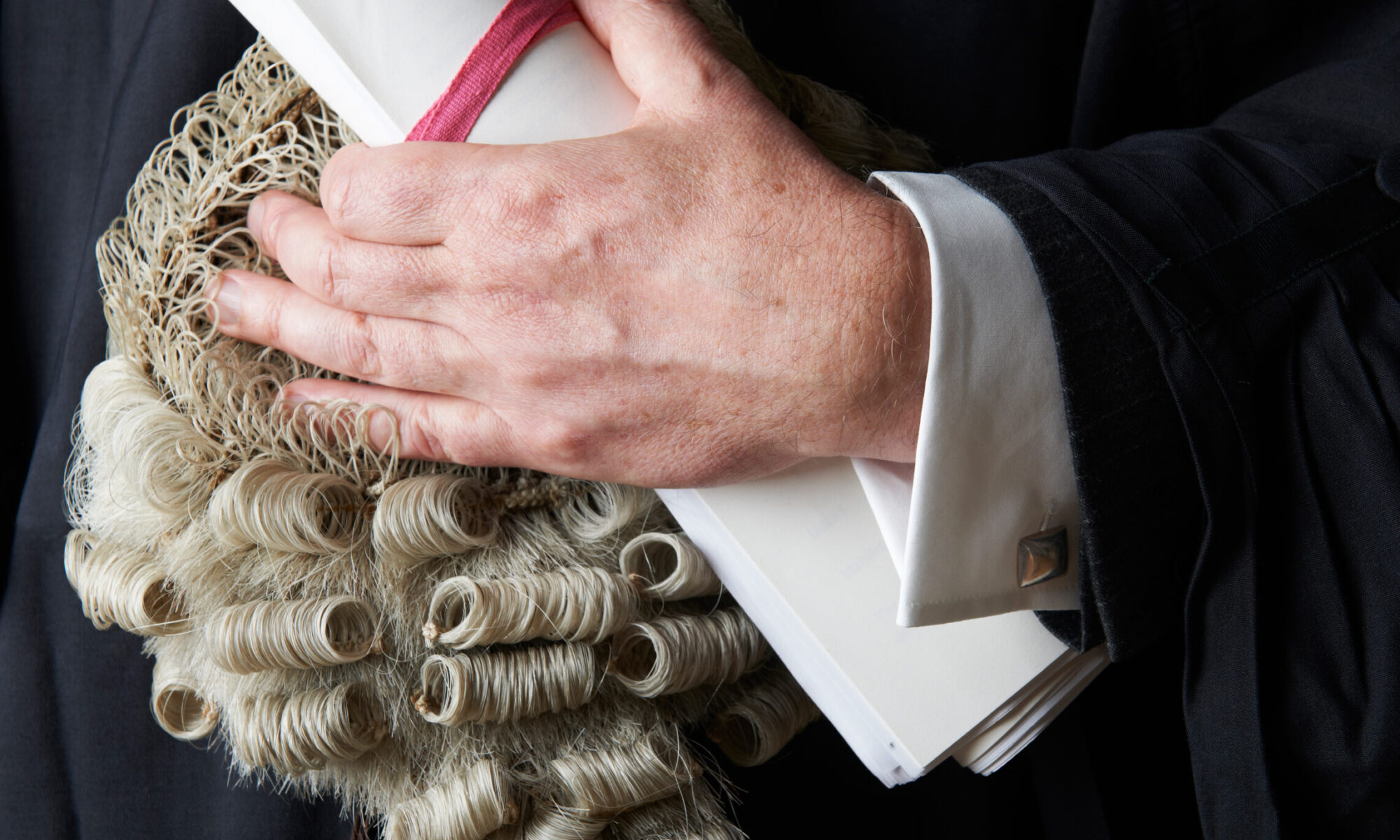
This year’s silk round, announced last week, saw 96 successful applicants make the grade, and this March they will make their way to Westminster Hall to accept their letters patent as they officially assume the status of King’s Counsel – the designation for elite advocacy in England and Wales.
As always, there is a broad mix of specialisms, experience and personalities on show – here, Legal 500 Global Bar editor Will Tolcher picks out ten notable names who will be making that journey to Westminster on 23 March.
 Ravi Aswani, 36 Stone
Ranked in the top tier for both shipping and commodities in Legal 500, international arbitration specialist Ravi Aswani has a practice to match his prominence as a flag-bearer for that practice area, and the Bar more broadly on LinkedIn, where he is particularly active. The winner of the shipping, commodities and aviation junior of the year at the Legal 500 Bar Awards 2025, he is active as both counsel and arbitrator in these areas.
 Rosemary Davidson, 6KBW College Hill
The only barrister of the top tier of the Legal 500 extradition ranking to make silk in this year’s round, Rosemary Davidson has of late been instructed by the Crown Prosecution Service in cases involving high-profile requested persons, including the long-running extradition proceedings concerning the late Autonomy CEO Mike Lynch, as well as politically sensitive matters such as requests for extradition to Ukraine.
Away from this area, she was also involved in the R (W80) v Independent Office for Police Conduct case concerning the appropriate test for self-defence in police disciplinary proceedings, including as sole counsel for the officer at Court of Appeal level – the matter concerned the death of Jermaine Baker, who was fatally shot while part of a plot to break out two prisoners being transported to Wood Green Crown Court.
 Timothy Killen, 3 Verulam Buildings
Ranked in the top tier for insurance and reinsurance in Legal 500’s London coverage, in addition to four other rankings, Killen is also notable for his work in the Dubai International Financial Centre, including unled work – as evidenced by his ranking in the top tier in the Commercial section of Legal 500’s English Bar in the Middle East and victory as commercial junior of the year at the 2024 Legal 500 MENA awards. He joined 3VB in October 2025, having moved from 2 Temple Gardens.
 Christopher Knight, 11KBW
Public Law junior of the year at the 2025 Legal 500 Bar Awards, Christopher Knight has been active across the most politically sensitive public law cases – appearing both for claimants and as part of government teams led by Sir James Eadie KC.
Of late he was instructed for the claimants in R (ARC Time Freehold & ors) v Secretary of State for Housing, Communities and Local Government – a challenge by freeholders to the leasehold enfranchisement reforms. Government side work of late included a successful appearance in Hora v United Kingdom, in which the vexed issue of voting by serving prisoners returned to the European Court of Human Rights once again.
 Alasdair Mackenzie, Doughty Street Chambers
Alasdair Mackenzie is notable as being the sole junior barrister with a Legal 500 ranking for immigration in this year’s silk round, reflecting the constrained market for silk work in a significantly privately-funded area.
His track record includes representing a number of Tamil asylum seekers in the British Indian Ocean Territory who were eventually transferred to the UK, and prior to that he was involved in the Rwanda plan litigation.
 Laura Newton, Brick Court Chambers
Winner of commercial litigation junior of the year at the 2025 Legal 500 Bar Awards, Laura Newton is one of four silks from Brick Court chambers in this round. In 2025 she was the top junior for the appellants in the NIOC v Crescent Gas case in the Court of Appeal, in which a technical point of trusts law became the latest skirmish in a decade-long dispute over a long-term gas agreement which included an arbitral award against NIOC to the tune of $2.5bn, and has also had roles in blockbuster cases such as Mozambique v Credit Suisse (also known as the Tuna Bonds case). In an unusual case – unled and pro bono – she represented three people subjected to director disqualifications in Montserrat in an appeal to the Judicial Committee of the Privy Council.
 Caroline Pounds, Quadrant Chambers
A nominee for shipping, commodities and aviation silk of the year at the 2025 Legal 500 Bar awards alongside Aswani, as is typical in this practice area, much of Caroline Pounds’ work has been in confidential arbitrations – including sitting as an arbitrator.
However, one highlight of her junior career in court was being part of an all-Quadrant team in first the Admiralty Court and then the Court of Appeal in the litigation concerning the salvage of the Ever Given. Pounds will be appointed alongside Quadrant Chambers stablemate Gemma Morgan, in a year when more women than men ranked in Legal 500 for shipping and energy have been appointed silk.
 Nehali Shah, One Essex Court
Nehali Shah’s appointment comes as no surprise, with her top-tier rankings in Legal 500 for international arbitration, banking and finance and energy, as well as a tier two ranking for commercial litigation. Of late she has been representing the claimants in Credit Suisse Virtuoso SICAV-SIF v Softbank, a case concerning the collapse of Greensill Capital, as well as representing the estate of Mike Lynch in civil litigation over HP’s purchase of Autonomy.
 Professor Philippa Webb, Twenty Essex
Professor of public international law at the Blavatnik School of Government at Oxford, Philippa Webb receives a substantive appointment to King’s Counsel for her work in that field, for which she won International Law Junior at the most recent Legal 500 Bar Awards. Her practice spans inter-state disputes, international human rights matters and investor-state disputes. Of late regarding the latter, she appeared on her feet in the UK Supreme Court in Infrastructure Services Luxembourg S.A.R.L and another v The Kingdom of Spain concerning submission to the UK’s jurisdiction for the enforcement of ICSID arbitral awards.
 Nicholas Wilkinson, 1 Hare Court
One of three junior barristers ranked by Legal 500 for family: divorce and financial remedy, Nicholas Wilkinson has a track record of the kind of heavyweight, high net worth, financial remedy litigation one would expect from a senior junior at 1 Hare Court. Unled and instructed by Howes Percival, he represented the father in W v C, a High Court Schedule 1 case involving two French nationals and, prior to that, represented a Jordanian princess in Al Hussein v Al Maktoum case, a claim by financial provision against her ex-husband, the Ruler of Dubai.



 In a statement, he said: ‘


 ‘The combination of litigation funding and the rise of class actions have
  Helen Carty (pictured right), head of the London litigation and dispute resolution team at
  Stewarts, notes that, so far, ‘all of the big cyber attacks have been mostly uninsured and have been settled.’ He argues that full-blown litigation is likely to emerge only in the event of ‘systemic cyber loss.’
 ‘The business environment is getting increasingly worse, and if we do head into a recession, there will likely be a lot of restructuring and insolvency work,’ says Ted Greeno (pictured right), co-managing partner of
  Tougher economic circumstances also impact private credit. ‘A lot of private equity money went into the market in the last five years,’ says Molyneux. ‘Perhaps that went into investments that haven’t come through or where the price was too high in a frothy market (which of course is part of the portfolio investing) – some of that is unwinding. And you get disputes as a result of that.’
 By way of example, Slaughters acted for the Premier League in the expedited legal challenges brought against its rules by Manchester City FC, as well as ongoing commercial disputes in F1 and golf.
 As he summarises: ‘Firstly, you want to project the kind of confidence that comes from experience. That air of calm when everybody else is panicking is absolutely key.’

 This marks a break from the seller’s market of previous years, which saw deals collapsing on valuation discrepancies. ‘But investment committees are still highly selective as to what they will allow people to run hard at,’ Rodham adds.
 Charlie Hayes, Freshfields’ global co-head of private capital in London, makes a similar point: ‘We’ll continue to see the bifurcation in funds that are readily able to fundraise, and those for whom it’s more challenging; there are great teams out there, and I think this year the consolidation of GPs we’ve already started to see will gain pace – there are some in the market as we speak. And in H2, the IPO market will be buzzing with private capital exits – there is a lot to look forward to.’