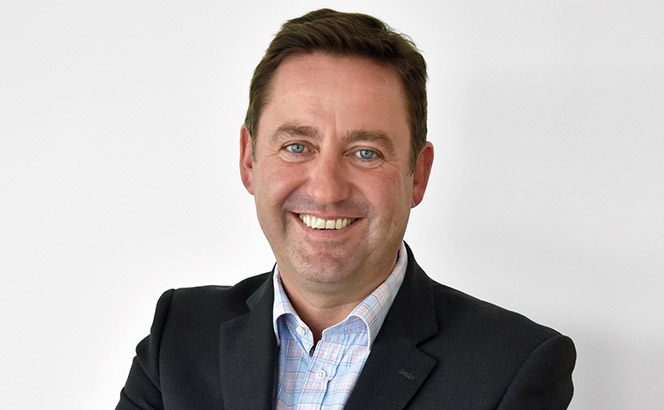
‘I am yet to find a person who wants a wallflower or a potted plant for a litigator,’ says John Quinn, chair and founder of international litigation specialist Quinn Emanuel Urquhart & Sullivan.
Founded 40 years ago in downtown Los Angeles, the firm has built its reputation on an assertive, trial-ready approach, taking on the world’s largest financial institutions.
This mindset, Quinn argues, has been at the core of the firm’s success. He embraces the moniker of ‘most feared’ litigation shop, citing the firm’s growth from just four lawyers in 1986 to 1,300 across 34 offices today.
‘As a litigator, you cannot be bashful. It’s not a recipe for success in this area of practice,’ Quinn says.
The label ‘aggressive’ is also shrugged off: ‘It’s a ham-handed way of addressing the thought. The approach to any case must be strategic. This could mean it’s sometimes aggressive, sometimes modulated.’
Even so, the firm has been doing some introspection. It is currently undergoing a ‘refresh exercise,’ comprised of a website revamp, as well as surveys conducted internally with staff and externally with clients to understand market perceptions of the brand.
These listening exercises prompted reporting that the firm was considering a shift in tone, with its traditional brand perceived as too ‘aggressive’ for non-US audiences in particular.
However, Quinn maintains that the outcome of these surveys is yet to be determined, stressing that ‘it may turn out no change is necessary.’
For him, there is no evidence that the firm’s branding or positioning has been holding it back.
If anything, the firm’s latest financial results underline this position.
PEP to write home about
Last month, the firm posted a 12.6% increase to its topline for the 2025 financial year, representing its third consecutive year of double-digit growth, with revenue of nearly $2.8bn.
Profit per equity partner (PEP) was up 10.6% year-on-year to $9.5m.
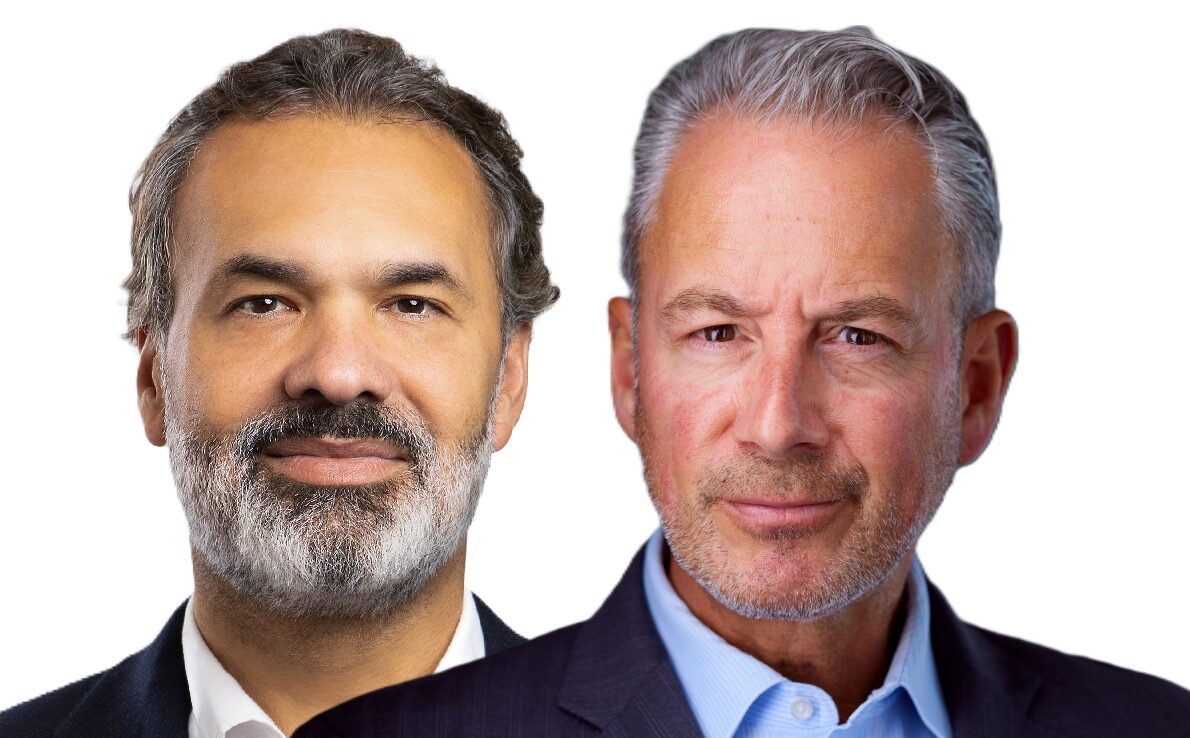
In the London office, led by co-managing partners Ted Greeno and Alex Gerbi, revenue in GBP rose 3% from 2024, hitting a new high of £227.1m, with the office’s profit margin climbing to 68%, up from 65% the previous year.
But John Quinn is not resting on his laurels: ‘We have a lot to be happy about and proud of in terms of what we’ve accomplished, but we also regard it as an unfinished project.’
Certainly, his ambitions are no more cautious than they were when the firm was smaller. ‘Our goal is to continue to win more than our fair share of cases, win more cases that maybe we shouldn’t have won. It’s no one focus. We want to be bigger, be better, everywhere, in everything.’
‘It’s like that Hollywood movie, Everything Everywhere All at Once,’ he adds.
Practice focus
Two areas in particular continue to drive the majority of the firm’s work.
Quinn explains: ‘Our largest practice areas have been intellectual property, and by that I mean largely patent litigation, and finance-oriented litigation representing funds of all kinds: structured finance disputes, restructuring disputes, and insolvency and bankruptcy disputes. Those are our two largest practice areas, and that’s not going to change any time in the near future.’
Alongside these, other areas are gaining momentum. ‘We’re seeing our international arbitration practice do very, very well, as well as our antitrust and government regulatory practice,’ he says.
This year sees several major mandates for the firm. In October, it will represent Aabar Holdings in a multibillion-dollar shareholder group action against natural resources giant Glencore, led by London senior partner Richard East and solicitor advocate Julianne Hughes-Jennett.
This month, East and Hughes-Jennett are also in the High Court for the first-stage liability trial in the Pan-NOx emissions litigation – one of the largest group proceedings ever brought in the UK.
Looking East
Geographically, growth is increasingly being shaped by global economic flows.
In Asia, Quinn is turning its sights on work from India, the world’s most populous country, with an estimated GDP growth rate of 8% for 2025-26. As he points out: ‘There’s no other country with an economy that size, growing like that.’
The country’s growing cohort of globally active entrepreneurs is central to the firm’s international strategy.
‘You have great wealth there,’ says Quinn. ‘In the past, [Indian businesses] have stayed in India because it’s such a large internal market. Now they’re reaching out and becoming increasingly cross-border and global.’
For disputes work, that shift has a clear consequence. ‘We’re disputes lawyers, and Indians are not afraid of disputes,’ Quinn says.
Crucially, for Quinn, the firm’s preferred venue for resolving disputes in Asia is the Singapore International Arbitration Centre.
Quinn Emanuel has been in Hong Kong for more than a decade. But, ‘rightly or wrongly, I think people view Hong Kong maybe a little bit differently,’ Quinn says, citing ‘questions in some people’s minds about whether it’s still a neutral forum’. Singapore, he adds, has been the ‘beneficiary of this attitude’.
That trend drove the firm’s launch in Singapore two years ago, following what Quinn saw as an ‘increasing market share moving to Singapore.’
Disputes being heard in Singapore come not only from India, but also from Thailand, Malaysia and the Philippines, as well as Singapore: ‘All very large economies,’ says Quinn, adding that ‘Singapore became important because India is important.’
The firm’s Singapore outpost began with one lawyer, Duncan Watson KC, and now has 11, Quinn says. ‘It’s been very successful,’ he adds.
China presents a parallel growth vector. The firm’s launch in Shanghai a decade ago was originally designed to support Western investment into China, work that has now largely fallen away.
‘That whole practice of representing Western companies in China has disappeared. Western companies are not investing in China,’ Quinn says.
As a result, the firm has changed tack. ‘Our practice has pivoted to representing Chinese companies wherever they are around the world – whether it’s Shein, or Alibaba, or Bank of China, or sovereign wealth funds, or pharmaceutical companies.’
‘The level of innovation, inventiveness, and ambition we’re seeing there is really extraordinary,’ Quinn adds. ‘So, we’re following those Chinese companies wherever they are, and in the disputes that they face, from IP to ESG and workforce issues.
‘If you’re a Chinese mining company and you buy a mine in Africa, you’ll face the same kinds of issues that you will if you’re a Canadian or American or Australian mining company. We do that kind of work for the latter and we will do it for the former.’
Two global cities
For all the expansion and international client approach, the firm’s geographic anchors remain unchanged.
‘There’s only two global cities: it’s London and New York,’ Quinn says.
London, in particular, continues to play an outsized role in the global disputes landscape.
‘It’s amazing to me the disputes that end up in London, the importance of English law, of English justice, as well as the very broad breadth of jurisdiction the English courts recognise and exercise,’ he says. ‘So, London is important globally in a way that no other city on the continent is. And I don’t see that changing.’
Of course, the pressure in the City is intense. Talent wars and expansion plays, particularly among US rivals such as Latham & Watkins and Kirkland & Ellis, ‘have driven salaries and compensation to a level we have never seen before,’ Quinn notes.
‘The US firms are more aggressive, because, firstly, they’re American, that is how we are. And two, they have the money. I am not sure the magic circle firms can compete, frankly.’
Quinn Emanuel is making plays of its own in the City. In November 2025, it added international arbitration practice co-head Andrew Savage from McDermott Will & Schulte, followed by financial and investigations disputes partner William Charles from Milbank in January this year.
‘We’re always looking for the best new talent,’ Quinn says. ‘We opened in London with primarily a finance-oriented practice, and now we have people who practice in many different areas, and there’s room for that to grow.’
The next chapter
At 72, Quinn is relaxed about the question of succession.
Stepping down as managing partner in 2022 to become executive chairman, he handed day-to-day leadership to Washington DC white-collar partner William Burck and New York litigator Michael Carlinsky.
‘It’s working very well,’ Quinn says.
While Quinn’s daughter is also a lawyer, there is no Succession-style dynastic handover in place: ‘We have younger people who are very respected in our firm, who are leaders, and very much have the reins of the leadership of the firm, and I remain involved. So far, so good,’ he says.
But on who might be the next John Quinn, he is unequivocal:
‘I am not going anywhere.’
[email protected]




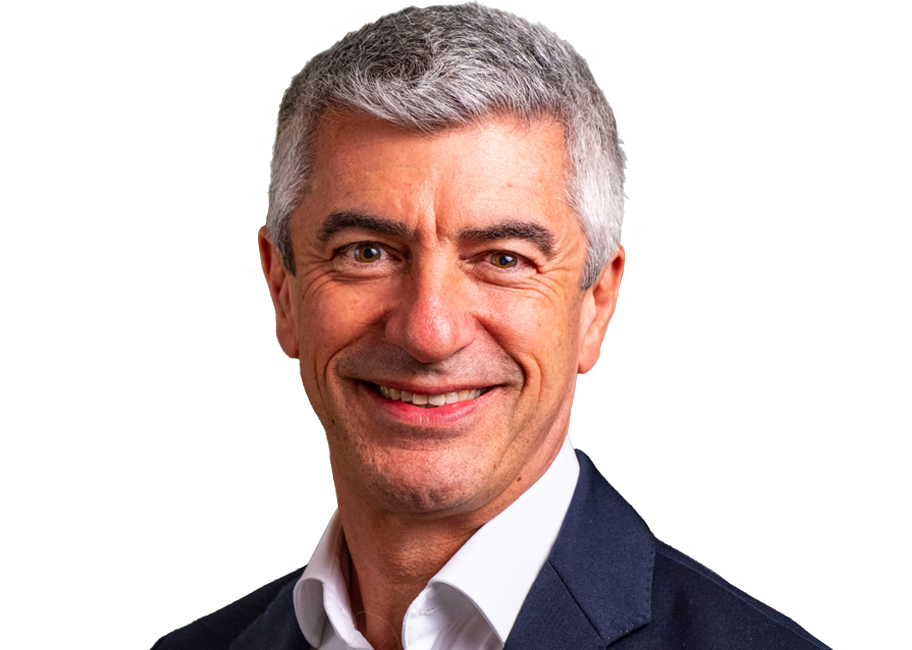










 On the trend for megadeals, Nigel Wellings (pictured), co-head of CC’s European corporate group, says: ‘
 ‘As clarity begins to return, history shows that investors consistently regain their stride and move ahead with renewed confidence