
‘This is now a market dominated by national firms’ – why the global and US elite are betting on Houston

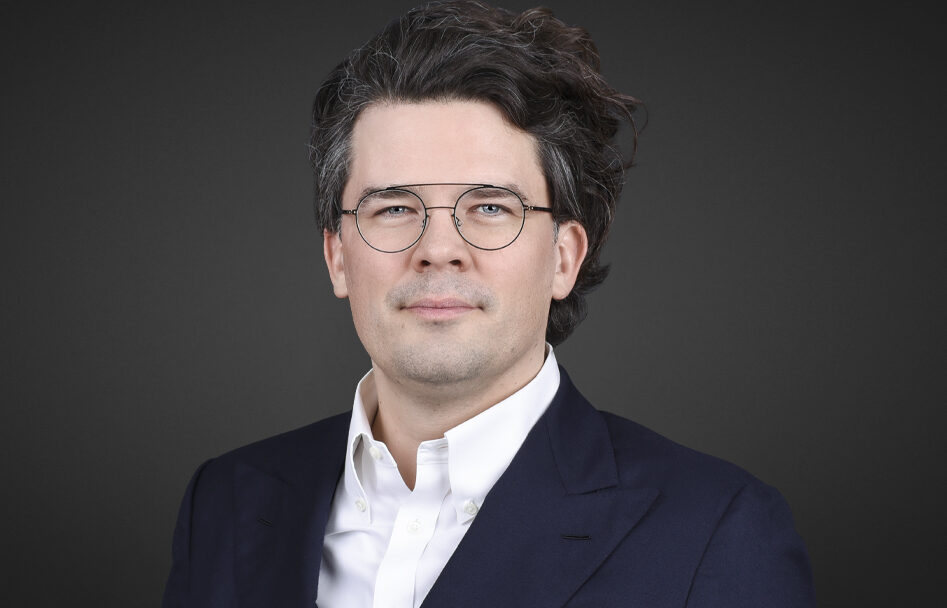
‘This is now a market dominated by national firms,’ says Houston-based Kirkland & Ellis corporate partner and executive committee member Andy Calder.

Since 2022, O’Melveny & Myers, Steptoe, and Nelson Mullins are among the firms to have opened in Houston, as well as the UK-headquartered Clifford Chance.

And, if further proof were needed of how hot the market is right now, news emerged earlier this month that Sullivan & Cromwell is set to expand its US national presence by hiring a lawyer from Kirkland in Houston, while Dechert announced last week that it would be setting up home in the city with the addition of trial lawyer Jim Wetwiska from Akin.

Movers and shakers

Hiring data tracked by legal market intelligence provider Surepoint highlights the city’s growth more starkly than individual moves.

In 2024, Houston saw a total of 104 lateral partner hires into top 100 US firms, up from 53 in 2023 and 96 in 2022.

This activity continued into 2025, when significant recruitment efforts saw Paul Hastings add Houston partners including trial lawyer Craig Stanfield, who joined from King & Spalding in April and Chris Richardson, who joined from White & Case in July. Richardson was one of nine energy and infrastructure partners to join the firm’s energy and infrastructure practice around the world, predominantly from W&C.

The hires came after Paul Hastings, which opened in Houston in 2012, added an eight-partner finance team across Houston and Dallas from Vinson & Elkins in 2024.

Confirming its commitment and intent in the city, in November, the firm also announced plans to move to a bigger office, at the same time signing the lease for a new Dallas office.

‘If you’re looking for growth, Texas is one of the top markets’

For its part, White & Case made hires including project development and finance partner Patrick Johnson, who joined in January from Norton Rose Fulbright, and energy and infrastructure partner Joshua Teahen, who joined from Kirkland in November.

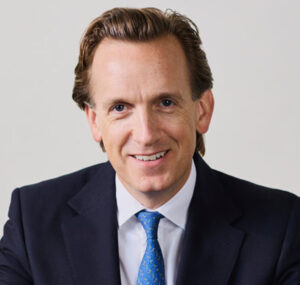
‘Every firm is trying to gain scale, to find new areas where they can grow revenue,’ explains Calder (pictured right). ‘There’s a limited amount of growth possible in the traditional markets of New York, California, and London, because those are very mature markets. If you’re looking for growth, Texas is one of the top markets.’

It’s easy to see why. The 2024 GDP of Texas was nearly $2.8trn – the second largest of any state in the US behind California, and enough to put it in the top ten largest GDPs by country, ahead of Italy, Russia, Canada, and Brazil.

Helping this GDP position is the fact that Texas touts itself as a business-friendly environment, home to the headquarters of 54 Fortune 500 companies, as well as to one in ten of all publicly traded companies in the US.

‘We’re seeing new clients who want to take advantage of Texas,’ says Russell Lewis, partner in charge of Baker Botts’ Houston office. ‘There are companies coming in from other states and other countries, and there are also investors who are coming in looking to spend money on the companies, assets, and startups here. There’s a lot of money flowing into Texas right now.’

‘Houston is obviously the energy capital of the world’

In Houston, one sector still dominates: energy. ‘Houston is the energy epicentre of the US,’ says Lewis McDonald, London-based co-head of the global energy practice at HSF Kramer – a firm that is open about its ambitions to establish a presence in Texas.
McDonald continues: ‘It is important to add that capability in order to build a credible energy and infrastructure brand in the United States.’

Hillary Holmes (pictured right), capital markets co-chair and co-partner-in-charge of the Houston office at Gibson Dunn, concurs but points out that energy no longer just means oil, even in a state with a history like Texas’s.

‘Houston is obviously the energy capital of the world,’ she says. ‘When I started doing this 25 years ago, energy largely meant oil and gas and the subsectors of that, producing and moving the hydrocarbons and servicing that activity. But now energy is a lot broader and even more innovative.’

Archie Fallon, project finance and investment practice group co-chair and Houston managing partner at Willkie, makes a similar point: ‘There’s a growing technology industry in Houston. The different subsectors of the energy industry are all converging with the technology sector in the form of data centre projects.’

This confluence of energy and technology has seen even more money flowing into the sector – and even more attention turning to Houston.

Enter the disruptors

For a long time, the primacy of the energy industry in Houston allowed local firms to dominate. ‘It used to be great for the big four,’ says one Houston partner at a top global firm, in reference to locally founded firms Baker Botts, Vinson & Elkins, legacy Fulbright & Jaworski, and legacy Andrews Kurth. ‘There was a lot of talent to choose from, and very few top firms from outside the market were here. The problem now, for those firms, is that the top firms are here.’

Another Houston partner at a different global elite firm outlines the change. ‘Latham opened in Houston in 2010, other firms including Sidley came in around the same time, and Kirkland opened in 2014. Around this point, the market changed. Until that time, both the Houston market and the energy transactions market across the United States were dominated by Texas firms.’

‘Before 2010, a lot of firms were swinging and missing’

There had been earlier waves of expansion – notably, Mayer Brown launched in Houston in 1982 with Weil following in 1985 – but nothing of the same scale.

‘Before 2010, a lot of firms were swinging and missing,’ says one Houston partner. ‘Firms would come in and try to mimic the full-service offerings that they had in other markets. Or otherwise they’d try to go into a niche area that was already well covered.’

The difference after 2010 was in how firms opened. The partner continues: ‘How did Latham open? It opened by grabbing teams who already worked together at top firms.’

Nick Dhesi (pictured right), Houston managing partner at Latham, explains: ‘The partners we hired already had a strong base of expertise in the key areas of work in Houston, in particular across the energy sector. What we were able to do was add that deep industry expertise to a comprehensive platform, the likes of which hadn’t existed in the market previously. That connected with the market, and we were able to lift out key partners who were experts in the core Houston markets and add them to our full-service platform.

‘We continue to view that as the most effective model: have the best people in the market, and ensure that they’re connected to key centres of excellence in the firm.’

‘On the rates side, Texas isn’t as distinct as it was a decade or so ago’

From seven partners at launch, Latham’s Houston office now has 130 lawyers, including 27 partners.

With their larger full-service global platforms, firms like Latham have been able to command higher rates.

Texas-based Major, Lindsey & Africa partner recruiting director Dave Beran comments: ‘On the rates side Texas isn’t as distinct as it was a decade or so ago. There’s still a difference, but the gap is closing, at least when it comes to the top 50 firms.’

This has piled pressure onto the old Texas-founded firms – a heightened version of the squeezed-middle dynamic that expresses itself across the US and around the world as top global elite firms grow ever larger.

How to stand out?

But in a market with so many new entrants and so much growth, how do newcomers distinguish themselves?

‘At this point, the market is very well served,’ says Cliff Vrielink (pictured right), executive committee member and global energy, transportation and infrastructure practice lead at Sidley, and co-managing partner of the firm’s Houston office. ‘A new firm coming in can’t really say to clients that they bring anything that’s not already on offer here.’

And even those who can argue that they provide a unique offering face hurdles. Notably the competition for talent. Calder explains: ‘When you come to town, there’s still room in the market, but it’s a question of whether you can hire the lawyers to do the work.’

Vrielink concurs: ‘To get the top rainmakers is really hard. People are settled recently.’

‘Growth for growth’s sake is not the way to do it. Especially in Texas’

For Holmes, this means firms need to be careful about how they expand: ‘The legal business is all about meeting client needs and market demand – not hiring for numbers or size. Growth for growth’s sake is not the way to do it. Especially in Texas, where there’s a smaller pool of truly excellent lawyers. It’s more competitive to get the best talent who has that entrepreneurial and client-first mindset we want.’

Even those that already have scale in the city need to stay on their toes. As Collin Cox, Gibson Dunn trial attorney and Houston office co-partner in charge, notes: ‘Clients value both loyalty and results. Both are important, and we try to work on both every day. But we have to prove we’re good at what we do to keep our place.’

For new entrants, the problem is more acute, as those who want to access the market must look for new ways to play. One firm that has sought to make such a bet is Clifford Chance, which opened in Houston in 2023.

‘Our clients were asking us to be there,’ says CC’s Houston office managing partner and global tech group co-chair Devika Kornbacher (pictured right). ‘We already had energy clients worldwide, and those clients said, “We need you in Houston.”’

Kornbacher moved to CC from Vinson & Elkins in 2022. Based at first in the magic circle firm’s New York office, she returned to Houston the following year to help launch the office there.

‘Our strategy is to expand our capabilities in the markets where we can support clients with our global offerings,’ she says. CC bases part of its Houston pitch on its established presence in markets that US-headquartered firms have been less keen to invest in, in particular in Latin America.

‘Gain a foothold in Texas, then use the revenue generated there to effectively open in New York’

Other firms too see opportunities there. ‘It’s very easy for investment to flow in and out of the United States through Houston,’ says Ricardo Garcia-Moreno, Houston office managing partner at Haynes and Boone. ‘For many years, a certain city in Florida advertised itself as the gateway to Latin America, but that has changed, and in particular with respect to opportunities with Mexico.’

Little wonder given everything Texas has going for it, that local firms have long-been linked with transatlantic merger rumours, with Vinson & Elkins and Baker Botts among local players to have been regularly linked in the past with UK firms known to be seeking a merger partner, such as Ashurst.

However with Ashurst last year confirming plans to combine with Perkins Coie, some believe a significant merger is now less likely, while maintaining that it would still be a sensible move.

‘Gain a foothold in Texas, then use the revenue generated there to effectively open in New York,’ one partner suggests, adding that such a deal would also provide the Texan firm ‘the global heft they need to compete.’

Irrespective of whether a UK/Texas merger comes to pass, what is clear is that with this many new entrants, it is unlikely that all will succeed. As a result, local partners suggest new and recent entrants will need to try hard to avoid becoming ‘zombie firms’ – living gravestones to big law ambition that litter the Houston landscape.

[email protected]

Partners at top Philadelphia firms on the state of play in a burgeoning lateral recruitment market


McDermott boosts London revenues by more than 50% as post-merger firm sits on brink of $3bn

McDermott Will & Schulte has boosted London revenues by more than 50%, with the newly merged City office contributing $154m to a near-$3bn total generated by the firm during 2025.

The London revenue total marks a 53% increase on the $100.9m generated by legacy McDermott Will & Emery’s London team in 2024.

Following the combination of McDermott with Schulte Roth & Zabel in August last year, the new firm has posted combined firmwide revenues of $2.99bn for 2025, a result which is set to catapult it into the top 20 largest law firms by revenue globally.

Last year McDermott placed 28th with $2.23bn, while Schulte sat just outside the top 100 with turnover of $618.8m. The $2.99bn generated by the merged firm during 2025 represents a 34% increase on legacy McDermott’s final full-year revenues.

Profit per equity partner (PEP) also increased across the combined firm, with its PEP hitting $5.17m.

For legacy McDermott partners, this represents a 13% increase, up from $4.58m in 2024, while for Schulte, the figure is up 25% on its pre-merger PEP of $4.1m.

The merger – which was completed after only three months of discussions led on the McDermott side by chair Ira Coleman (pictured) – brought together around 1,350 lawyers from McDermott and over 350 from Schulte, spread across 24 locations worldwide.

McDermott has also been investing in the City office, with recent hires including antitrust partner Kristina Nordlander from A&O Shearman, experienced litigator Hilton Mervis from Arnold & Porter, and financial services regulatory partner Karen Butler from DLA Piper.

For more, see The $3bn McDermott Will & Schulte merger: four things the data tells us

The firm also recently made its first round of partner promotions since the merger, with 74 lawyers made up globally, including two in London – Pilar Arzuaga (regulatory) and James Dobias (litigation).

While the post-merger financial picture is undeniably positive, the news comes at the same time as the departure of 20 partners across the US to Dechert, led by Chicago litigator and former head of global strategy Michael Poulos.

The lawyers moving are spread across New York, Los Angeles, San Francisco and Washington DC, where Dechert has established offices, as well as its ‘soon-to-be-opened’ offices in Chicago and Dallas.

In New York, Seth Friedman and Tim Hoeffner will now co-chair the firm’s accounting defence practice, while Bill Donovan in LA will chair the class action practice, after acting in similar roles during their time at McDermott.

Rachel Cowen has joined Dechert in Chicago – where the firm is reopening – as co-chair of its labour and employment practice.

Additionally, McDermott’s former global head of trademark prosecution and controversy Christina Martini will join as co-chair of Dechert’s intellectual property practice.

Poulos, who will serve as vice chair and global head of strategy for Dechert, said of his move: ‘I am incredibly excited to join Dechert, integrate with firm leadership and help continue the firm’s upward trajectory. At the same time, I am grateful for my time at my previous firm.’

‘We joined Dechert because we felt aligned with firm leadership on our approaches to strategic growth, the firm has experienced impressive performance, and we see opportunities to grow on the Dechert platform. In my role as global head of strategy, I also look forward to helping the firm build on its recent success and continue to grow in other strategically important areas as well,’ he added.

Legal & General announces new GC as company veteran steps down after 27 years

Legal & General has appointed a new general counsel, following the retirement of company veteran Geoffrey Timms.

Timms joined the FTSE 100 financial services company in 1991, after starting his legal career at Clifford Chance and Clyde & Co, and has served as GC for 27 years.

He will step down from his position on 21 May this year, and will be succeeded by the current deputy group GC and GC of the group’s insurance business, Maria Alvarez-Scott.

Alvarez-Scott has also had a long tenure at the company, having joined in 2009 as an employment solicitor and progressing through a number of senior legal roles, including GC of the employment, international & protection, and risk, digital & global operations divisions. Before joining L&G, she was an employment solicitor at legacy Scots firm Maclay Murray & Spens.

Timms has navigated a number of significant milestones for the group during his tenure, working under four CEOs.

In a 2016 interview with In-House Lawyer magazine, he looked back on some of his proudest achievements and most memorable deals – including the protracted sale of the Walbrook Square site at Queen Victoria Street – adding that his worst day in the office was when the share price fell to 21p in 2009.

‘We lost two thirds of our value in a week,’ he recalled. ‘I’m the company secretary and the link to the non-execs on the board, keeping them informed about what’s happening. Sometimes you’re just mesmerised by a screen that just shows a sea of red and this time you didn’t know what would happen. Other organisations were failing. It was pretty bad.’

Recent significant transactions include in 2023, when the group completed a £4.8bn buy-in for the Boots Pension Scheme, the UK’s largest single buy-in by premium size, with Slaughter and May and Simmons & Simmons advising.

The group completed a further significant transaction at the beginning of last year, selling its US protection business to Japanese life insurer Meiji Yasuda for $2.3bn, advised by CC.

CC and Slaughters are both established advisers of the company, alongside Eversheds Sutherland, Pinsent Masons and Macfarlanes

Macfarlanes last year handled a number of matters for the company, including advising financing for the acquisition and development of a £750m data centre in the London Borough of Newham, as well as the acquisition of a 2.6-acre brownfield site in Greenwich for development of a new urban logistics estate.

L&G group chief executive António Simões said: ‘Geoffrey has been central to building the great business that L&G is today, helping us to navigate economic turbulence, driving strategic acquisitions and forging some of our most important partnerships. He steps down with our very best wishes and gratitude for his outstanding service over more than three decades.’

He continued: ‘Maria is an exceptional legal practitioner and leader, with deep knowledge of L&G’s business, strategic context and culture. She will be a fantastic partner to the management team and board as we drive our next phase of growth.’

Speaking of her new role, Alvarez-Scott said: ‘I am delighted to be taking leadership of L&G’s talented legal and CoSec teams, who are rightly regarded as some of the best in the business. At a critical time for the delivery of the group’s strategy, our expertise, support and advice will be central to achieving our ambitions. Geoffrey has built a very strong legacy, and I’d like to thank him for all his guidance and support throughout our years working together.’

For more, see Perspectives: Geoffrey Timms

[email protected]

Revolving Doors: Dechert bolsters private capital with senior in-house hire as McDermott recruits from A&O Shearman

Dechert has boosted its private capital capabilities in London with the hire of a senior in-house lawyer from Singaporean wealth fund GIC.

Jarlath Pratt, who has spent the last 12 years at GIC, most recently as assistant general counsel, has previously worked in-house at Barclays Capital.

He was recognised in Legal Business’ 2024 Private Equity Elite, which highlighted the top London-based PE GCs, and will join the firm’s corporate and securities practice.

Meanwhile, McDermott Will & Schulte has bolstered its antitrust department in London with the hire of Kristina Nordlander from A&O Shearman. Nordlander spent the last four years at A&O Shearman, before which she was global antitrust co-head at Sidley Austin. She brings extensive experience of a range of antitrust and merger control matters in the tech and life sciences space.

Also in London, Kingsley Napley has recruited two partners for its dispute resolution practice. Tim Lowles joins from Level, a boutique specialising in media, entertainment, tech and sports law, while Romily Holland joins the firm from McDermott, where she has been counsel for the last three years, with a well-established international arbitration practice.

Wedlake Bell has hired Finella Fogarty in its insolvency and restructuring practice. Fogarty joins from RPC, where she spent the last six years as partner, and brings with her extensive experience in contentious and non-contentious restructurings, special administrations, restructuring plans, and corporate reorganisations.

Elsewhere in the city, Winckworth Sherwood hired private wealth and tax specialist Charlie Hancock as a partner in its London office. Hancock joins the firm from Forsters, where he was a senior associate.

The firm also announced the addition of Tim Foley to its property litigation practice. Foley joins the firm from Freeths, before which he was partner at firms including Ince, Fladgate and Clyde & Co. Foley has extensive experience advising property owners, occupiers, investors, developers and property funds on a whole range of contentious property matters.

Quinn Emanuel has strengthened its international dispute resolution practice with the hire of Ghalib Mahmoud from UAE firm Hadef & Partners. He joins the firm’s Dubai and Abu Dhabi offices. Mahmoud is well versed in disputes in the healthcare and life sciences sectors and frequently handles cross-border matters.

Greenberg Traurig has hired private credit and restructuring expert Andrew Amos to the firm’s Singapore office. Amos previously served as head of restructuring at global investment manager and FTSE 100 company M&G.

In Seoul, Paul Hastings has hired energy and infrastructure partner Sungjin Kang from White & Case. Kang handles energy and infrastructure mandates and has joined the firm’s Seoul and Tokyo offices.

[email protected]

Paul Hastings becomes latest to launch in Charlotte with fund finance team from Cadwalader and Haynes Boone

Paul Hastings has launched in Charlotte, North Carolina, with more than 15 lawyers from Cadwalader, Wickersham & Taft and Haynes Boone, underlining the growing importance of the East Coast city for major law firms.

The team includes Cadwalader fund finance partner Danyeale Chung and three finance partners from Haynes Boone: Holly Loftis, Aleksandra Kopec and Mark Nesdill.

Chung and Loftis – also a fund finance specialist – previously worked together at Cadwalader before Loftis moved to Haynes Boone in 2021.

Chung, who has been a partner at Cadwalader since 2021, acts for large lenders on complex and multi-jurisdictional arrangements that range from $35m to $6bn. Loftis brings particular expertise in subscription lines of credit for bespoke funds.

Kopec advises both lenders and borrowers on a range of products across fund and leveraged finance and brings with her extensive experience in financial markets in New York and Charlotte. Nesdill has a decade of experience representing banks and clients on matters involving NAV facilities, GP lines and collateralised fund obligations.

Paul Hastings expects the final size of the team joining to be between 15 and 20 lawyers in total.

‘Charlotte is a financial services hub and the home to many of our leading banks and asset manager clients, as well as Fortune 500 companies from other sectors,’ Paul Hastings’ chair Frank Lopez said in a statement. ‘We believe we are the global leader in finance and financial services and look forward to building a premier Charlotte office.’

The news marks the latest in a series of moves into Charlotte – where Bank of America is headquartered – by major US firms.

Orrick opened in the city last October as part of the hire of a 37-lawyer Cadwalader team across the US and London, while Proskauer also tapped Cadwalader to enter the market, taking a four-partner team led by former leveraged finance head Ronald Lovelace.

Paul Hastings has been bolstering its capabilities in private credit, leveraged finance and fund finance in recent months, with fund finance partner Jennifer Passange and structured finance partner Tom Picton joining the firm’s London base last November, from Haynes Boone and Ashurst respectively.

Loftis said that the opportunity to reunite with her former colleague Chung and team up with Paul Hastings fund finance head Eric Schwitzer was ‘too compelling to pass up.’

‘Our market has been craving additional service providers on the lender side, and our clients have been clear that they want one-stop shopping because of the efficiencies it creates for them, for their sponsor side clients and for their internal lawyers,’ Loftis added.

In 2025, Paul Hastings’ finance team closed over 500 debt financing matters, amounting to a total of more than $260bn in financing arrangements, the firm said.

Cadwalader, which announced its plan to merge with Hogan Lovells last year, has seen a steady stream of exits in recent months, including two senior litigation partners, who departed earlier in the month.

Danielle Tully, who has been a partner at Cadwalader for 17 years and served as co-chair of its global litigation and IP practice, will move to Orrick, while the former chair of Cadwalader’s corporate and financial services litigation team Jonathan Watkins is set to join Proskauer.

Tully’s move out of Cadwalader’s New York office marks the latest defection to Orrick, after last autumn the firm swiped a debt finance team comprising 37 lawyers, including ten partners, to its offices in London, New York, Washington DC, and Charlotte, the latter of which launched with the hiring announcement.

[email protected]

Norton Rose Fulbright partner and former Simmons leader recognised in 2026 silk round

Ninety-six new KCs have been appointed in this year’s silk round, including Norton Rose Fulbright partner Duncan Bagshaw, with former Simmons & Simmons senior partner Colin Passmore made an honorary KC.

Bagshaw (pictured right), an international arbitrator who joined NRF in May 2025, is the sole barrister working in private practice to take silk this year. He is a former partner at Howard Kennedy and also previously worked at Stephenson Harwood.

In a statement, he said: ‘I am delighted to have been appointed King’s Counsel. I owe a huge amount to many colleagues who have supported me over the years and who provided kind feedback on my work to the KC Appointments committee, and I am so grateful to all of them. I look forward to continuing to act in interesting and challenging cases. There is no better place – or better colleagues – for me to continue this work than the team at Norton Rose Fulbright.’

Elsewhere, City of London Law Society chair Passmore – who spent 37 years at Simmons, including a decade as senior partner – has been made an honorary KC for his scholarship and his leadership in sector-wide approach to diversity, social mobility and responsible business.

The total of 96 KCs appointed this year is down from 105 last year. The total success rate dipped also to 29.5% this year, down from 32% last year.

Top performing sets this year were One Essex Court and Brick Court, with four new KCs apiece. Other sets with multiple appointments include 39 Essex Chambers, 11KBW and Serjeants’ Inn, with three appointments each.

While the gender balance of the new KCs once again favours men, with a 70:30 male-female split, women once again outperformed men in terms of success rates, with 34% successful female applicants compared to 28% for men.

This follows the trend of recent years; last year 39% of female applicants were successful compared to 30% of men.

The gap between success rates was at its highest point in 2021, when 63% of women who applied and 28% of men took silk.

The new silks include 11 applicants who declared an ethnic origin other than white – a 21% success rate, down from 30% last year, as well as four applicants who declared a disability (22% success rate). This is down from eight appointments last year, a 42% success rate.

Monisha Shah, Chair of the Selection Panel said: ‘The competency framework for the award of King’s Counsel is set by the professions. We do not operate quotas for appointment. The rigorous and demanding selection process relies predominantly on the strength of the evidence provided by peers, clients and judges about each applicant.’

‘The selection process recognises strong and consistent excellence in advocacy in the law of England and Wales. I believe that every one of these new silks will be a credit to the profession.’

Bar Council chair of the Bar Kirsty Brimelow KC congratulated the new silks, adding that there is ‘work to do’ on diversity.

‘It is positive there are successful applicants from diverse backgrounds. However, any differences in success rates relating to protected characteristics are of concern to the Bar Council, Law Society and KC Appointments. Keeping in focus the poorer outcomes for those from minority groups over other years, there remains more work to do.

‘We’ll continue to investigate where there are barriers to appointment, including at the employed Bar, and we’re keen to support further improvements to the processes for applying.’

Full list of new KCs

Nicholas Wilkinson – 1 Hare Court
Jennifer Perrins – 1 King’s Bench Walk
Christopher Knight – 11KBW
Robin Hopkins – 11KBW
Sophie Belgrove – 11KBW
Sonal Dashani – 25 Bedford Row
Hanna Llewellyn-Waters – 2BR
Barry McElduff – 2KBW
Philip Hinks – 3 Verulam Buildings
Timothy Killen – 3 Verulam Buildings
Christopher Staker – 39 Essex Chambers
David Sawtell – 39 Essex Chambers
Rose Grogan – 39 Essex Chambers
Lucy Colter – 4 New Square Chambers
Jennie Gillies – 4 Pump Court
Tiran Nersessian – 4 Stone Buildings
Andrew Powell – 4PB
Chris Barnes – 4PB
Louise Oakley – 5KBW
William Davis – 5KBW
Rosemary Davidson – 6KBW College Hill
Thomas Williams – 6KBW College Hill
Michael Ryan – 7 King’s Bench Walk
Gareth Weetman – 7BR
Steven Gray – 7BR
Jessie Bowhill – 8 New Square Intellectual Property
Matthew Roberts – 9 Park Place
David Lowe – Blackstone Chambers
David Bailey – Brick Court Chambers
Laura Newton – Brick Court Chambers
Malcolm Birdling – Brick Court Chambers
Sarah Love – Brick Court Chambers
Robert Williams – Cornerstone Barristers
Robin Green – Cornerstone Barristers
Eleanor Mawrey – Deka Chambers
Alasdair Mackenzie – Doughty Street Chambers
Niall Mcculloch – Enterprise Chambers
Ben Griffiths – Erskine Chambers
Amy Sander – Essex Court Chambers
Adam Sher – Fountain Court Chambers
Richard Power – Fountain Court Chambers
Isabella Tafur – Francis Taylor Building
Sarah Mccann – Gatehouse Chambers
James Purnell – Henderson Chambers
Jonathan Moss – Hogarth Chambers
Matthew Bean – KBW Chambers
Ben Williams – Kings Chambers
Martin Carter – Kings Chambers
Jonathan Wills – Landmark Chambers
Leon Glenister – Landmark Chambers
Simon Gurney – Lincoln House Chambers
Anna Pope – Linenhall Chambers
Olivier Kalfon – Maitland Chambers
Watson Pringle – Maitland Chambers
Helen Law – Matrix Chambers
Nicholas Gibson – Matrix Chambers
Christopher Poole – New Court Chambers
Matthew Donkin – New Park Court Chambers
Phil Barnes – Nine Chambers
Vanessa Thomson – Nine Chambers
Duncan Bagshaw – Norton Rose Fulbright
Nicola Newbegin – Old Square Chambers
Robert Moretto – Old Square Chambers
David Caplan – One Essex Court
Derek Spitz – One Essex Court
Nehali Shah – One Essex Court
Richard Mott – One Essex Court
Lydia Seymour – Outer Temple Chambers
Martina Murphy – Outer Temple Chambers
Karen Robinson – QEB Hollis Whiteman
Caroline Pounds – Quadrant Chambers
Gemma Morgan – Quadrant Chambers
Morgan Sirikanda – Queen Elizabeth Building (QEB)
William Moffett – Radcliffe Chambers
Felicia Davy – Red Lion Chambers
Serena Gates – Red Lion Chambers
Alexander Dos Santos – Serjeants’ Inn Chambers
Elliot Gold – Serjeants’ Inn Chambers
Michael Walsh – Serjeants’ Inn Chambers
James Weale – Serle Court
Jonathan Upton – Serle Court
John Fitzgerald – Six Pump Court
Rory Brown – South Square
William Willson – South Square
Matthew White – St John’s Chambers
Ben Close – St Philips Chambers
Nicholas Chapman – Temple Garden Chambers
Ravi Aswani – The 36 Group
Luke Ponte – Three Raymond Buildings
Sebastian Kokelaar – Three Stone
Philippa Webb – Twenty Essex
Dan Pawson-Pounds – Walnut House Chambers
Bobby Friedman – Wilberforce Chambers
Jack Watson – Wilberforce Chambers
Hugh Miall – XXIV Old Buildings
Michael Uberoi – XXIV Old Buildings

At the intersection of theory and practice: Dr Tadas Zukas on AI, ESG and the future of in-house legal leadership

Dr Tadas Zukas, who is concluding his four-year tenure as the global lead senior legal counsel for sustainability at Zurich-based international investment management firm Vontobel, is a member of the Swiss Bankers Association Working Group on Sustainable Finance and an influential voice in the Swiss and European sustainable finance market

People have long predicted that technology will replace lawyers, but with AI now more advanced than ever, legal teams remain crucial players in business dynamics. Why is that? Which parts of the legal function are becoming more valuable in the AI age?

The law, especially the law in action, is more an art than a science. At its highest level of mastery, the art of practising law is about correctly predicting what courts or another relevant authority will in fact decide on a specific legal question in the future. In top-tier business law practice, those predictions are about most complex and novel legal questions, mostly never dealt with before.

Automation tools such as AI and GenAI may be not bad in telling you what judges said on a standard question in the past, especially on simpler questions and derive certain conclusions based on that. But I am sure that the most sensitive, complex and innovative legal work will require creativity and flexibility of the human brain.

Also, a qualified human professional remains at the centre of most areas of classic legal work such as dealing with the gaps in the law, leading negotiations, representing clients in trials and before regulatory authorities, mediating disputes.

I think that such trends as automation of law will further consolidate the role of top-tier in-house lawyers as the responsibility for rendering professional advice will remain with a legal professional.

Furthermore, in the flood of increasingly overwhelming and conflicting information, GCs and lead lawyers will remain key players in their strategic function which consists of timely recognising, filtering out, communicating and helping to manage the most important trends, risks, conflicts, opportunities in law on a global scale.

I believe that in this context the role of such lawyers will become more relevant than ever. These are fascinating times to practise law.

Your role as a senior fellow at the Center for Sustainable Finance and Private Wealth in Zurich means you sit at the intersection of theory and practice. What is one ESG issue that sounds straightforward in theory but becomes difficult to implement inside a real organisation?

If I have to limit myself to just one ESG issue, this would be the time and effort which needs to be invested into ‘upgrading’ a company’s in-house regulatory sustainable finance capabilities not only in legal and compliance, but also in business operations. The speed, breadth and intensity with which the field of modern sustainable finance has been moving on the regulatory front over the past five to seven years, and also the level to which those regulatory and supervisory developments have challenged market conventions, has been truly unprecedented.

In such a rapidly developing field as sustainable finance, operationalisation of new concepts and requirements is a much more challenging task in practice than one thinks looking at it from a theoretical perspective. In the first phase, such an in-house’upgrade’ needs to make sure a firm is capable and enabled to professionally recognise and manage the relevant risks. Building on top of that, state-of-the-art expertise on the sustainability impact side can then be developed, allowing a company to come up with a modernised version of its own unique selling proposition in sustainable finance.

You have previously talked about ESG², where security and geopolitics enter the sustainability equation. Are we entering an era where ESG can no longer be understood primarily as environmental and social? What does this shift mean for in-house legal and compliance teams?

The acronym ESG was brought to life more than two decades ago to refer to three main sustainability matters that are financially relevant for long-term investment decision making. My reference to the second S for security and the second G for geopolitics, was to highlight that the concept of ESG was not invented to mean an exhausting list of sustainability factors. ESG was always designed as a framework to help practitioners operationalise sustainability and have the right focus in doing that.

With my remark on the second S and the second G, I aimed at inviting more in-depth thinking on the topic, move away from ‘tick the box’ culture, which sometimes dominates the modern practice too much. In this context, at a seminar in Zurich, a participant made an observation that there is also a second E in ESG, which stands for economics – a perfectly valid reminder that ESG investing is not philanthropy. So, we ended up with an enriched version of the acronym – ESG², which I found really useful because it deepens one’s thinking about ESG, the concept’s flexibility and evolution.

However, it is important to remember that this does not change the concept’s core, which will remain the focus of legal and compliance teams covering ESG. The brightest legal minds will be constantly challenged by the investors and business needs to go the extra mile in delivering practical solutions. One of the key tasks for in-house legal sustainability teams here is to understand the subtle yet very essential difference between ethical values-driven, financial value-driven and real-world impact-driven investors when applying the umbrella term ESG.

Understanding the difference between sustainability risks versus sustainability impacts in investment decision making is another key task for in-house legal ESG teams. If we take integration of sustainability risk, those additional S and G in ESG may make clear sense. However, they may become much more challenging to deal with as soon as we start talking about consideration of sustainability impact. The ongoing debate on the interplay between the European sustainable finance regulatory framework and the special financing needs of the European security industry is a good real-life case illustrating the challenge.

Looking ahead ten years, what do you think ESG will look like for in-house teams? Do you expect it to be more standardised and trusted, or more contested and fragmented? What would each scenario look like for legal teams?

I think, and hope, that consideration for sustainability impact in investment decision making will become as mainstream as integration of sustainability risks (defined as material financial risks) has become mainstream over the past fifteen years. In addition to that, I expect that the sustainable finance market will have clearer focus on the field’s core which is the environment and especially climate. I also think that transition finance will become a concept which is as well-established as the concept of sustainable finance is today. The focus on transition finance will slowly but steadily continuing to help grow the pie of investment opportunities into assets which are already sustainable.

Hogan Lovells and Fried Frank boot up for Russell & Bromley sale

Hogan Lovells and Fried Frank have stepped into the lead roles on high-street retailer Next’s £3.8m acquisition of family-owned footwear brand Russell & Bromley.

Next was advised by Fried Frank, which fielded a team led by London restructuring and insolvency partner Ashley Katz, assisted by associates Amy Faraday and Eshan Khot.

On the Russell & Bromley side, the Hogan Lovells team was led by London restructuring partner James Maltby with support from corporate finance partner Simon Grimshaw and counsel Camilla Eliott-Lockhart.

Fried Frank’s Katz brings significant experience of high-street restructurings to the mandate, having previously advised on deals involving British clothing retailer Jack Wills and furniture chain Bensons for Beds.

The pre-pack insolvency transaction includes the Russell & Bromley brand and associated intellectual property, valued at £2.5m, as well as a tranche of existing stock worth £1.3m. Next will also retain three of the 36 stores in the high-end locations of Chelsea, Mayfair and Bluewater Shopping Centre in Kent. The future of the other 33 stores remains uncertain.

Russell & Bromley CEO Andrew Bromley said in a statement: ‘Following a strategic review with external advisers, we have taken the difficult decision to sell the Russell & Bromley brand. This is the best route to secure the future for the brand and we would like to thank our staff, suppliers, partners and customers for their support.’

The transaction is being overseen by CEO Will Wright and Chris Pole of Russell & Bromley’s administrators Interpath.

Founded in 1879 and a family business throughout, the premium footwear retailer is the latest in a series of struggling high-street chains to reassess its operations, following several years of reduced consumer spending and increased cost pressures.

The deal, however, cements Next’s position as a prolific buyer of distressed high-street brands, having built a strategy of acquiring the brand name while exiting on the loss-making estates. In 2023, it acquired Cath Kidston from administrators PwC for £8.5m, retailer Joules for £34m and clothing retailer FatFace for £115.2m in this way.

Next also holds a 72% majority stake in fashion retailer Reiss, having acquired an additional 34% interest in 2023 alongside the Reiss family in a £128m transaction that saw private equity firm Warburg Pincus exit its investment.

Freshfields and Slaughters among international line-up on €5bn Deutsche Börse deal

Freshfields and Slaughter and May are among a raft of firms advising on Deutsche Börse’s planned €5.3bn acquisition of Allfunds, a wealthtech platform that is listed on Euronext Amsterdam.

Freshfields is leading for Allfunds with a cross-border team comprising 12 partners, including three London M&A partners: Nick Jones, Stephen Hewes and Michael Black.

Antitrust advice is being led by Uta Itzen, Andreas von Bonin and Jenny Leahy, who are based in Düsseldorf, Brussels and London respectively. David Franco in Madrid and Cyrus Pocha in London are advising on financial regulation, with London partners Alice Greenwell and Martin Hutchings handling employment and finance matters.

Christoph Seibt, who co-heads the firm’s global listed companies/public M&A group, and Hanneke Rothbarth, who heads the corporate and finance teams in Amsterdam and is global co-head of M&A, are leading on German and Dutch law matters respectively.

On the other side, Slaughters is one of several firms advising Deutsche Börse, the German multinational corporation which operates the Frankfurt Stock Exchange. Corporate and M&A partners Jack Wharton and Harry Hecht are leading the magic circle firm’s team, which is advising on English law aspects of the deal.

Elite German firm Hengeler Mueller, which regularly collaborates with Slaughters, is advising on German law. LB understands the firm’s team is led by corporate partners Daniel Möritz and Lucina Berger.

Benelux firm NautaDutilh is handling Dutch law aspects, while Spain’s Garrigues and US firm Covington & Burling are advising on specific regulatory matters. Covington’s team is understood to be being led by Brussels partner Johan Ysewyn, who co-chairs the firm’s global competition and antitrust practice.

The role for Freshfields comes after it acted for US private equity house Hellman & Friedman on the €1.8bn acquisition of Allfunds in 2017, alongside GIC.

In 2021, the firm advised Hellman on Allfund’s listing on Euronext Amsterdam, a matter that Jones, Pocha, Franco and Rothbarth also acted on.

Cleary Gottlieb are advising BNP Paribas which acquired a 22.5% stake in Allfunds in 2020. London-based M&A and private equity partner Chris Gollop is leading the team which includes fellow London colleagues Paul Gilbert, who specialises  on competition law, PE regulatory partner Ferdisha Snagg, and Michael James who co-leads the firm’s sponsor solution group.


[email protected]

Ropes and Kirkland lead on EQT’s $3.7bn acquisition of secondaries leader Coller

Ropes & Gray and Kirkland & Ellis have taken the lead roles on EQT’s acquisition of UK secondaries firm Coller Capital.

The $3.7bn bid was agreed by both parties on Thursday morning (22 January), marking EQT’s entrance into the secondaries market.

Ropes is advising the Swedish private equity house, with private equity partner Shona Ha leading from London, alongside M&A specialist Ariel Deckelbaum and private equity partners Neill Jakobe and Elizabeth Langton in New York.

Ha has worked with EQT in the past, supporting the investment firm on its $14.5bn acquisition of Nord Anglia Education as part of a consortium in March 2025.

Jakobe also has prior experience working with EQT including advising on its joint $3bn takeover of cloud software developer NEOGOV alongside CPP Investments.

Ropes’ connections to EQT are set to be strengthened further with the imminent arrival of the PE firm’s group GC of M&A and investments, Paul Dali, who will join the firm’s private capital transactions practice this year.

Kirkland’s team advising Coller on the EQT deal is led by investment funds partners Andrew Reilly in London, Jordan Murray and Jack Rossman in New York, as well as M&A partner Emma Lange-Novak in Chicago.

Coller is also a longstanding client for Reilly, who advised the PE firm on its $600m joint venture platform with CDC to acquire Indian secondaries in 2018.

More recently, Kirkland also acted for Coller as it invested in a €215m continuation fund to support Motion Equity Partners’ work with Olyos, which was announced in June 2025.

Two leading Nordic firms also advised on the deal, with Sweden’s Vinge acting for EQT and Finland’s Roschier advising Coller.

Coller, which was founded in the UK in 1990, currently manages nearly $50bn in private assets. The firm, self-described as a ‘pioneer’ in the secondaries sector, has invested just under $18bn into private assets since its first transaction in 1996.

Listed in Stockholm, EQT’s acquisition of the British firm will provide it with direct access to the secondaries market, which is anticipated to double by 2030.

In 2025, Evercore estimated that transaction volume in the secondary market exceeded $200bn for the first time, up 41% from the year prior.

EQT’s offer involves a $3.2bn upfront payment for Coller, with $500m to follow based on the firm’s success in the next year.

Leading lawyers across LA, San Francisco, Seattle and more, unveiled in biggest Legal 500 US Elite rankings yet

More than 1,000 lawyers in key markets across the West Coast, Salt Lake City and Detroit have been recognised in Legal 500’s latest US Elite rankings.

This latest release is the largest set of US Elite rankings to date, with 1,111 leading lawyers at 348 firms receiving a ranking, including 249 firms that were not previously ranked by Legal 500.

The US Elite recognises the best lawyers at firms outside of the global elite, with dedicated rankings for the most prominent practice areas in a wide range of key markets across the country.

The first set of US Elite rankings was released by Legal 500 in February last year, recognising lawyers in New York, Chicago and Washington DC. These rankings were followed by Boston, Miami and Charlotte in April, Philadelphia, Atlanta and Ohio in June and key markets in Texas and the Midwest in October.

The latest Legal 500 US Elite rankings include:

Of all the new markets covered, Los Angeles was the biggest, with 381 individual lawyers recognised across eight practice areas, including key areas for the city including media and entertainment and intellectual property.

San Francisco was the second largest ranking, with 251 lawyers across six practice areas, with key areas for the tech-focused market including intellectual property and data protection.

Top Performers

The firm that achieved most rankings across the entire cohort was Greenberg Glusker, a single-office full-service firm headquartered in Los Angeles, with 27 lawyers ranked across seven of LA’s eight practice areas, including 14 in tier 1.

The other top firms in the Los Angeles rankings were LA-founded US national firm Buchalter, with 20 ranked lawyers including nine tier 1, and Glaser Weil, another LA-bred full-service firm with four offices across California, which notched 16 individual rankings, with 13 in tier 1.

Elsewhere in California, in San Francisco, SF-based Coblentz Patch Duffy & Bass scored highest, with 16 rankings in total, including 3 in tier 1. Second place went to fellow San Francisco full-service firm Shartsis Friese, which came just below with 15 individual rankings, five of which were in tier 1.

The final rankings in California were for San Diego, and here Procopio saw the most lawyers ranked, with nine individuals recognised, of which four were in tier 1.

In Detroit, Honigman, a full-service firm founded in the city, came out on top, with seven lawyers receiving a ranking, all bar one of which were in tier 1.

Seattle-headquartered Foster Garvey and Oregon-headquartered Miller Nash shared the top spot in the Portland rankings, each with seven rankings. Foster Garvey also performed well in Seattle, where it topped the rankings with 10 lawyers recognised, including two in tier 1.

Finally, in Salt Lake City, top spot went to Parsons Behle & Latimer, a locally headquartered firm with offices across Utah and into Idaho, Montana, and Wyoming. The firm saw 15 lawyers recognised across commercial disputes, corporate and M&A, and natural resources & environment,

Also performing well in the Utah capital was Dorsey & Whitney, a full-service firm founded in Minneapolis with a raft of offices across the US, Canada, China, and London. The firm received 14 rankings across all four of the Salt Lake City practice areas, including six in tier 1.

Legal 500 is continuing to build out its US Elite coverage, with rankings covering key markets across the country. Check the US Elite page to learn more.

[email protected]

Top performing firms by ranking

Location Practice Firm Rankings
Los Angeles Banking and finance Greenberg Glusker 4
Banking and finance Frandzel Robins 4
Commercial disputes Susman Godfrey 5
Corporate and M&A Buchalter 4
Corporate and M&A Greenberg Glusker 4
Corporate and M&A Jeffer Mangels Butler & Mitchell 4
Corporate and M&A Massumi + Consoli 4
Corporate and M&A Rutan & Tucker 4
Corporate and M&A Stubbs Alderton 4
Corporate and M&A Thompson Coburn 4
IP Doniger / Burroughs 4
IP Glaser Weil 4
IP Irell & Manella 4
IP Lowenstein & Weatherwax 4
IP Munger, Tolles & Olson 4
IP Russ August & Kabat 4
IP Rutan & Tucker 4
Media and entertainment Greenberg Glusker 5
Real estate Greenberg Glusker 5
Real estate Manatt, Phelps & Phillips 5
Tax Greenberg Glusker 4
Tax De Castro, West, Chodorow, Mendler, & Glickfield 4
White collar crime Bienert Katzman Littrell Williams 4
White collar crime Bird Marella 4
San Francisco Commercial disputes Alto Litigation 4
Corporate and M&A Coblentz 4
Corporate and M&A Gunderson Dettmer 4
Corporate and M&A Cox, Castle & Nicholson 4
Corporate and M&A Shartsis Friese 4
Data protection Lieff Cabraser 4
Finance and restructuring Pachulski Stang Ziehl & Jones 5
IP Bozicevic, Field & Francis 4
Real estate Coblentz 5
Real estate Cox, Castle & Nicholson 5
Real estate Shartsis Friese 5
Real estate SSL Law Firm 5
San Diego All Procopio, Cory, Hargreaves & Savitch 9 (four commercial litigation, three corporate and M&A, two real estate)
Detroit All Honigman 7 (four commercial disputes, three corporate and M&A)
Portland All Foster Garvey 7 (four commercial disputes, three corporate and M&A)
All Miller Nash 7 (three commercial disputes, four corporate and M&A)
Salt Lake City All Parsons Behle & Latimer 15 (two commercial disputes, two corporate and M&A, four IP, seven natural resources and environment)
Seattle All Foster Garvey 10 (two commercial disputes, four corporate and M&A, four real estate)

The best lawyers in Houston, Dallas and more, revealed in latest Legal 500 US elite rankings

Slaughters and Freshfields lead on Zurich’s fresh £7.7bn bid for FTSE 100 insurer

Slaughter and May and Freshfields are advising on Zurich Insurance Group’s £7.7bn bid for FTSE 100 insurer Beazley.

Slaughters is leading for Zurich on the latest bid, which comes after the Swiss insurance giant made an earlier offer of 1,230 pence per share on 4 January.

That was rejected by Beazley’s board as ‘significantly undervaluing’ the company. The latest proposal has been upped to 1,280 pence per share.

Slaughters is advising Zurich, with the firm’s corporate and M&A co-head Richard Smith and corporate and commercial partner Natalie Cook leading the firm’s team.

Smith is ranked as a leading partner in both the Legal 500 premium M&A and mid-large cap equity capital markets rankings.

On the other side, Freshfields is acting for Beazley, fielding a team including London corporate partners Meredith Bayley and Claire Wills, global M&A co-head Andrew Hutchings and insurance transactions partner Lauren Honeyben.

Slaughters has a history of working with Zurich. At the end of last year, the firm advised subsidiary company Zurich Assurance on a £6bn longevity swap with the BCC Pension Scheme and Metlife, which n 2018 a team acted for Zurich Insurance on the transfer of its pre-2007 UK legacy employers’ liability portfolio to Catalina Holdings.

Freshfields has also handled work for Zurich in the past, leading on the company’s $488m acquisition of a controlling stake in India’s Kotak General Insurance in 2023, as well as its aborted bid to take over RSA in 2015.

[email protected]

Disputes partners predict boom in lateral recruitment ahead of rise in activity

With firms including Proskauer, Orrick and Paul Hastings building up their disputes teams in the US, litigators in London are predicting an uptick in hiring activity, as firms move to grow their practices ahead of an expected rise in disputes work across a range of sectors.

2025 saw a number of high-profile UK decisions that brought new certainty around everything from case certification, to funding and case management. These decisions – combined with the state of the economy – mean partners expect to see more activity in sectors including securities, tech, sports, and restructuring litigation.

Big Tech and the draw of class actions

One area partners are certain is set for a rise in claims is competition class actions relating to Big Tech, building on momentum from the Competition Appeal Tribunal’s (CAT) decision in Kent v Apple last October, in which the Tribunal found the tech giant liable for abuse of dominance in its App Store operations.

‘The decision will be regarded as a boost to the regime as it comes at a time when a number of other claims in this space had encountered significant issues,’ says Jon Gale, head of Ashurst‘s UK dispute resolution practice.

There are already similar claims proceeding in the CAT against tech giants, including Gormsen v Meta, an opt-out class action seeking up to £3bn in damages, Alex Neill v Sony Interactive Entertainment Ltd (seeking £5bn), Dr Maria Luisa Stasi v Microsoft (£1bn), while the Association of Consumer Support Organisations Ltd v Amazon is also seeking damages on behalf of 45 million UK consumers.

‘The combination of litigation funding and the rise of class actions has changed the way hiring works in London’

And, as multibillion-dollar tech companies with deep pockets attract greater scrutiny, many predict that firms, including US firms that have traditionally kept their City offices focused on transactions, will invest more in their London disputes teams.

These firms are unlikely to make any mass pivot towards full-service commercial litigation. But the rise of this type of competition litigation is already having an impact.

‘The combination of litigation funding and the rise of class actions have changed the way hiring in disputes works in the London market,’ says Scott Gibson, co-founder and director at legal recruitment consultancy Edwards Gibson.

Richard Swallow (pictured), head of the disputes and investigations group at Slaughter and May, notes that the changes in the market have also produced a proliferation of disputes-focused firms: ‘There are more claimant firms out there – it used to be only Hausfeld and Leigh Day, but now there are many more firms acting on the claimant side.’

Securities litigation

Partners also predict a heightened appetite for claims under the Financial Services and Markets Act (FSMA), after a key decision that clarified the scope of ‘reliance’ under section 90a of the Act.

The last year saw courts grapple with the meaning and importance of reliance, with conflicting High Court judgments on the application of reliance to passive and index-fund investor claims in Allianz & Ors v Barclays and Various Claimants v Standard Chartered leaving the law unsettled.

Late 2025 saw a significant development in the Privy Council’s decision in Credit Suisse v Ivanishvili, which overturned prior authorities and found that claimants need not be consciously aware of false representation to establish reliance.

‘It has fundamentally reshaped key aspects of the law of reliance’

Stewarts securities litigation head Keith Thomas says the case ‘has fundamentally reshaped key aspects of the law of reliance.’

He continues: ‘This may have quite dramatic effects on what claimants need to show to prove reliance in s90A open market securities cases. The confirmation that there is no requirement to show awareness is likely to lower the threshold for claimants to bring their claims, particularly where they are index or benchmark funds.’

Helen Carty (pictured right), head of the London litigation and dispute resolution team at Clifford Chance, also predicts further activity in FSMA claims: ‘People are naturally watching for falls in stock prices and basing claims on those. That is likely to continue until there is a decision that sets the rules on these claims.’
Further guidance will come in October, when the mammoth Aabar Holdings & Ors v Glencore goes to trial. Thomas says the decision on a number of key untried issues ‘will move the whole jurisdiction forward.’

Pallas Partners founder and managing partner Natasha Harrison agrees: ‘This case will clarify areas of law around corporate disclosure and investor protection.’

Cyber attacks and AI

It’s not all high-value group claims predicted for 2026 though, with partners also expecting growth in smaller, technology-related disputes.

‘We are seeing a really wide range of disputes,’ says Addleshaw Goddard’s global head of disputes Mark Molyneux, pointing to ‘lots of cases about investment IT infrastructure through to cyber attacks and data breaches.’

Aaron Le Marquer (pictured right), head of policyholder disputes at Stewarts, notes that, so far, ‘all of the big cyber attacks have been mostly uninsured and have been settled.’ He argues that full-blown litigation is likely to emerge only in the event of ‘systemic cyber loss.’
CC’s Carty echoes this note of restraint: ‘We are clearly seeing a large number of cyber attacks, and that has a massive impact on people,’ she says. ‘But in terms of actual litigation, there are practical limits to what remedies are available against the perpetrators.’

Partners are more broadly in agreement that AI and tech adoption are more likely to generate disputes work, with Molyneux pointing to disputes arising from ‘major IT infrastructure refreshes and investment in different forms of technology, including AI.’

The spectre of recession

Underlying all this is the question of recession – and when, or whether, a long-predicted downturn will produce more claims.

Ted Greeno‘The business environment is getting increasingly worse, and if we do head into a recession, there will likely be a lot of restructuring and insolvency work,’ says Ted Greeno (pictured right), co-managing partner of Quinn Emanuel‘s London office.

Carty makes a similar point: ‘Economic uncertainty often leads to restructuring and insolvency issues; people have been talking about that for a long time. And it is possible that 2026 may be the year when all of that starts coming through.’

‘Everything that’s been papered over is now starting to come apart’

Even if 2026 did see a recession, this would not necessarily mean an uptick in related litigation any time soon. ‘Litigation happens over a long time frame,’ says Carty. ‘Once you have started proceedings, it might be one to two years, possibly longer than that, before they come to trial. So you want to be reasonably sure you’ve suffered a loss before you incur the cost of actually starting the proceeding.’

Private credit

Tougher economic circumstances also impact private credit. ‘A lot of private equity money went into the market in the last five years,’ says Molyneux. ‘Perhaps that went into investments that haven’t come through or where the price was too high in a frothy market (which of course is part of the portfolio investing) – some of that is unwinding. And you get disputes as a result of that.’

Pallas’s Harrison (pictured right) has a starker warning: ‘Everything that’s been papered over for the most part is now starting to come apart,’ she says. ‘While there isn’t a private credit crisis yet, many are concerned it’s on its way.’

Back in the game: sports

Slaughters’ Swallow points to sport as another significant growth area. ‘There’s a lot of money in sport, so there’s a lot of money at stake. The second reason is that most of the sports disputes are in fact competition law disputes.’

By way of example, Slaughters acted for the Premier League in the expedited legal challenges brought against its rules by Manchester City FC, as well as ongoing commercial disputes in F1 and golf.

‘Sports law used to be seen as a niche practice area,’ says Ashurst’s Gale (pictured right). But that has changed with ‘investment flooding into traditional sports, and their electronic equivalents.’

‘High-stakes commercial disputes are likely to arise in the sector,’ he says, predicting ‘more litigation and arbitration as club sponsors, broadcasters, associations and even the players and participants in the sports jostle for influence.’

[email protected]

The Slaughters standard: what makes a top quality partner?

‘Most of our clients are entities – be they corporations or partnerships – but these client relationships are, above all, a series of relationships with individuals. You may be acting for one of the biggest global corporations, but ultimately, it’s all about building trust with individuals,’ explains Slaughter and May managing partner David Johnson.

When it comes to the priorities for clients when choosing a law firm, the quality of the individuals who work there is of course high up the list. But while partners can reel off their monthly billings, quality isn’t always an easy metric to quantify.

However, data collected during Legal 500 research offers direct insight into what clients think about the lawyers they use.

Every year, the research team collects thousands of scores from client referees on a range of client service metrics – and for the UK’s biggest law firms, Slaughter and May gets the top score for partner quality. 

Other firms that rank highly on this metric include Withers, Travers Smith, A&O Shearman, and Linklaters, while among the 50 largest law firms in the world, Weil, Gotshal & Manges comes out top, with Simpson Thacher, Skadden,  King & Spalding and Sidley following.

Marks of quality

So what makes a high quality law firm partner? For Johnson – who took over as Slaughters’ second-ever managing partner in August last year – the key qualities of a good partner can be summed up in three points.

As he summarises: ‘Firstly, you want to project the kind of confidence that comes from experience. That air of calm when everybody else is panicking is absolutely key.’



‘Secondly, you need to have absolutely excellent technical ability (this is taken for granted) and be able to demonstrate commercial awareness. You can be the best technical lawyer in the world, but if you can’t apply that to a commercial setting, you are of very limited value, in my view.’

‘Finally, you need to be able to demonstrate leadership – that you can lead a team, and that you can get your team to deliver to the same standard as you.’

If everything works out well, you get to the point where the client thinks, “This is a person I want next to me at the really difficult moments in my professional life.”‘

Among some of the specific Legal 500 practice areas in which Slaughters receives the highest scores for partner quality are power, planning and commercial contracts, while the firm’s partners are also among the top scorers for premium M&A, bank lending and corporate crime.

The client view

One GC at a FTSE 100 company describes Slaughters and ‘a proper bet-the-company firm’, saying: ‘I will never be criticised for appointing Slaughters – the quality of the lawyers there is so good.’

Paul Stebbings, Europe GC at Tate & Lyle Sugars, believes that for in-house counsel, relationships with quality partners are crucial. ‘It isn’t necessarily the law firm – it’s the lawyer within that. If partners cross to another firm and you’ve got a good relationship, then you’d think about going with them.’

Stebbings explains why he sticks with those established relationships: ‘They’re not necessarily the cheapest, but they offer value for money because they’re giving you a more holistic service.’

Sara Mackie, GC at data analytics company JMAN Group and the former group GC at French Connection, defines quality client partners as those who invest in important relationships from the get-go. ‘Good partners will realise early on the strategic value of that instruction and will stay across it,’ she says.

‘I had an example where a partner could just have delegated the work to a more junior member of the team, but they were very involved and came to in-person meetings to talk through what we wanted to achieve,’ she recalls. ‘They were there all the way through the project – they put a lot of investment behind that relationship.’

Johnson agrees that partners need to show that they are all in. ‘You have to make every client feel that they are the sole focus of your attention and care. Rationally, we all know that’s not feasible, because managing multiple clients is a practical necessity, but that’s how a client wants to feel, and I think that’s fair.’

[email protected]

Sullivan & Cromwell lures Weil finance duo in City buildout

Sullivan & Cromwell is pushing forward with its ambitious expansion plans in London, with the firm set to take a pair of London finance partners from Weil Gotshal & Manges.

Legal Business understands that the US firm is set to bring City duo Chris McLaughlin and Alastair McVeigh from Weil, in a move which will reunite them with former Weil London head Mike Francies.

McLaughlin will lead S&C’s private equity sponsor and borrower acquisition and leveraged finance practices in London, while McVeigh will lead the firm’s European private credit offering, including direct and specialty lending.

In a statement, S&C’s firmwide co-chairs Robert Giuffra and Scott Miller said that the news represented ‘a significant step in our strategic expansion in London’.

McLaughlin, who has been at Weil since 2014, is a Legal 500 leading partner for acquisition finance, advising PE sponsors and providers of private credit on acquisition and leveraged finance deals, with a track record of work for clients including Brookfield, Inflexion, Montagu and Apax Partners.

McVeigh – who is also ranked by Legal 500, as a next generation partner for acquisition finance – has particular expertise in private credit, with a focus on direct and specialty lending, working with clients including Ares and Goldman Sachs, while he also has experience of large-scale restructurings. He was made up to partner at the firm five years ago.

The news comes after Francies, who led Weil’s City base for over two decades before retiring from the firm at the end of 2024, was tempted back into private practice to play a key role in S&C’s ambitious City reboot. He joined the firm last September alongside Kirkland & Ellis restructuring partner Kon Asimacopoulos, who is now co-head of the London office alongside John Horsfield-Bradbury.

Asimacopoulos and Horsfield-Bradbury said the hires of McLaughlin and McVeigh marked ‘a major step in the execution of our private capital strategy in London’.

‘They are top-tier lawyers across private equity acquisition and leveraged finance, private credit, direct and specialty lending,’ their statement continued. ‘Together, they will play a key role in the growth of our finance offering in Europe. Their experience and approach align closely with our firm’s global platform and our market-leading U.S. finance practice.’

Since Francies and Asimacopoulos came on board, S&C has made a series of other hires in London, including private equity partner Aprajita Dhundia and tax partner Ian Ferreira from Kirkland, as well as former Shearman & Sterling structured finance specialist Patrick Clancy, who is joining as counsel.

The Wall Street firm has historically taken a very conservative approach to hiring in London. The most recent hire before Francies and Asimacopoulos was the June 2025 addition of former A&O Shearman global financial services regulatory co-head Barney Reynolds.

Reynolds was just the third lateral partner hire for S&C in London since 2013, meaning it has now made twice as many lateral partner hires since September as it did in the 12 years before that.

The elite Wall Street firm has set out a clear ambition to strengthen its London offering and build up its private capital capabilities at a time when competition among US firms for top City talent and high-value transactional work remains intense.

Speaking to LB in September, S&C co-chair Scott Miller emphasised the need for greater scale in London, and cited a 50% increase in headcount as a growth objective for the office.

The firm carried out a strategic review at the end of 2024 which established that it needed to take a more aggressive approach to recruitment in the City.

While London is the firm’s second-largest office globally, it lags New York in terms of scale. As of September, the City office comprised 18 partners and 90 lawyers, compared with 650 lawyers in New York, including 114 partners.

In contrast, Weil has a much larger London base, with around 215 lawyers in the capital, according to the firm’s website. The firm recently made up four London lawyers in its annual promotions round, including finance specialist Kai Zhang.

The London office, which is now co-led by corporate duo David Avery-Gee and Jonathan Wood, has seen a degree of turnover of late, with A&O Shearman funds partner Phil Baynes and Ropes & Gray private equity secondaries partner Simon Saitowitz joining last year following the departure of a trio of senior funds partners to Sidley Austin.

Kirkland also recruited a competition duo from the firm in December, taking partner Nafees Saeed and counsel Chris Thomas.

Weil’s finance practice, which is led by private equity partner Tom Richards, has been added to over the past 18 months with the hire of PE infrastructure partner Simon Caridia from White & Case and Nicola Noël from pension fund PSP Investments.

Weil was unavailable for comment.

[email protected]

Senior Cadwalader litigators exit amid Hogan Lovells merger talks

Two senior litigation partners have left Cadwalader for rivals in the US, as the firm prepares for its merger with Hogan Lovells.

Danielle Tully, who has been a partner at Cadwalader for 17 years and served as co-chair of its global litigation and IP practice, will move to Orrick, while the former chair of Cadwalader’s corporate and financial services litigation team Jonathan Watkins is set to join Proskauer.

Tully’s move out of Cadwalader’s New York office marks the latest defection from the firm to Orrick, after last autumn the firm swiped a debt finance team comprising 37 lawyers, including ten partners, to its offices in London, Washington DC, and Charlotte, the latter of which launched with the hiring announcement.

Meanwhile, Watkins will join the Charlotte office that Proskauer launched with its hire of a four-partner finance team from Cadwalader, also last autumn. Watkins will be the first litigation partner in the new office, which is led by former Cadwalader partner Ron Lovelace.

Now recognised as the second largest banking centre in the US, behind New York City, Charlotte is an increasingly attractive location for firms looking to build out their finance practices.

Proskauer and Orrick’s new offices in the city will continue to compete with Cadwalader, which retains five partners in its Charlotte team.

The news comes as Cadwalader continues its talks to combine with Hogan Lovells, set to be the biggest ever law firm merger, creating a firm with 3,100 lawyers and $3.6bn in revenue.

While Cadwalader is well known for its finance and securitisation practices, Hogan Lovells already has a strong litigation practice in the US. The firm is ranked in tier 1 by Legal 500 for aviation and air travel – litigation and regulation, and tier 2 for both environment litigation and rail and road – litigation and regulation.

Commenting on Watkins’ move, Proskauer’s Lovelace said: ‘We’re building a strong foundation in Charlotte that reflects both local market dynamics and the Firm’s broader client priorities,’

He added: ‘Jonathan’s experience complements our finance and corporate capabilities and strengthens the ways we can partner with clients.’

[email protected]

Kirkland, Simpson Thacher and Latham top LSEG PE rankings as partners look ahead to 2026

Kirkland & Ellis was the top performing firm for PE-backed M&A globally in 2025, advising on 293 deals worth a total of $274.2bn – more than a quarter of total market value, according to data from the London Stock Exchange Group (LSEG).

Simpson Thacher was in second place, while Latham & Watkins took the third-place spot in a year that private equity partners said demonstrated the market’s resilience in the face of economic turbulence.

We saw a number of significant geopolitical and macro events and, while they caused brief pauses as investors assessed the impact, the market has shown a remarkable ability to absorb them and move on. That resilience now feels like the new normal,’ says Kem Ihenacho, PE partner and executive committee member at Latham. ‘It has been an exceptionally busy year and as we look into 2026 there’s a cautious optimism that this pace will continue.’

The top performers for PE-backed M&A

LSEG Top Legal Advisers, PE-backed M&A 2025 – PE-side advisers by deal value

Firm Rank Total deal value Number of deals
Kirkland & Ellis 1 $274.2bn 293
Simpson Thacher 2 $166.5bn 75
Latham & Watkins 3 $136.1bn 231
Paul, Weiss 4 $108.0bn 113
Sidley Austin 5 $104.7bn 79
Fangda Partners 6 $95.6bn 39
Gibson Dunn 7 $66.1bn 62
Morrison & Foerster 8 $61.9bn 33
Ropes & Gray 9 $58.1bn 106
Davis Polk 10 $53.4bn 29

The value of global private equity-backed M&A in 2025 totalled nearly a trillion dollars, LSEG reports, with nearly half of this in PE-to-PE deals.

The numbers were boosted by a resurgence of mega deals into Q3 and Q4, with examples including the take-private of US video games giant EA by a consortium made up of Saudia Arabia’s Public Investment Fund (PIF), Silver Lake and Affinity partners, in a deal valued at $55bn, as well as Macquarie’s sale of Aligned Data Centers to a consortium comprising the AI Infrastructure Partnership, MGX and Global Infrastructure Partners, valued at $40bn.

This high level of activity is encouraging market confidence: ‘That there is large-scale M&A in the US doesn’t definitely mean things are about to go gangbusters but it’s a pretty good sign,’ Will McDonald, a private equity partner at Gibson Dunn observes.

Kirkland’s total deal value equated to nearly 28% of the global market last year – ahead of second-place Simpson Thacher, which had nearly 17% of market share with 75 deals worth a total of $166.5bn.

Latham was in third place, with $136.1bn across 231 deals. However, the firm came top in LSEG’s ranking of PE-to-PE deals, advising on 222 deals worth a total of $105.9bn – well above Kirkland’s $76.3bn across 245 deals.

Similar to its performance in the overall M&A rankings, Freshfields was the highest ranking UK-origin firm for global PE-backed M&A, narrowly missing out on a place in the top ten with 11 deals worth a total of $52.1bn.

LSEG Top legal advisers, PE-backed M&A 2025 – EMEA target, PE-side advisers by deal value

Firm Rank Total deal value Number of deals
Kirkland & Ellis 1 $39.4bn 58
A&O Shearman 2 $32.5bn 44
Latham & Watkins 3 $30.7bn 88
Simpson Thacher 4 $30.1bn 21
Paul Weiss 5 $29.0bn 33
Clifford Chance 6 $22.8bn 46
Linklaters 7 $21.8bn 36
Freshfields 8 $17.5bn 33
Sidley Austin 9 $15.0bn 24
Debevoise & Plimpton 10 $14.1bn 9

UK-heritage firms performed well in LSEG’s EMEA rankings, with A&O Shearman in second place with 44 deals totalling $32.5bn. Fellow magic circle firms Clifford Chance, Linklaters, and Freshfields each also featured in the top ten, in sixth, seventh, and eighth place respectively.

US firms again put in strong performance, however, taking six of the top ten spots, with Kirkland and Latham in first and third place respectively.

Looking for an exit

One PE partner tells LB that one reason for optimistic predictions going into 2026 is that the year marks the fifth anniversary of investments made in the boom year of 2021. ‘Everyone thinks that 2026 is going to be great,’ they say.

However, they add: ‘I don’t think it’s going to be too different to 2025.’

This is because the ubiquity of the five-year PE timeline may be a thing of the past due to the longer hold-times required for assets to reach their target valuations. ‘That classic cycle is not always the case anymore,’ says John Newton, co-lead of Ropes & Gray‘s European PE transactions practice.

Owing to this shift, the private equity sector has been reinventing itself after a quiet few years following the surge of deals in 2021. A burgeoning secondaries market has replaced quick and straightforward exits, often stumped by valuation gaps which demand creative and technical solutions. ‘Years ago you might have had the occasional earn out or a bit of vendor financing,’ says Gibson Dunn’s McDonald. ‘Now I’m seeing those methods on pretty much every deal.’

Though there are glimmers of hope on the horizon as several partners point to European capital markets beginning to sputter into gear as a positive sign for  private equity. ‘There is some optimism coming back in terms of IPOs as a source of exit for large portfolio companies,’ says Freshfields’ head of UK private equity James Scott (pictured right).

‘There’s still nervousness about running formal processes. People still want to avoid being tarnished with a failed process’

Newton also notes that companies beginning to list will be helpful to signal valuations and help narrow the price gaps which have dogged the market.

However, some partners are more cautious: ‘The mid-market’s been quite buoyant [but] anything north of £1bn is difficult. Investment committees are hugely focused on what is the next exit,’ says one partner.

‘There’s still nervousness about running formal processes. People still want to avoid being tarnished with a failed process.’

This reality has meant that asset mangers looking to off-load maturing investments have had to adjust their expectations. ‘The broad theme of 2025 is that, for the first time in a long time, it has become more of a buyer’s market, and sellers are increasingly having to accept that their valuations may not be met,’ says Linklaters global financial sponsors sector co-head Ben Rodham.

This marks a break from the seller’s market of previous years, which saw deals collapsing on valuation discrepancies. ‘But investment committees are still highly selective as to what they will allow people to run hard at,’ Rodham adds.

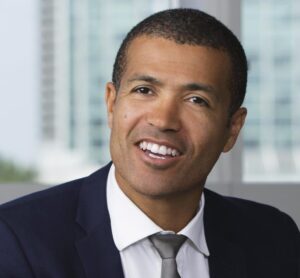
Helen Croke (pictured right), a PE partner at White & Case, agrees with Rodham, and believes the spiky deal flow that defined 2025 is likely to continue into the new year. ‘People are quite rightly cautious,’ she says. ‘They don’t want to sell too low and they don’t want to buy too high … buyers are desperate to buy but sellers aren’t desperate to sell.’

Scott echoes warnings about hangovers from a market favourable to sellers: ‘It has been an environment where people will pay for desirable assets. But you’ve got to be careful,’ he says. ‘If you try to oversell an asset, people will just walk away.’

Ready to deploy

Private equity houses and fund managers have capital to deploy, with Ropes noting in its January 2025 US PE market recap that at the start of the year there was $1.1trn of nascent US private equity money.

But that is only half the story. ‘There is dry power to spend, massively,’ one partner at a US firm says. ‘But there’s nothing to spend it on.’

Stubborn interest rates have meant that houses are having to commit to longer hold times of assets, says Ropes’ Newton, explaining that this situation is ‘inevitable because of these circumstances.’

These conditions have seen partners turn to new mechanisms to keep portfolio companies under management.

Partners recognise that there is a willingness across the market to find solutions and get capital flowing, driven by a need to return funds to investors.  Continuation vehicles such as partial exits and fund-to-fund transfers have  become increasingly popular, a trend partners expect to continue. ‘They are a route to liquidity for LPs without sacrificing overall value if the GP has conviction in the underlying asset,’ says Elizabeth Todd (pictured right), who co-leads Ropes’ European PE transactions practice with Newton.

But these solutions can only go so far. Private equity fundraising fell to its lowest levels in five years in 2025, according to PE data provider Preqin – a shift which has put pressure on smaller houses and increased fund-to-fund acquisitions.

‘People will be shrewd and selective, but everyone is working to get deals over the line’ 

‘It’s not an easy fundraising market but the names at the top of the market have generated consistently strong returns – whether that’s from traditional LPs or new sources of capital, like retail,’ says Latham’s Ihenacho (pictured below, right). ‘Some will look to other sources of capital as they grow their funds under management. We also believe that asset management M&A will continue to be part of the story in 2026.’

Charlie Hayes, Freshfields’ global co-head of private capital in London, makes a similar point: ‘We’ll continue to see the bifurcation in funds that are readily able to fundraise, and those for whom it’s more challenging; there are great teams out there, and I think this year the consolidation of GPs we’ve already started to see will gain pace – there are some in the market as we speak. And in H2, the IPO market will be buzzing with private capital exits – there is a lot to look forward to.’

Other partners are encouraged by the return of the end of year rush: ‘I’d be more positive about a general increase in the market, rather than spikiness,’ Gibson Dunn’s McDonald says. ‘People will be shrewd and selective for sure, but I think within that context, everyone is a bit more willing to get deals over the line.’ 

Clifford Chance’s head of private capital Spencer Baylin also sees reasons to be optimistic: ‘We have seen a steady uptick since April in deal-activity and would hope that the macroeconomics of 2026 should continue to facilitate this,’ he says.

‘A lot will depend on the momentum gained from recent months of successful transactions and exits that give people the confidence to run exit processes themselves.’

Many processes in the end of year rush won’t have closed, so will land early 2026 leading to a strong start to the year, Ben Rodham says. But he cautions that this is just a positive trajectory – much like the start of 2025 – rather than the release of a flood of assets. ‘There needs to be a more positive business environment generally across Europe, and that will be heavily influenced by avoiding any macro shocks,’ Rodham says. ‘If we can avoid any big events in early 2026 then momentum should keep building, but I think we are some way off the dam breaking.’

[email protected]

‘A poisoned chalice’ – SFO director’s early exit reignites speculation over organisation’s future

Serious Fraud Office

‘It is a difficult job to recruit for,’ says Sara George, a white-collar defence and investigations partner at Sidley Austin, as partners debate a likely successor for Serious Fraud Office director Nick Ephgrave after last week’s unexpected news that he is set to step down from his role at the end of March.

 ‘Not many people want to do the job because it is somewhat of a poisoned chalice… It’s very difficult to get cases to court with the current backlog, let alone win these very long cases,’ she adds. 

White-collar partners were taken by surprise when Ephgrave, a former Metropolitan Police officer and the first non-lawyer to hold the role, announced that he would be retiring two-and-a-half years into a five-year term. 

They suggest that his unexpected departure, reportedly for personal reasons, and the hunt for a successor that must now follow is likely to further destablise the SFO, which has struggled to find momentum in recent years, and potentially raises fresh questions about the organisation’s future.

‘Commentators in recent years have called for the abolition of the SFO and its merger into the National Crime Agency (NCA),’ says Louise Hodges, head of criminal litigation at Kingsley Napley. ‘Even when Nick Ephgrave arrived, there was suspicion that his appointment may have been to ensure an orderly merger. This latest news sadly risks reigniting that debate.’

When Ephgrave came in as director the market was optimistic that his recruitment marked a fresh hope for the SFO, which had gained a reputation for being toothless under his predecessor, Lisa Osofsky. 

In Osofsky’s first year the organisation dropped 14 cases – twice as many as the previous three years combined. A reduced appetite for major investigations subsequently led lawyers to diversify their practices to include a diet of sanctions, compliance, private prosecutions and internal investigations work.

During his tenure, Ephgrave has pushed the organisation back into the public eye, carrying out a series of high-profile dawn raids and pushing for policy changes, including introducing financial incentives for whistleblowers. Notably, in December 2024, Ephgrave led the SFO to bring charges against five individuals for complex fraud in a case linked to the collapse of law firm Axiom Ince in the fastest time in the organisation’s history.

‘There was a famous year when the SFO did no raids; Nick’s approach was different, owing to his background as a former police officer,’ says Barry Vitou, head of HFW’s global investigations and white-collar group. ‘These raids cost money and represent investment in the SFO, so that might not square with the SFO being folded into the NCA.’

‘For the last decade or so, each director has had a legal change they have championed, tools marked as “gamechangers”, like deferred prosecution agreements or changes to the Bribery Act. But all of these struggle to fundamentally change the organisation’s performance and the recurring trials and tribulations of the SFO,’ he adds.

The focus will now turn squarely to who could replace Ephgrave, with the Attorney General’s office running the process, which is expected to see an interim director appointed in March.

It is such a demanding job. It might be one of the hardest jobs in criminal law,’ says Polly Sprenger, a corporate crime and investigations partner at Michelman & Robinson. ‘The SFO has minimal resources but faces the most well-resourced defendants, and there is minimal praise when things go well. But, I think it is one of the bravest, most principled and most important roles, to go up against crooks in suits who should know better.’

‘Two months until [Ephgrave] steps down is not a long time to find a replacement,’ adds Vitou. ‘While there will be continuity with the likely appointment of an acting director pending the appointment, inevitably, there is a question of momentum, uncertainty and the unwelcome distraction that goes with a hunt for a new boss. Historically, it is a slow recruitment process, due to the nature of the civil service.’

The Attorney General’s office, the department responsible for the SFO, is expected to initiate the recruitment process for a permanent replacement shortly, and continues to work with the SFO on interim measures to ensure the organisation continues to operate smoothly.

‘I would love to see a really good promotion from within the organisation, it would be a good way to capitalise on the morale boost Ephgrave injected,’ adds Sprenger, who previously worked at the SFO. ‘Victoria Jacobson [case controller] or Emma Luxton [director of operations] perhaps. But not an outsider, whether a police officer or a lawyer. The last promotion to director from within was Robert Wardle and that was 20 years ago.’

‘It doesn’t matter if the SFO becomes part of a larger organisation,’ Sprenger concludes, ‘As long as the job gets done.’

The Attorney General, Richard Hermer, paid tribute to the outgoing SFO director via a statement posted on LinkedIn where he thank Ephgrave for his long career in public service.

[email protected]

Revolving Doors: Sidley and Hogan Lovells swipe Latham partners, as Ropes and Clifford Chance build in Europe

Sidley Austin has rolled into 2026 with yet another hire from Latham & Watkins, bringing over the firm’s former global co-chair of real estate, Jeremy Trinder.

After nearly ten years at Latham, Trinder is the tenth partner to leave the firm’s London office for Sidley in the last 18 months. Last year, Sidley brought in Latham London corporate co-chair David Stewart and capital markets partner Vladimir Mikhailovsky, following up on its 2024 hire of a five-partner leveraged finance team led by Jay Sadanandan and Sam Hamilton.

Additionally, Latham’s London finance co-chair Tania Bedi and high yield duo Scott Colwell and Patrick Kwak also moved to Sidley in 2024.

A spokesperson for Latham said of Trinder’s move: ‘We thank Jeremy for his contributions to the firm and wish him all the best in his next endeavor.’

Hogan Lovells has targeted Latham as well, as it announced Lisa Quelch will join as a partner in the firm’s infrastructure and energy practice.

Quelch has spent six years as an associate at Latham, and prior to this she began her career at HSF Kramer. She has experience working on infrastructure and project financings within emerging markets, with expertise across Africa.

For its part, Latham has made its own spate of hires in recent months, including bringing over three partners from A&O Shearman earlier this month, including the merged firm’s global head of real estate finance David Oppenheimer.

White & Case has made a series of hires across its European and APAC offices. In London, the firm has brought in funds partner Chris Jeanes, formerly a counsel at Akin.

Jeanes has worked on fundraising and secondary transactions, including a €400 million continuation fund for BlackRock as co-lead for private equity firm Seven2, as it financed two assets Marlink and Crystal.

The firm also hired three partners from DLA Piper into its real estate team in Paris, bringing over Antoine Mercier, Sarah Fleury and Romain Guénin. Each has advised on real estate financing and acquisition deals across Europe.

In Tokyo, the firm hired real estate partner Ed Sheremeta, also from DLA Piper. Sheremeta, who has over 25 years experience advising real estate investors, will join the firm’s global M&A acquisitions team, and leaves DLA after becoming co-head of real estate for Japan in September 2024.

Meanwhile in Sydney, W&C welcomed Will Stawell as a partner in its debt finance team. Stawell previously worked at White & Case as an associate from 2013 to 2016, and rejoins after nine years at King & Wood Mallesons.

Shoosmiths has expanded its London banking and finance team with its hires of partners John Dawson and Graham Knight.

Dawson joins after five years at CMS, with previous stints as a partner at both Vinson & Elkins and Clifford Chance, where he advised sovereign wealth investors and banks on international transactions.

Meanwhile, Knight brings particular experience in energy and infrastructure finance, and joins the firm after more than two decades at legacy Allen & Overy and stints in-house at Bank of America and Goldman Sachs.

Osborne Clarke has grown its London corporate practice further with the hire of Sunjay Malhotra, the third partner to join the practice in the past year.

Malhotra joins from Pinsent Masons, where he spent six years advising clients across the life sciences sector on venture capital financings and equity capital markets mandates.

WilmerHale has hired former United Health general counsel Rupert Bondy as partner and co-head of its crisis management and strategic response group in London.

Bondy has worked in-house for 30 years, with experience as general counsel for GSK, BP and Reckitt in the past.

Also swapping an in-house role for partnership is Google senior counsel Sarah West, who has rejoined Baker McKenzie’s dispute resolution team in London. West was previously a senior associate at Baker McKenzie before moving to Google in 2022.

Experienced at handling tech litigation, investigations and compliance, West rejoins the firm with expert knowledge of the Online Safety Act, among other regulations.

Elsewhere, CMS has hired the head of white-collar defence and investigations at Withers, Carl Newman, to its London corporate crime practice.

With over 25 years of experience, Newman has handled several high profile cases, such as defending BargainHunt broadcaster Charles Hanson against assault and controlling behaviour charges last year.

Also in the City, Charles Russell Speechlys has hired K&L Gates real estate special counsel Chiara Del Frate as a partner in London.

Del Frate, who worked across K&L Gates’ London and Milan offices, brings experience working with a number of large corporates and luxury companies across Europe, such as Audemars Piguet, Gucci and YSL.

Winckworth Sherwood has expanded its London tax practice with the addition of Arcangelo D’Apolito from Macchi di Cellere Gangemi.

With five years of experience at the Italian firm, D’Apolito also spent time at both KPMG and PwC as a tax manager, before becoming a partner in 2021. 

Over in Milan, Ropes & Gray has launched an antitrust and foreign direct investment (FDI) practice with the hire of Jacopo Figus Diaz.

Formerly a senior counsel at Italian firm Legance, Diaz also spent time at Cleary’s office in Brussels as an associate. Dual-qualified in both the US and Italy, he has experience working on merger control proceedings before the European Commission and Italian Competition Authority for clients across media, manufacturing and financial services industries.

In Dublin, A&L Goodbody has hired two partners from Hogan Lovells, who will join its financial regulation advisory team. Eoin O Connor, former managing partner of Hogan Lovells Ireland, will head the practice group, while Eimear O’Brien joins as partner.

Meanwhile, Clifford Chance has hired global private capital lawyer Matthias Kerbusch into its Luxembourg office. Kerbusch began his career at Clifford Chance in 2012, but left to become a partner at Dechert in 2022.

He returns to Clifford Chance with experience advising on the formation and restructuring of Luxembourg-based investment funds, with a particular focus on alternative asset classes.

Also in Europe, Dentons welcomed former A&O Shearman counsel Soline Louvigny as a partner in its Paris debt capital markets team. Louvigny spent over 15 years at A&O Shearman, where she focused on ESG issuances and regulatory capital.

Crowell & Moring has hired Liesbeth Truyens into its international trade group in Brussels. Previously, Truyens spent five years as a partner at Belgian firm Schoups, and also has in-house experience in KBC Bank’s dispute resolution team.

Litigation firm Boies Schiller Flexner has hired competition partner Gianluca Faella in Rome. Faella joins after 20 years at Cleary, and his move marks his first partnership position.

Reed Smith has promoted new office managing partners across its European, Middle East and APAC teams. The managing partners include: antitrust lawyer Christian Filippitsch in Brussels, M&A specialists Anders Nilsson in the Middle East and Manoj Purush in Singapore.

The firm has also appointed Singapore-based Tim Cooke as the global chair of its international arbitration practice, succeeding Peter Rosher, who held the position for four years.

Squire Patton Boggs has also hired in Singapore, as the firm brought over DLA Piper’s head of financial services for Asia, Philip Lee, as a partner. Lee has acted as Asia regional head of financial services for the past two years, and before this served as DLA’s capital markets practice lead for APAC.

Over in the Middle East, Ashurst has hired its first real estate partner in the region, Chris Beaumont-McQuillan, who will join the firm’s Abu Dhabi office.

Beaumont-McQuillan will head Ashurst’s Middle East real estate practice, after three years in the same role at BCLP’s office in Dubai. Prior to this, he also worked as partner in Reed Smith’s London team.

Back in the UK, Ward Hadaway has hired corporate partner Paul Wigham into its Newcastle office. Wigham was previously a partner at Weightmans, where he has advised on tech-related M&A and fundraising transactions.

Finally, RWK Goodman has acquired Oxfordshire’s oldest law firm, HMG Law, which has operated for over 200 years in the Thames Valley region.

The two firms are to be based in RWK Goodman’s Oxford office from February, with client services roles unaffected by the combination.

[email protected]

Taylor Wessing and Winston kick off partner vote on transatlantic merger

Partners at Taylor Wessing and Winston & Strawn have started voting on the firms’ planned transatlantic merger, which was announced just before Christmas.

Voting is set to close by the end of the month, with the merger set to go live in May should it receive the blessing of partners at both firms.

The pair announced plans to combine as Winston Taylor in mid-December, with the union set to create a firm with estimated revenue of $1.75bn at the end of the financial year.

Should it go ahead, the merged firm will have more than 1,400 lawyers and 450 partners operating across the US, the UK, Europe, Latin America and the Middle East.

If voted through, the merger will see Taylor Wessing’s UK-led business (which has operations in the UK, Ireland, Dubai and a few lawyers in San Francisco) leave the existing Taylor Wessing verein to join forces with Winston & Strawn as Winston Taylor.

The Netherlands and Belgium offices will leave the Taylor Wessing verein, but will not join the merged firm straight away. Instead they will enter into an agreement to operate under the Winston Taylor brand without being part of the single firm for an interim transition period. The German and French arms will operate independently, while retaining a cooperation and referral relationship with Winston Taylor.

Winston chair Steve D’Amore will serve as chairman of the combined firm, with Taylor Wessing UK managing partner Shane Gleghorn set to become managing partner of Europe and the Middle East.

The firm will have particular focus on major litigation, critical transactions, strategic IP, and private wealth.

In its most recent financial results, Taylor Wessing reported a 15% increase in UK revenue to £283.7m, with UK profit per equity partner (PEP) up to £1.1m.

Turnover for Taylor Wessing’s entire business, including France and Germany, stood at £526.2m (€619m) for 2024-25, up 10% from £480.7m in the previous year’s financial results.

Winston, meanwhile, recorded revenue of $1.27bn (£946m) in 2024, with net profit of $410m and PEP of $3.5m (£2.6m). The firm has 10 US offices and a small presence in London and Paris.

Taylor Wessing has long sought to build a platform in the US, and in 2019 signed a non-exclusive relationship with West Coast tech firm Wilson Sonsini.

Speaking to LB before Christmas, Gleghorn said: ‘We wouldn’t want you to think that the vote is something that is predetermined, but I really do hope that my partners believe the merits of this deal speak for themselves. We’ve both come to deeply admire the respective attributes of our organisations… these are two very strong, financially performing units coming together. That’s why I was totally captivated by this opportunity from the start.’

D’Amore said at the time: ‘I believe that our partners are going to see the merits of this quite clearly. I view this transaction as a consummation of what I have been saying for a long time, which is that Winston needed to be bigger and stronger in London, which is a hugely important market.’

News of the Winston Taylor deal came amid a frenzy of merger activity before Christmas, with Hogan Lovells announcing plans to merge with Cadwalader in a $3.6bn combination and Ashurst agreeing a deal to combine with Perkins Coie. The Ashurst Perkins deal would create a financially integrated firm with revenue of around $2.7bn and roughly 3,000 lawyers worldwide.

Taylor Wessing and Winston declined to comment on the vote opening.

[email protected]

For more, see ‘A merger of complementaries’ or ‘transatlantic panic’? – the market view on Winston Taylor